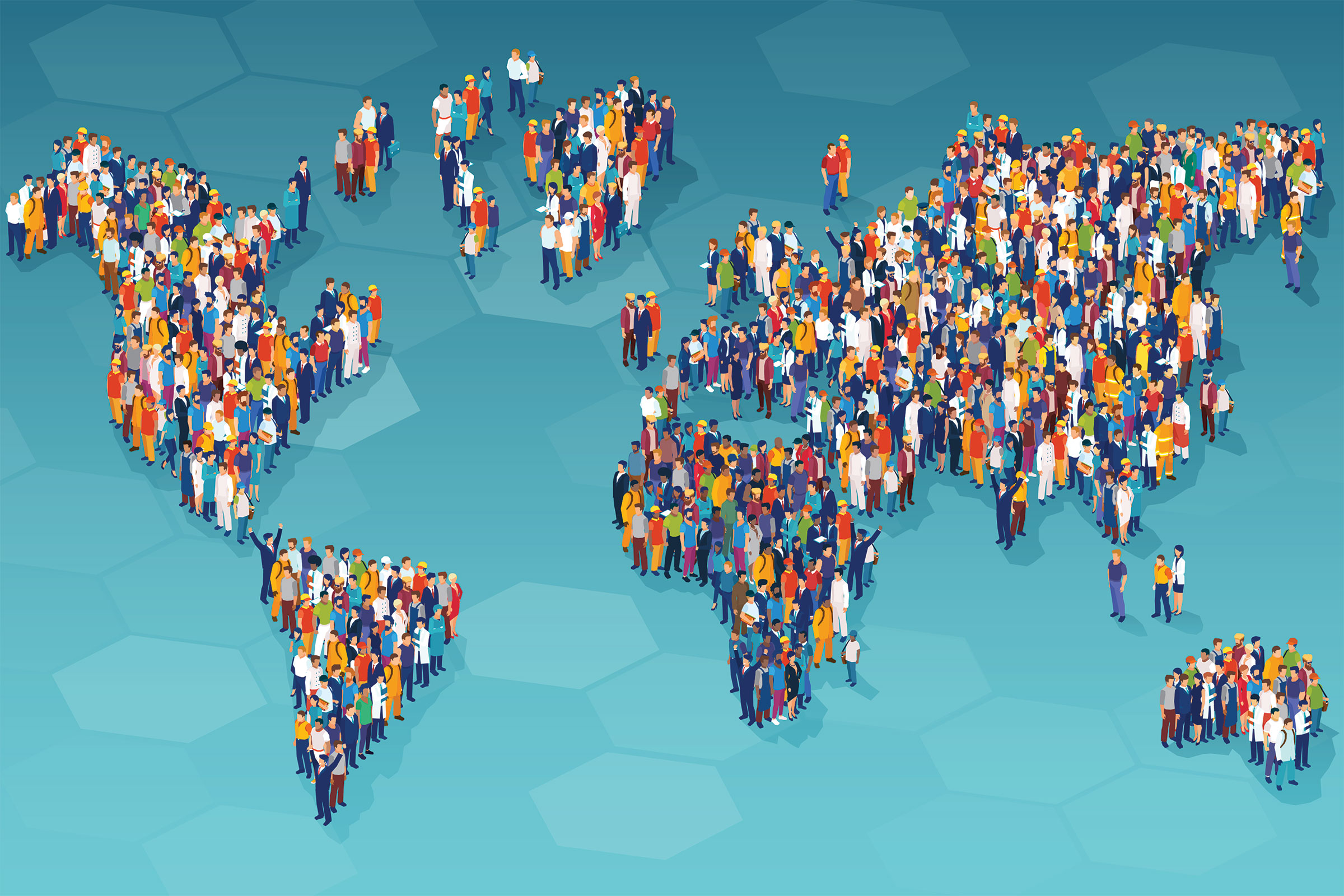
Most adults have low levels of trust in institutions and people, study shows
Findings underscore need to boost trust to improve public health outcomes
September 11, 2026


Inspired by his own experiences with conflict and displacement, Tutlam focuses on understanding and addressing the challenges facing young people and families affected by war, poverty and displacement
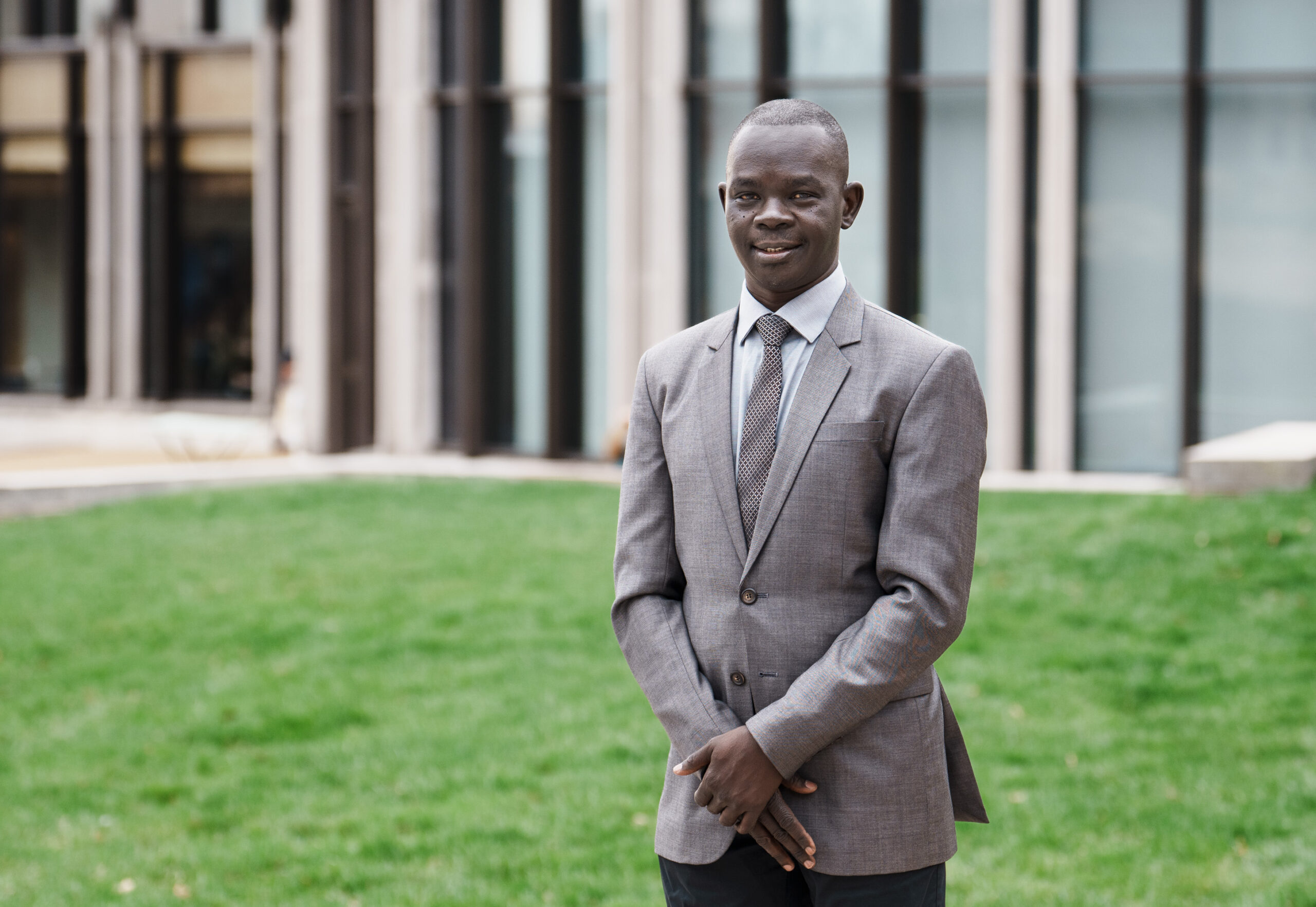
Nhial Tutlam’s early experiences of conflict, displacement and inequity motivate him to understand and find solutions for the challenges facing young people and families affected by conflict and poverty. (Photo credit: Zachary Linhares/Bursky Public Health)
Long before Nhial Tutlam, MPH, PhD, became an epidemiologist, he was a seventh grader standing in front of a first-grade classroom in South Sudan.
It was the early 1990s, during the country’s long civil war, and there were few teachers available. Many had joined the fighting. Tutlam, who had returned to South Sudan with his family after growing up largely in Ethiopia, found himself in a place where there was no class for someone his age.
“If you could read and write, and you could teach math, you could teach,” Tutlam recalled. So he did. He taught first-grade math to students who, in some cases, were older than he was. “I was a kid, basically, teaching,” he said. Some of those students, he later learned, went on to attend universities.
Tutlam’s father was a physician who worked in refugee camps and on the front lines treating wounded freedom fighters, and Tutlam remembers seeing people die from cholera and other preventable diseases. Those early experiences of conflict, displacement and inequity now run through his work as an assistant professor at the Andrew M. and Jane M. Bursky School of Public Health at Washington University in St. Louis.
Tutlam describes his research as having “one foot on this continent” and another in sub-Saharan Africa. In the United States, he studies intergenerational trauma and mental health among young people born to parents who resettled as refugees. In Uganda, he works with young people living with HIV in refugee settlements, examining how poverty, mental health and displacement shape health outcomes.
The work is deeply personal. While conducting research in refugee settlements, he has encountered relatives he had not seen in decades and met families whose experiences echo his own.
“These are not random people,” he said. “These are not just numbers. These are actually my people.”
That connection, he said, is what keeps him going through long flights, late-night weekend drives across the Midwest, demanding fieldwork and the uncertainty of research funding. It also underpins a philosophy that guides his career: Research should do more than document a problem.
“You just don’t produce data or do research for the sake of doing research,” Tutlam said. “What are you going to do about the issues the research unearths?”
Here, he discusses his journey, hopes and motivations for his work.
“I spent much of my childhood in Ethiopia. I also lived in South Sudan during the war. When the Ethiopian government was overthrown in 1991, many South Sudanese people who had been living in Ethiopia returned to South Sudan. My family went back as well, and I lived there for roughly a year and a half during the conflict. There was no school for me. Eventually, I returned to Ethiopia and finished eighth grade. Then I went to Kenya. My dad had been part of the liberation struggle. He escaped first to Uganda and eventually ended up in Kenya. My mother and siblings later joined him, and then I joined the family and attended high school in Kenya. My father died in a plane crash in 1998, and afterward my mother and I came to the United States. My family is now spread all over. I have relatives in the United States, Ethiopia, South Sudan, Sweden, and elsewhere. One of my cousins is married to a Dutch man, and he once joked that our family is ‘like the Hiltons without the money’ because almost anywhere you go, you can find a relative and a place to stay.”
“I’ve been involved with WashU since 2005, starting as a research assistant at the School of Medicine, first in infectious diseases, then neurology. I later earned a PhD in epidemiology from St. Louis University and returned to WashU School of Medicine, where I worked as a data analyst in the Department of Obstetrics and Gynecology. Then I left to manage the chronic disease epidemiology program at St. Louis County Department of Public Health for about five years, including during COVID. Seeking research opportunities, I returned to academia via a postdoctoral program focused on mental health interventions for conflict-affected youth, such as former child soldiers and refugees. This led to research roles, including NIH-funded work with refugee youth in Uganda, culminating in a faculty position.”
“Initially, I wanted to determine whether intergenerational trauma existed among U.S.-born children of parents who had resettled as refugees, particularly within South Sudanese families. That question became the focus of my PhD research. I have since moved from asking if it exists to developing and testing interventions to address related mental health symptoms. The idea of intergenerational trauma partly came from observing children of Holocaust survivors who showed symptoms similar to their parents, despite not experiencing the Holocaust themselves.
“This led me to wonder if similar patterns occur in South Sudanese families. Sudan, before splitting into two countries, endured generations of war. South Sudan’s fight for independence started in the 1950s, and many of its people experienced trauma.
“Broadly, I’m interested in the mental health outcomes of young people affected by conflict, regardless of where they live. In Uganda, I also work with young people living with HIV, so I’m particularly interested in the intersection between HIV and mental health among young people living in refugee settlements. Our initial NIH-funded work looked at whether these young people would be willing to participate in interventions, and then we conducted a pilot study to see whether an intervention could improve both their mental health outcomes and their HIV outcomes.”
“For me, it means you don’t just produce data or conduct research for its own sake. The question is: What are you going to do about it? Once we had evidence suggesting that intergenerational trauma existed in this population, the next question became: Now that we know this, what are we going to do about it?
“My current K01 research, funded by the National Institute of Mental Health, develops and tests an intervention for mental health symptoms in young people aged 14-17. It combines two interventions: a multi-family group where families discuss issues such as rules and communication, and a virtual, youth-focused program in which avatars simulate situations such as being offered drugs, experiencing bullying or navigating potential violence, followed by peer-led discussions about how to respond. The family part also tackles depression, stress, and relationships, involving both youth and caregivers. A key focus is implementation science, understanding how and why an intervention works and how to deliver it effectively in communities.”
“I often see myself in the young people I work with because I was in their shoes. In the U.S., I address problems that have affected my family: incarceration and violence. During COVID, I attended many funerals in Nebraska for young people affected by violence, overdoses or sudden deaths. These deaths, often overdoses, reveal that young people face substance use, violence, mental health issues, and rising suicide rates. Nearly every family I work with is touched by these issues.
“My motivation comes from seeing these problems firsthand in my family and communities, which connects to epidemiology. At the health department, I urged my team to make reports more useful by involving community partners to identify useful information. For instance, if data show higher breast cancer deaths in certain ZIP codes due to late diagnosis, we should bring mammography resources there. This is why I became an intervention researcher: to develop solutions.”
Judith Mwobobia, MPH, is the inaugural Writing Fellow for the Bursky School of Public Health Office of Communications. Mwobobia is a PhD student in public health sciences and previously was a journalist in Kenya. She writes profiles and helps cover the news of the school, with a particular focus on student- and education-related stories.
Findings underscore need to boost trust to improve public health outcomes
September 11, 2026

Bursky Public Health-led center draws on universitywide expertise to address major public health challenge
September 11, 2026

Bursky Public Health’s Summer Experience Program offers undergrads, MPH students hands-on experience with diverse aspects of public health research, practice
September 11, 2026