

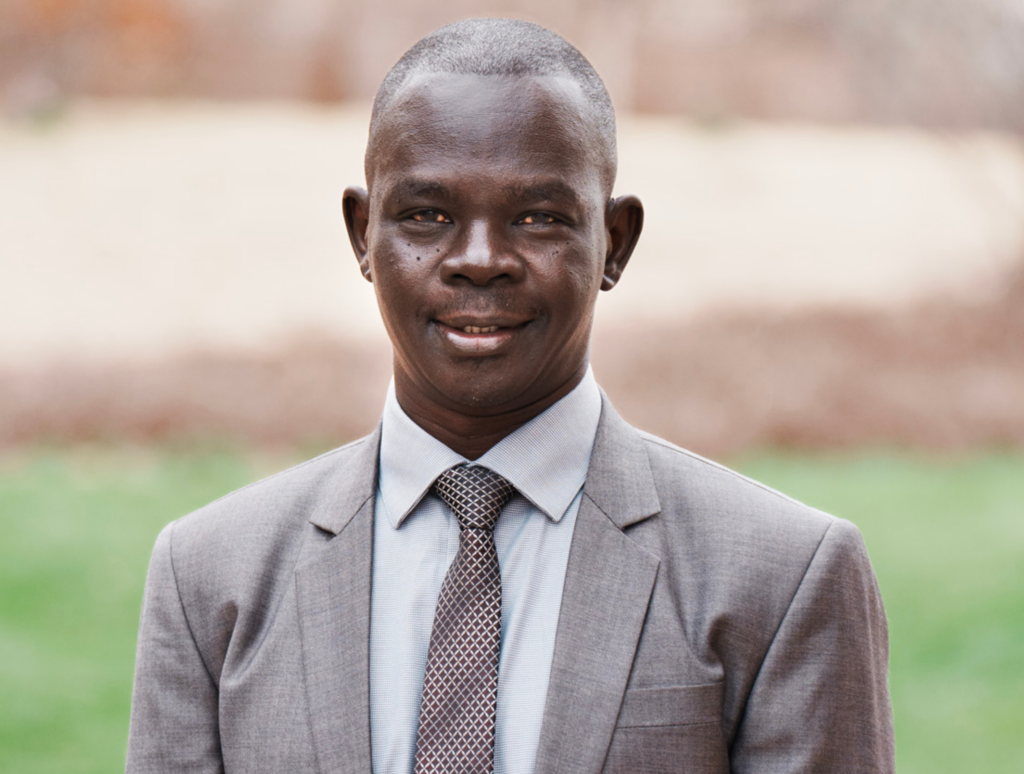
Nhial Tutlam studies how the trauma of war affects the mental health of young people and increases the risk of problems such as suicide, substance use, and HIV infection. He develops and tests culturally appropriate, community-based interventions to support the mental health of vulnerable youth belonging to families resettled in the U.S. as refugees as well as those living in refugee camps and resettlement in sub-Saharan Africa.
Through a career development award funded by the National Institute of Mental Health (NIMH), Tutlam is testing a combination intervention to address emotional and behavioral problems related to intergenerational trauma among youth born in the U.S. to parents resettled as refugees. Additionally, he leads a major study in refugee settlements in Uganda, funded by the NIH. The study aims to understand what factors affect whether people stick to their HIV treatment plans, how trauma affects their mental health, and how they make decisions about their sexual health. The goal is to better understand and address the significant public health challenges posed by mental health issues and HIV in these communities.
As an ACHIEVE Scholar at the Fogarty International Center of the NIH, he led a study evaluating the feasibility and acceptability of combining a psychosocial intervention with financial literacy training to address mental health and HIV risk among refugee youth in Uganda.
Tutlam is the associate director of research at WashU Public Health’s International Center for Child Health and Development (ICHAD). Before joining Washington University, he managed the Chronic Disease Epidemiology program at the St. Louis County Department of Public Health. There, he oversaw the monitoring of chronic diseases and mental health. He also led Project RESTORE, a comprehensive, four-year youth violence prevention initiative funded by the Office of Minority Health in the U.S. Department of Health and Human Services. This project received recognition as a Model Practice by the National Association of City and County Health Officials (NACCHO).
Areas of focus:
- Intergenerational trauma
- Conflict-affected populations
- Refugee youth impacted by HIV and conflict
- Impact of trauma on adolescents and youth
- Chronic diseases
Featured publications
- Type I hybrid effectiveness-implementation randomised controlled trial to address intergenerational impact of war trauma and resilience among second-generation refugee children in the USA: Resettled Refugee Families for Healing (RRF4H) study protocol
BMJ Open
October 2025 - Social determinants of mental health outcomes among refugee adolescents and youth living with HIV in refugee settlements in Uganda: A cross-sectional analysis
AIDS and Behavior
February 2026 - Low HIV viral load suppression and its implications for controlling HIV among refugee adolescents and youth living in refugee settlements in Uganda: A cross-sectional analysis
AIDS and Behavior
February 2025 - The impact of group-based interventions on emotional and behavioral difficulties among adolescents living with HIV: The Suubi4Stigma Cluster randomized controlled trial
Journal of Child and Family Studies
March 2025 - Triple crisis among refugee youth resettled in high-income countries
The Lancet
July 2025