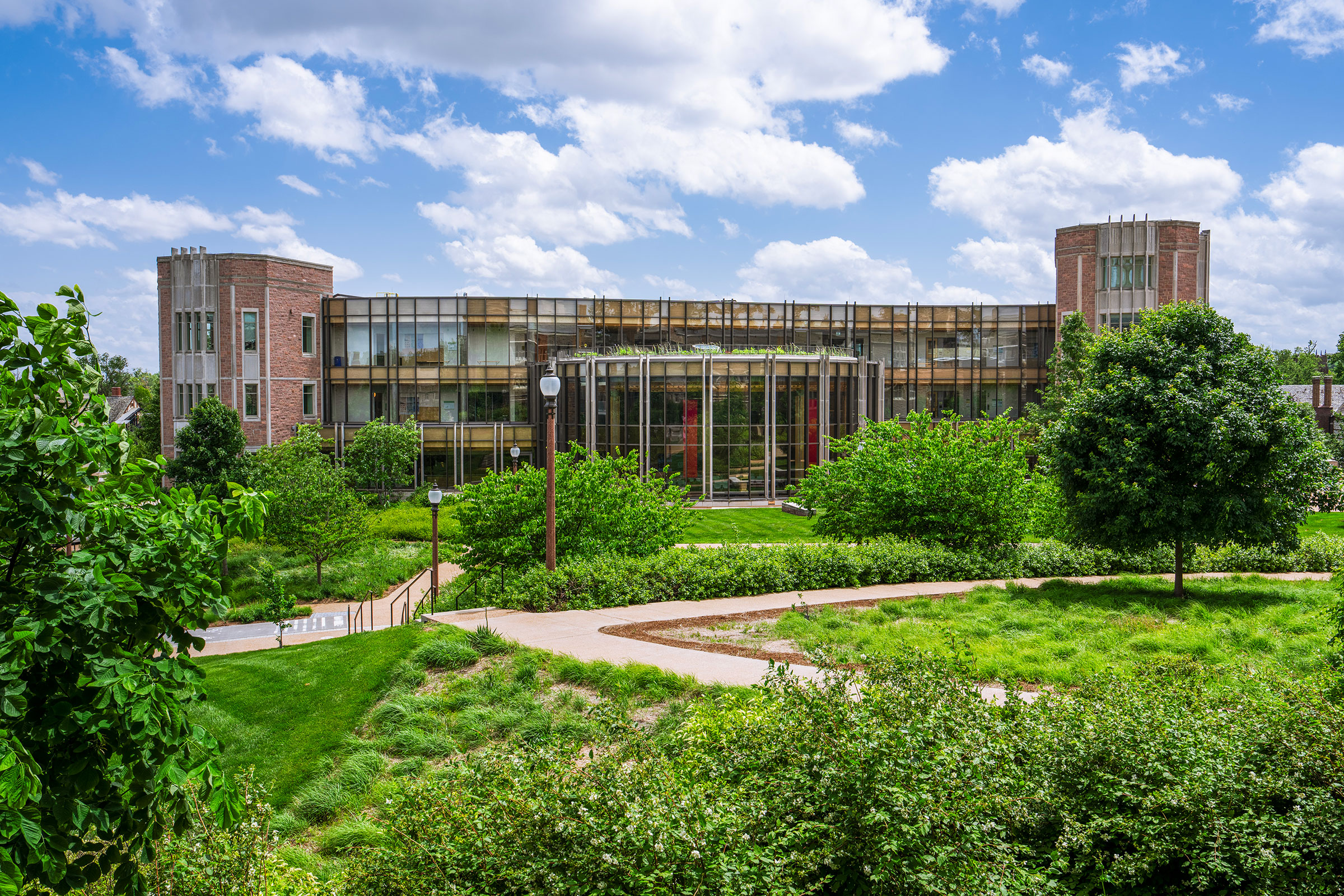
Bursky Public Health welcomes 19 new faculty in 2026
The Andrew M. and Jane M. Bursky School of Public Health at Washington University in St. Louis welcomes 19 new primary and joint faculty members for the 2026-2027 school year.
September 1, 2026


Equitable partnerships, stronger regional institutions, greater bottom-up engagement among solutions offered

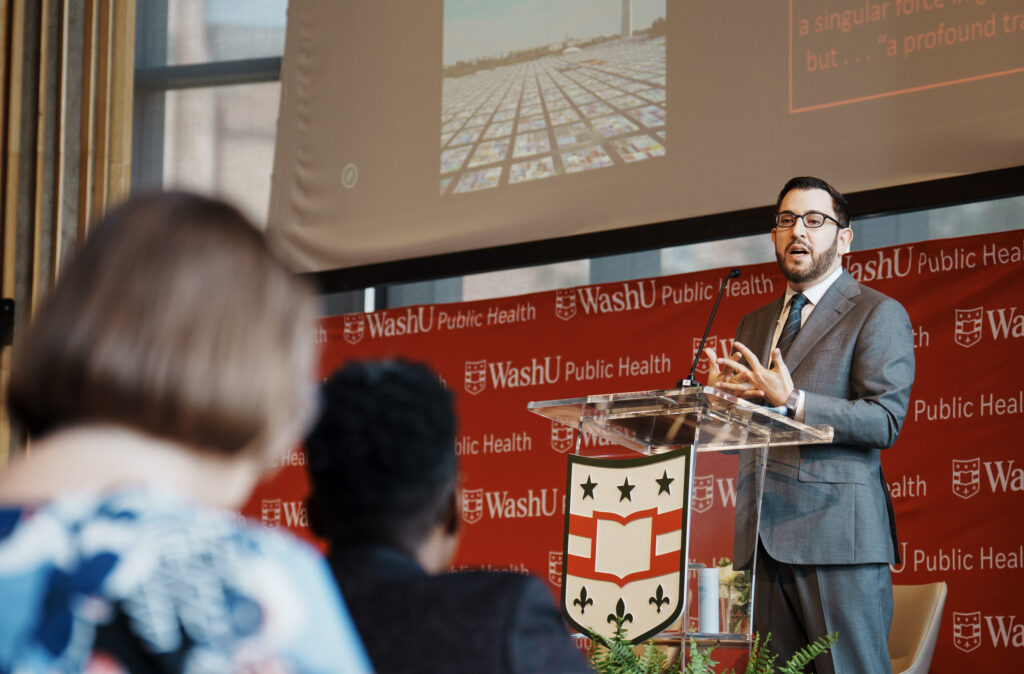
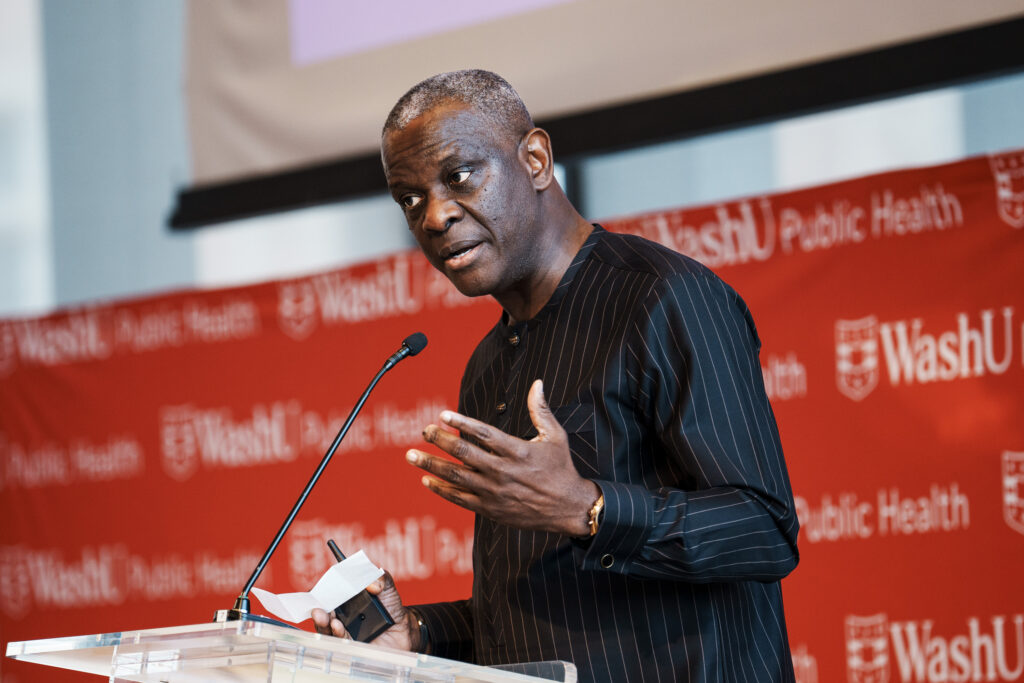
Keynote speaker Gbenga Ogedegbe, MD, MPH, the director of the Institute for Excellence in Health Equity at NYU Langone Health, emphasized the importance of developing fit-for-purpose solutions to public health challenges in low- and middle-income countries, rather than adapting solutions from high-income countries, in his talk at the "Building for a New Era of Global Health" convening at WashU Public Health. (Photo: Zachary Linhares/WashU Public Health)
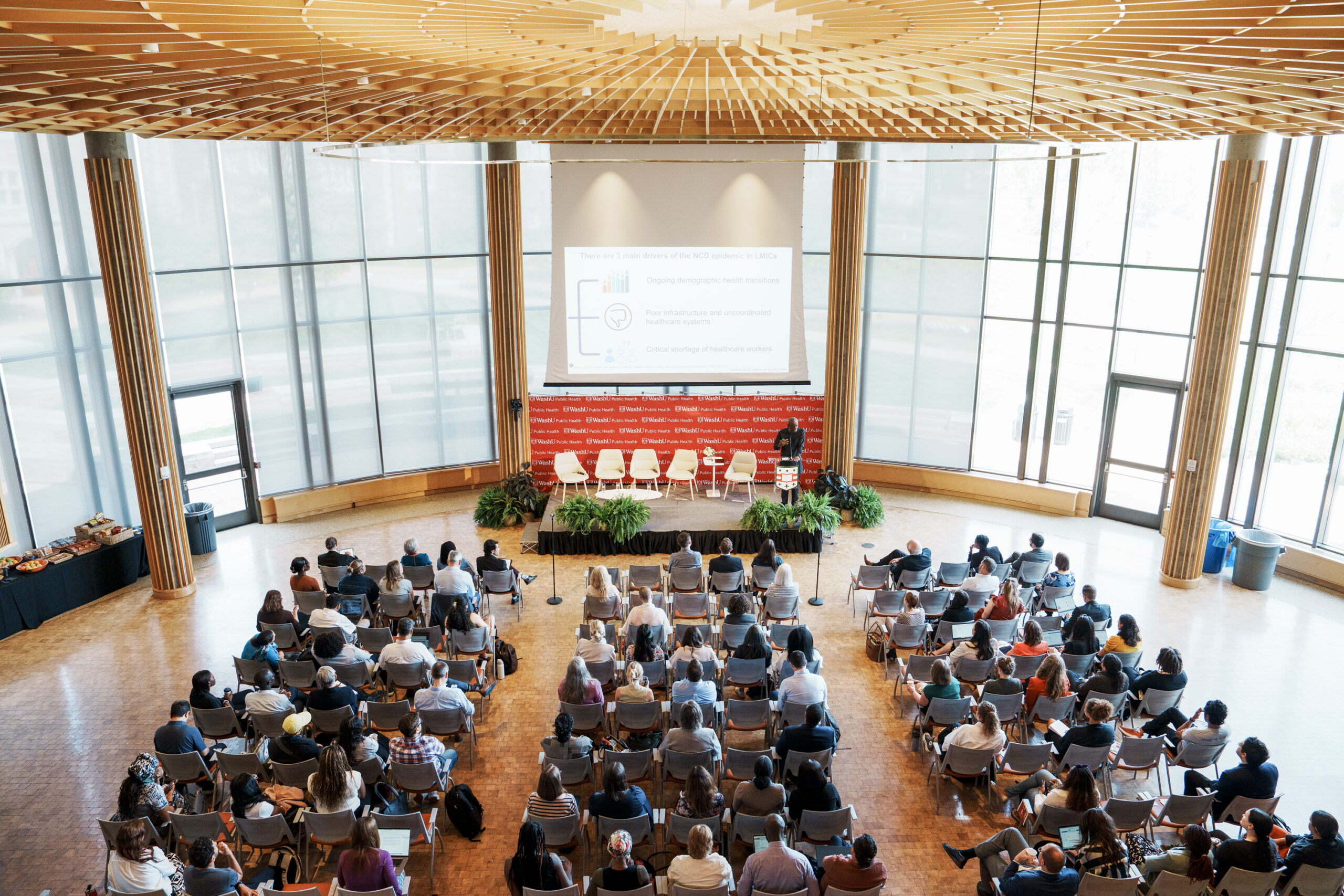
Against a backdrop of weakened support for global health and international institutions that bolster the health of millions worldwide, leading voices in public health convened at Washington University in St. Louis on Tuesday, April 14, to envision how best to work toward making the world a healthier place for all.
The leaders met at the inaugural convening of WashU School of Public Health’s Global Health Futures research network. The symposium, titled “Building for a New Era of Public Health,” was held in WashU’s Clark-Fox Forum in Hillman Hall. More than 130 people attended in person and another 220 tuned in online from across 20 states, North and South America, Asia, Africa, Australia and Europe.
The first keynote address was delivered by Benjamin Meier, JD, LLM, PhD, a professor of global health policy at the University of North Carolina at Chapel Hill. Meier outlined the political history that led to this moment of declining American leadership in global health, and argued that moving forward requires a deeper appreciation of the political determinants of health.
“Public health has long stood behind the fiction that health is not political, even amid a series of political attacks that give proof to this lie and have undermined our field, as we now face an existential crisis that threatens everything that we have built over the last 80 years,” Meier said. “If we are to ensure global health through these difficult days and amid these rising political divisions, we must teach political advocacy to the next generation of global health practitioners, reshaping our global health curriculum to ensure that students have the necessary political skills to engage in this moment, to shape their careers, to develop healthy public policies, and to ensure that tomorrow’s global health governance meets future challenges.”
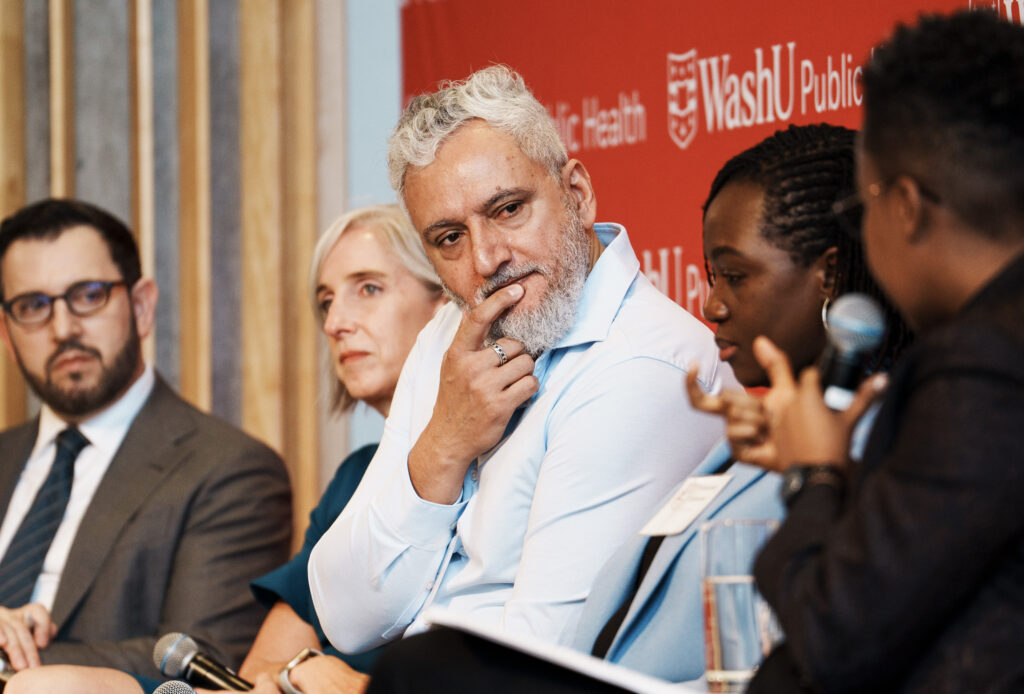
The panel discussion that followed focused on how global health institutions should change to meet the needs of a new era of global health. The World Health Organization (WHO) plays an important role in setting global norms, the panelists agreed, but more players need to be at the table when setting priorities and designing strategies.
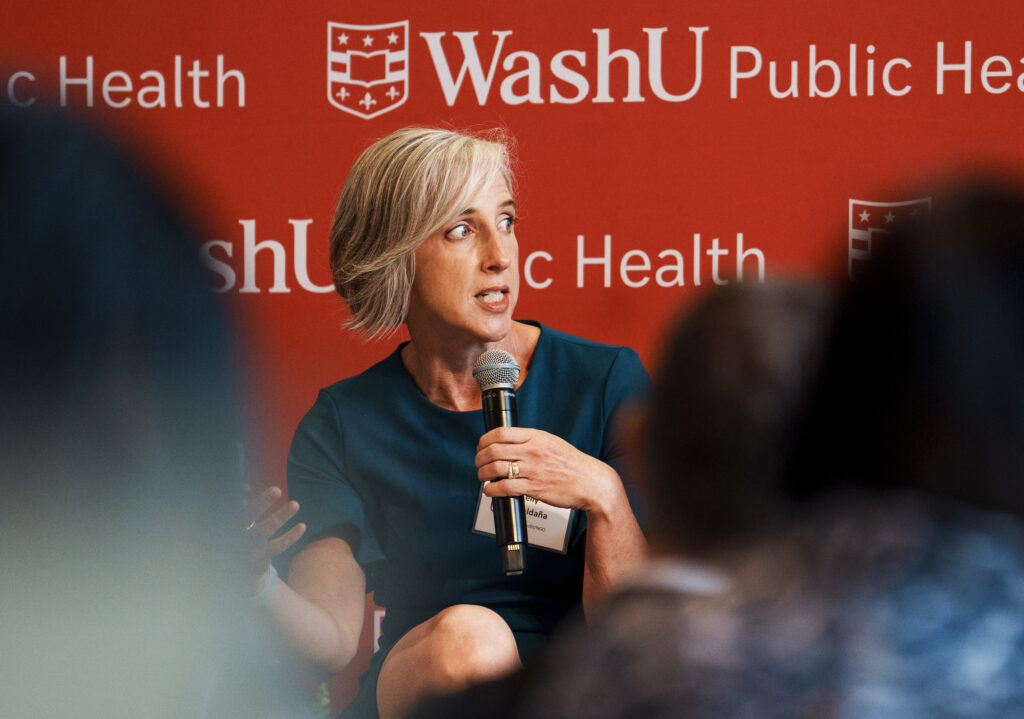
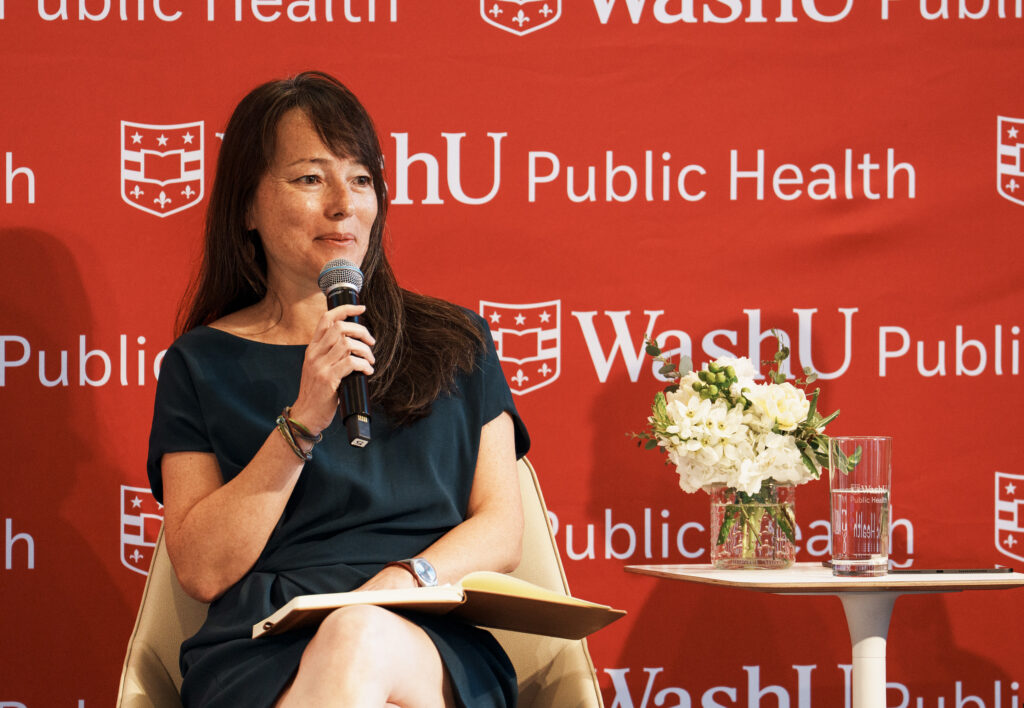
“WHO is inherently an organization made up of governments and member states, but the global health ecosystem is multisectoral: It’s public, it’s private, it’s academia,” said Kelly Saldaña, executive director of the ISPOR Institute for Healthcare Transformation in New Jersey. “(The WHO) needs to open up their aperture a little bit in having conversations and understanding the perspectives of a much wider stakeholder group, and then recognizing that in those multistakeholder conversations, outside of their norm-setting role, they are on equal footing with other actors who are trying to figure out the best intervention or the best approach to doing things and to show up a little bit more as a collaborator and not the main decider in the room.”
Panelist Proscovia Nabunya, MSW, PhD, an associate professor and director of the International Center for Child Health and Development at the Brown School, and a secondary faculty member at WashU School of Public Health, noted the rising importance of regional health collaborations such as the Africa CDC.
“For WHO to reinvent itself, one of the key things they should do is to really empower and integrate those regional bodies,” Nabunya said. “In Africa, we have the Africa CDC, which is at the core of advancing public health in Africa. I think that WHO needs to look at these regional bodies as complementary to what they’re doing, as opposed to competitors.”
Rodrigo Reis, MS, PhD, a professor at WashU School of Public Health and the director of the People, Health, and Place Unit at the university’s St. Louis Prevention Research Center, added that it was time to think beyond established global institutions such as the WHO.
“I question whether WHO is the right architecture for us to develop our global health system anymore,” Reis said. “We have ways of enhancing the global health ecosystem through institutions, cities, global governments, bilateral agreements, and people are doing that.
“I think first you need to reimagine how public health is happening locally, largely focusing on the social determinants of health,” he continued. “The World Bank and the economic system have been funding infrastructure that fundamentally changes social determinants of health. Cities can actually act more on the social determinants of health than national governments. … We have to reimagine how global health happens locally through those infrastructural changes that cities can actually work on. I think we need to integrate those — I’ll call them interventions — but housing, transportation, zoning, water systems as part of the health ecosystem in the cities.”
Gbenga Ogedegbe, MD, MPH, director of the Institute for Excellence in Health Equity at NYU Langone Health, and the Dr. Adolph & Margaret Berger Professor of Medicine and Population Health at NYU Grossman School of Medicine, gave the second keynote address. He stressed the importance of strengthening institutional capacity in Africa, of building a global health system based on partnership rather than aid, and of taking action.
“We talk about problems all the time. I see this in health equity research. I tell my colleagues, ‘I don’t want to hear more about health disparities. We know they’re there; they’ve been there for a hundred years,’” Ogedegbe said. “The question is: What are the drivers? Now we know what the drivers are; the question is: What are the interventions? Now that we know some solutions, the question really becomes: What are the structural policies that can help us at least mitigate that?”
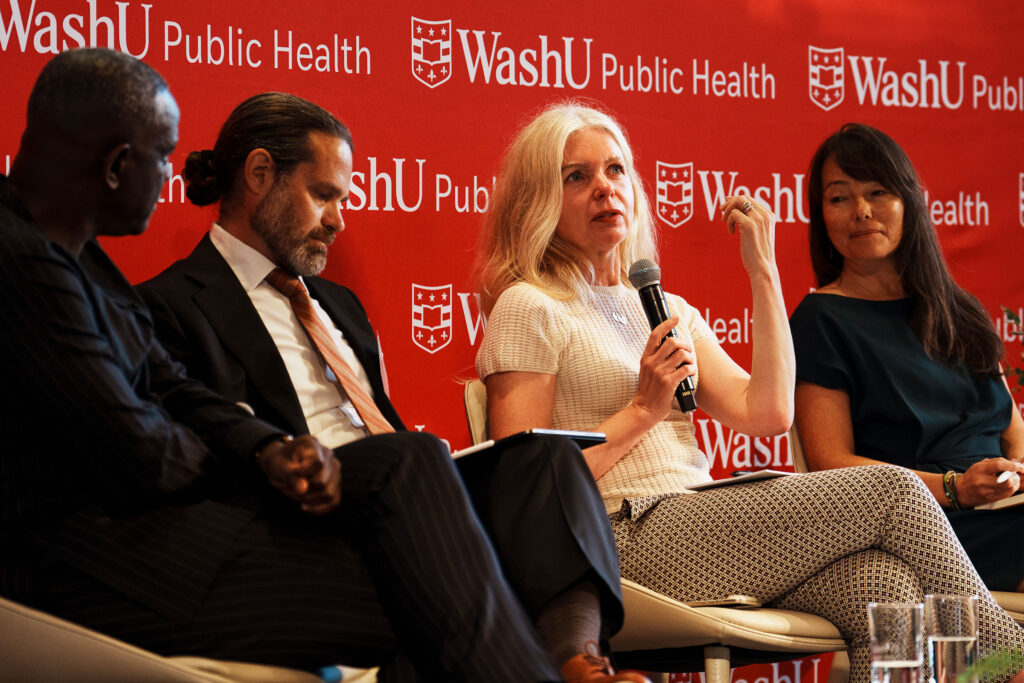
The second panel discussion centered on how to translate global insights to local contexts. The conversation touched on strengthening health systems, understanding cultural context and finding shared opportunities across countries.
Panelist Diego Abente, MA, MBA, the president and CEO of Casa de Salud, a nonprofit that provides access to health care to people who are underinsured in St. Louis, pointed out similarities between the largely immigrant population he serves and other groups around the world that face high barriers to care.
“We’re under-resourced. We’ re on the margins of being able to access care with very little hope in accessing that care,” Abente said. “The people who we serve primarily are newly arrived immigrants who, in addition to the (well-known) barriers to care — like transportation and complexity and cost — also layer on top of that, barriers to access because of their culture and their preferred language, which is not English. … And so it’s important to keep that in mind as we’re thinking about transferring the global perspective and experience into the local context, because there are so many similarities in terms of how we sometimes design interventions in a laboratory and expect them to work in reality without ever conferring with that reality.”
An attendee asked how academic research needs to change to more effectively advance global health.
“Global health research going forward needs to start by asking: Where do we have shared questions? Where do we have shared challenges? And maybe: Where are shared solutions popping up that we could now explore?” said Margaret E. Kruk, MD, MPH, the Distinguished Professor of Health Systems and Medicine at WashU Medicine, a secondary faculty member at WashU School of Public Health, and the director of the Quality Evidence for Health System Transformation (QuEST) Centers and Network. “Because solutions pop up, whether we do research on them or not. I’m quite convinced of that. The world just goes by and doesn’t wait for us to have an R01 to study that thing. But where (academics can contribute is by) preventing the recycling of failure. There are lots of ideas that don’t actually improve (health). I think we can lean into strategic partnerships with other countries where there is equal benefit to learning and an idea is developing — then we could test across settings.”
Panelist Kim Thuy Seelinger, JD, a professor of practice and director of the Center for Human Rights, Gender and Migration at WashU School of Public Health, added that researchers should consider how their findings will be disseminated when they are first planning their studies.
“I think we have to diversify our outputs, too,” she said. “Most of the people we work with — the folks who are implementing, the folks who are in the community where the challenges of this implementation are — they’re never going to read the articles. It has to be in our grants. There has to be time and money dedicated to fully reporting back that goes beyond the period of the activity of the grant.
“I think ongoing relationships, ongoing sharing of the learning and getting critiques from the community is super important, too.”
Watch a recording of the full symposium here.
Tamara Schneider, MPH, PhD, is the assistant director of communications and senior science writer at Bursky Public Health. She holds a bachelor’s degree in molecular biophysics & biochemistry and in sociology from Yale University, a master’s in public health from the University of California, Berkeley, and a PhD in biomedical science from the University of California, San Diego. She joined WashU as a science writer in 2016.
The Andrew M. and Jane M. Bursky School of Public Health at Washington University in St. Louis welcomes 19 new primary and joint faculty members for the 2026-2027 school year.
September 1, 2026
Convening addresses the question of how to build listening systems to understand community priorities around health
August 28, 2026
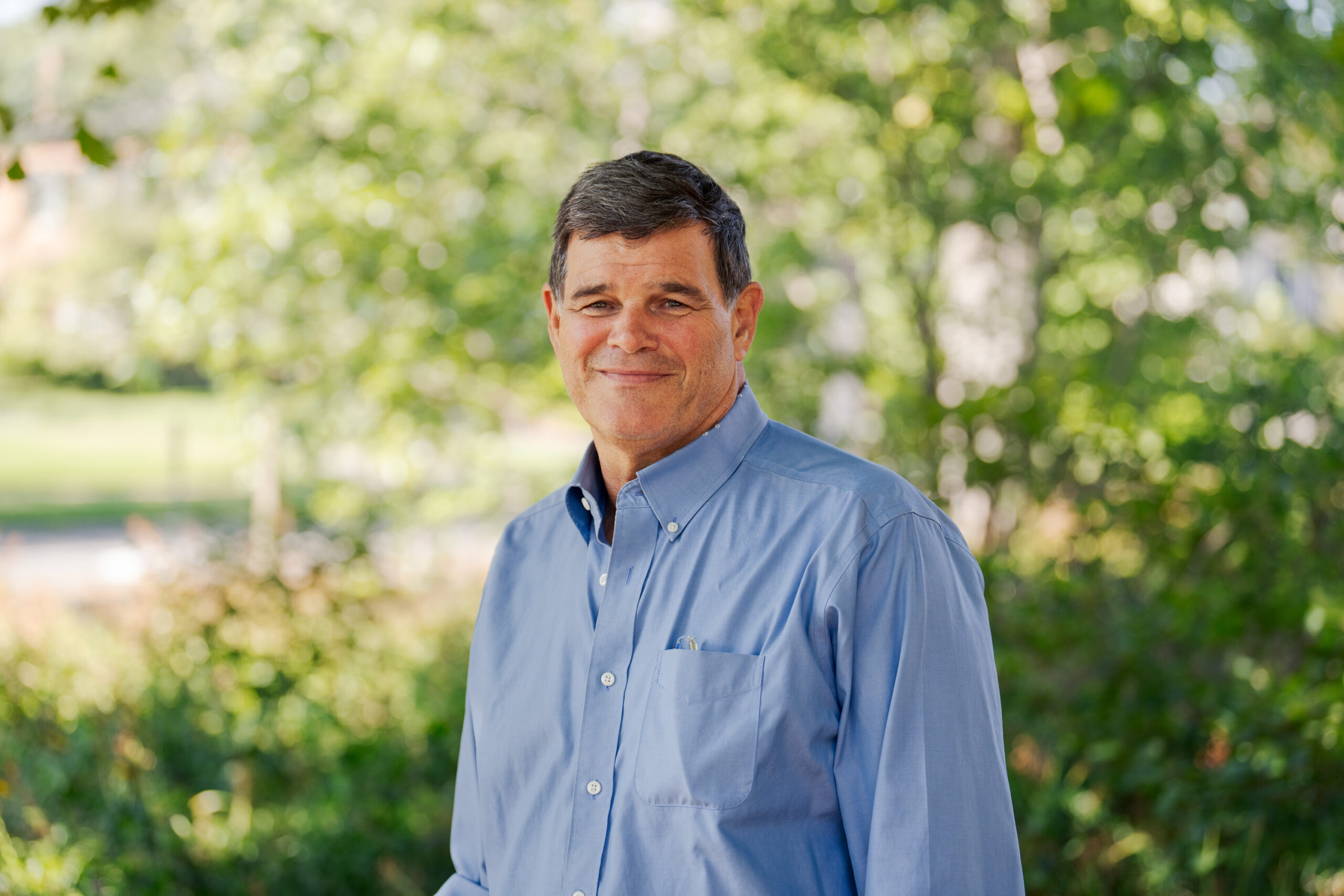
Archaeologist TR Kidder brings an anthropological perspective to studying health, culture and the environment
August 28, 2026