October 9, 2026
Bridging public health and primary care for a healthier population
WashU convening to explore building primary care-based research networks to improve healthcare, public health



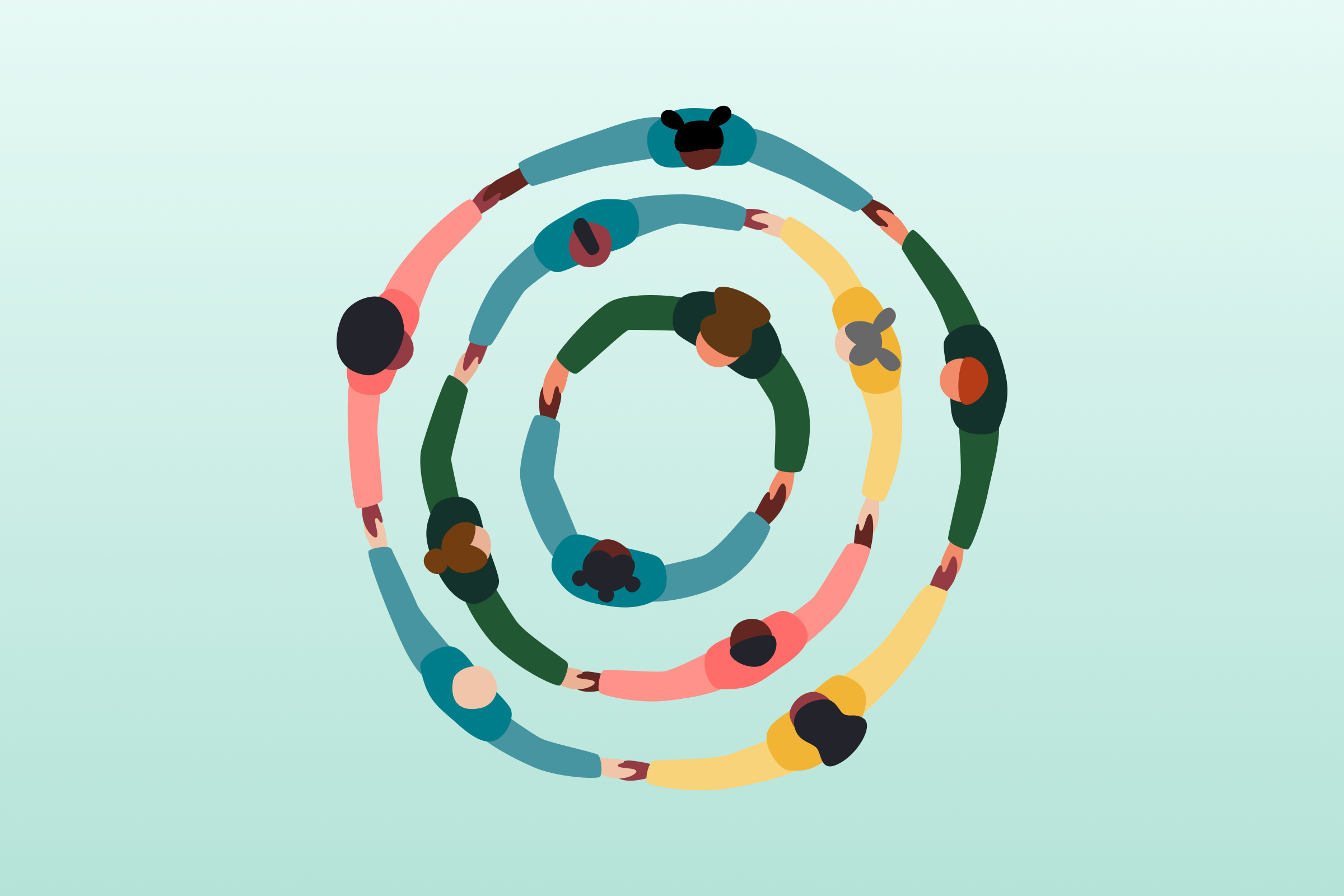
Convening addresses the question of how to build listening systems to understand community priorities around health
Imagine a world in which public health priorities were set by the community.
“In St. Louis, year after year, people tell us the top four public health issues are gun violence, mental health, substance use, and healthcare access,” said Matt Kreuter, MPH, PhD, the Kahn Family Professor of Public Health at the Andrew M. and Jane M. Bursky School of Public Health at Washington University in St. Louis. Kreuter leads a community listening project called iHeard that surveys St. Louis residents weekly to find out what they know, believe and value about health.
“None of those are in the top 10 causes of morbidity and mortality in the U.S., but those are what St. Louisans want to see addressed," Kreuter said. "What if we took that seriously? What if we built a public-driven public health where what guides action is not just what epidemiology tells us is a problem but what the community feels is most important?”
Solving the problems people care about — rather than the ones experts think people ought to care about — could be the key to winning back the public trust lost in recent years. But if the goal is to create a world where public health decision-making is driven by community perspectives and priorities, then public health officials need a way to find out what people want. In other words, they need to learn how to listen.
On September 23, thought leaders from academia, government and the private sector will gather at WashU Bursky Public Health to reimagine how public health leaders listen to their communities. Called “Leading with Listening: Modernizing Public Health Communication in a New Information Age,” this half-day event will explore how to listen better in a time of eroding trust, emerging technologies and increasing demands for community input into public health decision-making.
The event will take place from 9 a.m. to 12:30 p.m. CT in the Clark-Fox Forum in Hillman Hall on WashU’s Danforth Campus. Programming will run until 12:30 p.m., and all attendees and panelists are invited to continue the conversation at a networking lunch from 12:30 to 1:30 p.m. The event is free and open to the public, in person or via Zoom. Registration is required.
The event is a convening of WashU Bursky Public Health’s Health Communication Collaborative, which is co-directed by Kreuter and Penina Acayo Laker, MFA, an associate professor at WashU’s Sam Fox School of Design & Visual Arts, and managed by Alexis Marsh, MSW. The Health Communication Collaborative, an initiative of WashU Bursky Public Health’s Office of Innovation, seeks to promote population health and well-being by leading with listening to deeply understand what the public knows, believes and values about health.
The event will open with remarks by Sandro Galea, MD, DrPH, the Margaret C. Ryan Dean of the Bursky School of Public Health, the Eugene S. and Constance Kahn Distinguished Professor in Public Health and vice provost for interdisciplinary initiatives at Washington University.
The opening remarks will be followed by a keynote address by Claire Wardle, PhD, MA, an associate professor in the Department of Communication at Cornell University who studies misinformation, information ecosystems and the ways people seek, share and make sense of information. Wardle’s talk is titled, “Rethinking the Playbook for Health Communication: What Role for Community Listening?”
After the address, Wardle will join a panel with Stefanie Friedhoff, the director of the Information Futures Lab and a professor of the practice at Brown University School of Public Health to discuss how public health leaders can adapt to a new media environment.
During the convening, attendees will learn how other fields have built comprehensive listening systems, and consider what public health can learn from them.
“We brought in leaders from listening systems outside of public health because we can learn from everybody,” Marsh said. “Sometimes you have to look outside of what you do every day to find inspiration and answers.”
Dale Sanders, the chair of Dendritic Health AI, will speak on gathering data for decision-making in the intelligence, space, defense and healthcare industries. Brian Montgomery, a meteorologist and emergency response specialist at the National Weather Service, will discuss its Operation Center and two-way communication system that bridges real-time data collection and public-facing communication products.
A second panel discussion will follow the presentations. Jen Layden, MD, PhD, the associate dean for practice and a professor at WashU Burky Public Health, will join Sanders and Montgomery to discuss, “Borrowing the Playbook: What Health Communication Can Learn from Other Listening Systems.” The goal of the convening is not just to learn more about public health listening, but to start the process of building an effective listening infrastructure.
“In public health, the word of the day is ‘trust.’ Everyone is talking about the problem of trust. People don’t trust that public health authorities are listening to them,” Laker said. “I think it’s time to move away from studying the problem and start thinking about solutions. This convening will shake up the landscape a little bit, take what is already being done and challenge people to think big. We can’t just tell people, ‘It's important to listen.’ We have to think about infrastructure, systems, structures. If it is done well, this could be the beginning of something big.”
October 9, 2026
WashU convening to explore building primary care-based research networks to improve healthcare, public health
WashU's The Source
October 9, 2026
Bursky Public Health researchers examine how to respond to changes driven by digital technology and generative AI.

October 9, 2026
Public attitudes may inform policies to address substance use, homelessness, mental illness