October 9, 2026
Bridging public health and primary care for a healthier population
WashU convening to explore building primary care-based research networks to improve healthcare, public health


Archaeologist TR Kidder brings an anthropological perspective to studying health, culture and the environment
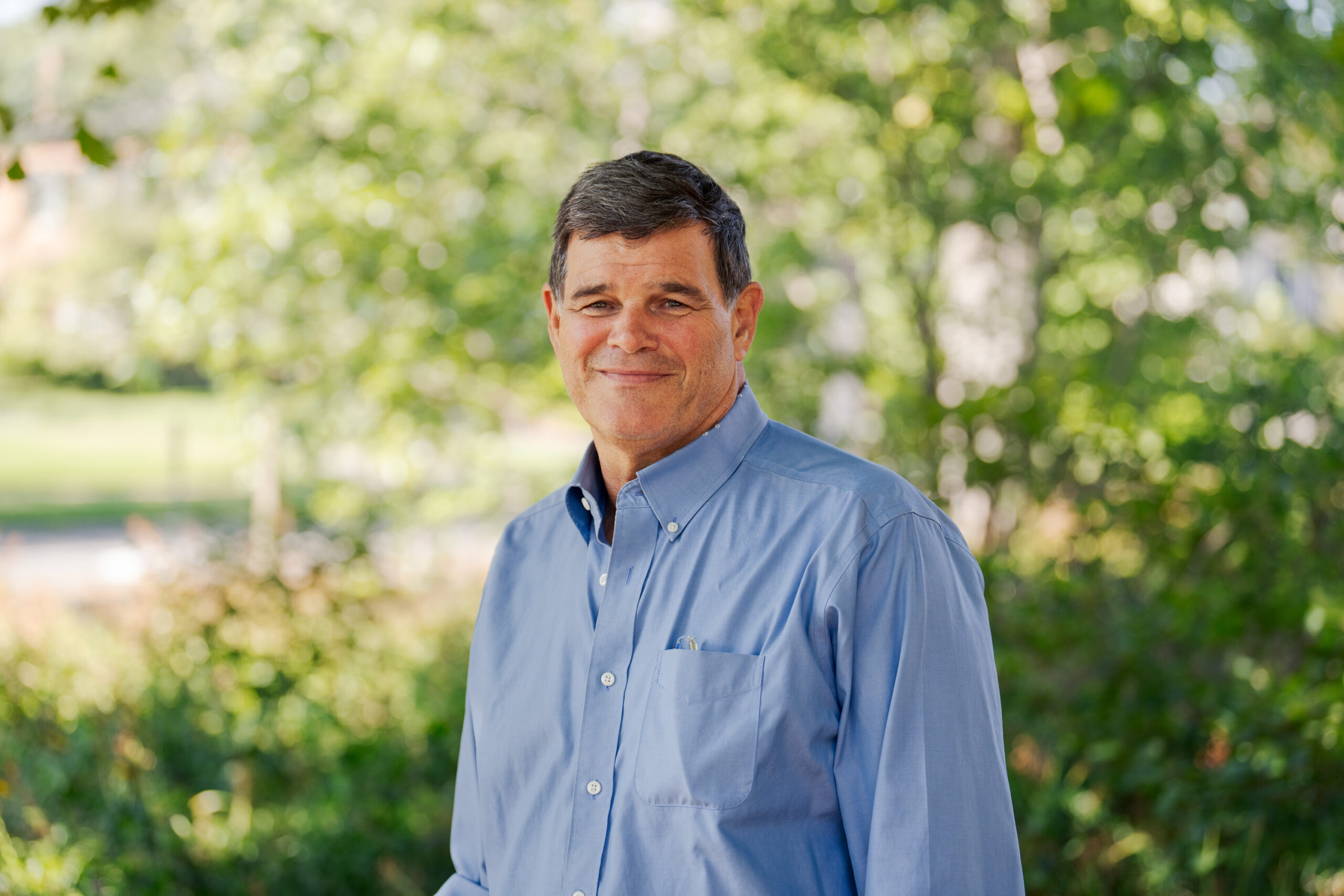
For Tristram R. Kidder, MA, PhD — the Edward S. and Tedi Macias Professor of Anthropology at Arts & Sciences and a member of the secondary faculty at the Andrew M. and Jane M. Bursky School of Public Health at Washington University in St. Louis — becoming an archaeologist was both a family tradition and a personal calling.
"I'm a third-generation academic archaeologist. My grandfather, my grandmother, my uncle and my great-uncle were all professional archaeologists, so in one sense I'm following the family business," he said. "The cool thing about archaeology is I get to play in the dirt, and they pay me for it. I'm living a childhood dream. Everybody wants to be an archaeologist. Very few of us actually get to do it."
Kidder was trained in archaeology, a subdiscipline of anthropology. While much of his work today examines ancient societies and how they changed over time in response to environmental challenges, this grounding in social and cultural anthropology continues to shape both his research and his work co-directing the undergraduate Public Health & Society program.
“While modern medicine is technologically impressive, it operates within cultural systems, known as social determinants of health,” Kidder said. “Anthropologists have long understood that health is affected by economic, political, social and cultural factors.”
Public Health & Society is based in Arts & Sciences and co-directed and co-taught by Bursky Public Health faculty. Launched as a minor in fall 2024 and as a major in fall 2025, the program has proven popular among WashU undergraduates. The first 11 students graduated this past spring, and more than 80 current students have declared a Public Health & Society major or minor.
Here, Kidder discusses the connections between archaeology and public health, what ancient societies can teach us about today's health challenges, and why curiosity has remained the driving force behind his career.
"One of the biggest differences is structural. Most undergraduate public health programs are housed within schools of public health. Ours is deliberately housed in the College of Arts & Sciences because we believe that's the best foundation for understanding public health. If public health is really about health for everyone, students need to understand that health is embedded in culture, society, and many different disciplines. Another thing that makes us different is our co-teaching model. Every core course is taught by two faculty members, one from public health and one from Arts & Sciences, whether that's anthropology, English or biology. Very rarely is there only one solution to a complicated problem. Students see two scholars approaching the same issue from different perspectives. That models exactly the kind of multidisciplinary thinking they'll need throughout their careers. We live in a world of incredible complexity and helping students learn to think across disciplines is one of the most valuable things we can teach.”
"I'm interested in understanding how people adapt when environments change, how societies respond or sometimes fail to respond and how humans themselves alter the physical world around them. Over the years, I've become increasingly interested in the relationship between the physical environment and the ways people think about the world. Belief systems, ideology and culture all influence how we interact with one another and how we respond when change happens.”
“My PhD is in anthropology, not archaeology, which is a subfield. I was fortunate to be trained in social and cultural anthropology, which studies living societies and influences my view of the past. Anthropology has expanded into medical anthropology, studying the link between medicine, health, and culture.
“As chair of a large department, I focused on preparing students, many of whom were aspiring to become physicians. We want them to see medicine not just as technology but also as bedside manner and cultural awareness. Many students come from privilege, and we aim to help them recognize their privilege and responsibility to serve patients by understanding their perspective.”
“I've never dug up tombs or found gold, but my most remarkable discoveries connect me to real people. In northeast Louisiana, I found a 3,200-year-old artifact with visible fingerprints, an extraordinary link across time. Elsewhere in China, we excavated a flood-buried farm site, uncovering footprints, including one that showed someone running frantically, with clear toe separations. These finds highlight the personal human stories behind archaeology, blending science with storytelling, which I love.”
“If we learn from the past, a key lesson is that public health really matters. Ancient societies reveal — sometimes directly, sometimes indirectly — what happens with inadequate or nonexistent public health. A simple example is lifespan. Public health efforts have transformed human life. Learning to wash our hands might be one of the greatest public health interventions.
“Archaeological records show the huge gap between average lifespans today and those of ancient societies. My mother was born in 1928, and her sister died of whooping cough. That's a public health story. You don't need archaeology to understand that, but archaeology shows how public health has been transformative.
“Health also shapes culture. In ancient China, close contact with domestic animals and contaminated water led to disease spread. People adapted, and even 2,000 to 4,000 years ago, dense settlements had sanitation facilities. These systems thrived with cooperative societies and suffered when disrupted by war, economic hardship or political stupidity. The worst impacts often fall on the least among us.
“Even today, water is often boiled to prevent diseases like cholera and typhoid. Before germ theory, societies responded to disease with practices visible in material culture, settlement patterns, and sanitation.”
"Archaeology gives you perspective. One of the greatest tools archaeologists have is time. Looking over millions of years of history, one thing is clear: Human resilience is extraordinary. Statistically speaking, most people today live better lives than at any other point in history. When you compare our lives with those of our parents and grandparents, you realize how much has changed. That perspective reminds me of humanity's resilience and its remarkable accomplishments.
“It also makes the rejection of science and evidence-based medicine quite remarkable. As an anthropologist, though, I remind myself that people don't reject science simply because they're unintelligent. Their decisions are rooted in belief systems, social networks, and the communities they belong to. Understanding those systems is part of understanding human behavior."
"Setting aside my family, I think the thing I'm proudest of is that I've been a good teacher. What I really get the most out of is the human component. I love archaeology. I love research. But what matters most to me is knowing that I've helped people in small ways. Students have told me that I've influenced their careers or the way they think. It's not that I've dramatically changed someone's life. It's that every day I've had an opportunity to help someone become a better writer, a better scholar, or simply see the world from a different perspective. That's what teaching is. Some days it's frustrating. Some days you wonder why students do the things they do. Then I remind myself that my teachers probably wondered the same thing about me. I can still name the teachers, going back to second grade, who changed my life. And I think one of the privileges of my career has been having the chance to pay that forward."
Judith Mwobobia, MPH, is the inaugural Writing Fellow for the Bursky School of Public Health Office of Communications. Mwobobia is a PhD student in public health sciences and previously was a journalist in Kenya. She writes profiles and helps cover the news of the school, with a particular focus on student- and education-related stories.
October 9, 2026
WashU convening to explore building primary care-based research networks to improve healthcare, public health
WashU's The Source
October 9, 2026
Bursky Public Health researchers examine how to respond to changes driven by digital technology and generative AI.
October 9, 2026
Public attitudes may inform policies to address substance use, homelessness, mental illness