October 22, 2026
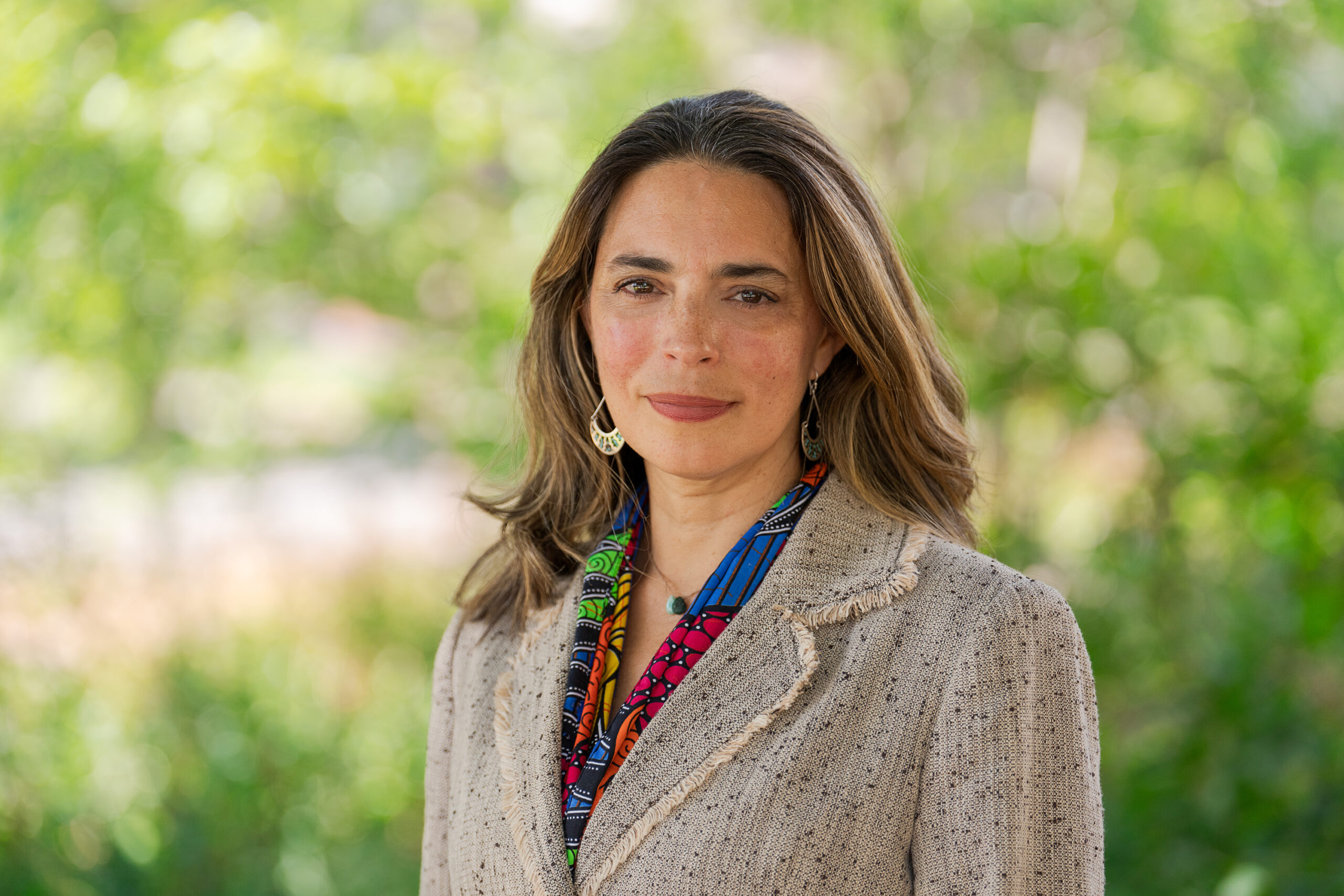
A conversation with nutrition scientist Uriyoán Colón-Ramos
Colón-Ramos examines how policy and food environments interact to influence what people eat and how to effect lasting change



Greatest benefit seen in Black and Hispanic men, people from marginalized families
Preschool has lasting benefits. Studies have shown that preschool grads are better prepared for kindergarten, so they perform better academically with fewer behavioral problems, go on to finish more years of school and earn more money as adults. Now, new research indicates another benefit to early-childhood education: better brain function in middle age.
A study by researchers at Washington University’s Andrew M. and Jane M. Bursky School of Public Health and the University of California, San Francisco (UCSF) shows that people who attended preschool have better cognitive function at age 50 than those who did not. The relationship seemed strongest for Black and Hispanic men, and for people who grew up in families that were socioeconomically marginalized due to limited financial resources, less education or other factors. The findings are published in the journal PLoS ONE.
“Early-childhood education may have long-term benefits on cognitive health,” said senior author Anusha Vable, MPH, ScD, an associate professor at Bursky School of Public Health. “We suspect this is because children who attend preschool start kindergarten more socially, emotionally and behaviorally ready to learn. That sets them up for success in elementary school, and they keep reaping the benefits for the rest of their lives. However, partially due to the cost and limited availability, there are huge inequities in who can access early-childhood education in the U.S., and it may be one factor contributing to the inequities we see in cognitive health decades later.”
Cognitive issues — difficulty concentrating, remembering and making sound decisions — are some of the most common health problems in the U.S. An estimated one-third of people over 65 are living with mild cognitive impairment or the advanced form, dementia. While diagnosable cognitive impairments are uncommon in middle-aged adults, early signs of differences in cognitive health can be detected with specialized assessment tools and can help predict future problems.
The burden of poor cognitive health falls most heavily on marginalized communities. Members of Black and Hispanic communities, and people with fewer years of schooling or lower income, are at significantly higher risk of developing cognitive impairment and dementia as they age.
Given the known benefits of formal K-12 education for bolstering cognitive health and reducing dementia risk, Vable and colleagues — led by first author Whitney Wells, PhD, then a graduate student under Vable’s supervision at UCSF — investigated whether preschool attendance was also associated with better cognitive health later in life.
The researchers analyzed publicly available data from the National Longitudinal Survey of Youth, 1979 cohort. The survey, which is sponsored by the U.S. Department of Labor, is a national sample of people born from 1957 to 1964. Participants were first surveyed in 1979 and have continued to be part of the survey. For this study, the researchers analyzed data from 7,129 participants.
In the baseline survey, participants provided demographic and socioeconomic information such as race and ethnicity, and the parents’ education level and income. In 1994, when participants were in their early to mid 30s, they were asked to recall whether they had attended preschool and, if so, whether the school was part of a Head Start program. Head Start is a national, federally funded program launched in 1965 as part of President Lyndon B. Johnson’s War on Poverty, to provide high-quality early-childhood education to families that could not otherwise afford it.
At about age 50, participants were given a telephone-based, validated cognitive assessment that included memory and thinking tasks such as recalling a list of words after a delay and counting backward by sevens.
The researchers found that private preschool, but not Head Start, was associated with better cognitive function in midlife compared with no early-childhood education. The lack of demonstrated benefits for Head Start preschool education may have been due to other social determinants of health that overwhelmed the effect of the Head Start program, the researchers said.
“The comparison group was kids who didn’t attend private preschool or Head Start, and those kids are very different from the kids who went to Head Start — they’re from families with more social and economic resources; they’re more likely to be white — so it’s something of an apples-to-oranges comparison,” Vable said. “When you compare kids who went to Head Start with those who were likely to be eligible for Head Start but didn’t go, that’s when you see some evidence of long-term benefits.”
To determine which families were likely to have been eligible for Head Start, the researchers constructed a socioeconomic marginalization index based on parental education and occupation, household income and the presence of a father in the child’s life. Among likely Head Start families, both private preschool and Head Start were linked to greater cognitive health at age 50. The strength of the effect varied, with Black and Hispanic men and people from more marginalized families reaping the greatest benefit.
“Head Start seems to disproportionately help those who have experienced structural marginalization,” Vable said. “Maintaining cognitive health is really important as we age, and what we’re seeing here is that differences may be starting very early in life. I think we should start thinking about how educational interventions in the 0 to 5 age range could have impacts for cognitive health equity decades later.”
Wells W, Hebert J, Eng CW, Duarte CdP, Vable AM. Is early-childhood education associated with better midlife cognition, especially for children facing socioeconomic marginalization? PLoS One. April 15, 2026. DOI: 10.1371/journal.pone.0343880
This study was supported by the National Institute on Aging of the National Institutes of Health (NIH), grant numbers R01AG069092 and T32AG049663. The content is solely the responsibility of the authors and does not necessarily represent the official views of the NIH.
Tamara Schneider, MPH, PhD, is the assistant director of communications and senior science writer at Bursky Public Health. She holds a bachelor’s degree in molecular biophysics & biochemistry and in sociology from Yale University, a master’s in public health from the University of California, Berkeley, and a PhD in biomedical science from the University of California, San Diego. She joined WashU as a science writer in 2016.
October 22, 2026
Colón-Ramos examines how policy and food environments interact to influence what people eat and how to effect lasting change
October 22, 2026
A live podcast taping at WashU will challenge experts with differing perspectives to navigate a hypothetical pandemic as it unfolds

October 16, 2026
Projects explore the connections among food, agriculture, environmental sustainability and human health