From listening to farmers in Benin to training community researchers in Papua New Guinea to connecting planetary health scholars at WashU, Mandeville works to create a healthy planet for populations
Long before planetary health became a recognized field, Jen Mandeville, MS, was learning to see people and the natural world as inseparable. Her mother taught her to consider how much of the planet’s resources she used and what she gave back. Her father took her outdoors and encouraged her to wonder about what she saw. Later, three years as a Peace Corps volunteer in Benin taught her that meaningful work begins with sitting, listening, and building trust before springing into action.
“I was an environmental volunteer working in agroforestry in the northernmost part of Benin, near the Burkina Faso border in the Sahel. The landscape was fascinating, but the most lasting lesson was the importance of sitting with a community and listening,” she explained.
An ecologist by training, Mandeville began her research career studying how climate change affects birds. She retraced historical survey routes in West Africa and Papua New Guinea, comparing earlier records with the species found there centuries later. As part of the project, she trained local research assistants in Papua New Guinea to conduct surveys, manage data, and contribute to the study as scientists and co-authors, a task she found rewarding.
“I am proud that I helped transfer those skills and, ultimately, worked myself out of a job. That is probably the shining moment of my career,” she said with a laugh.
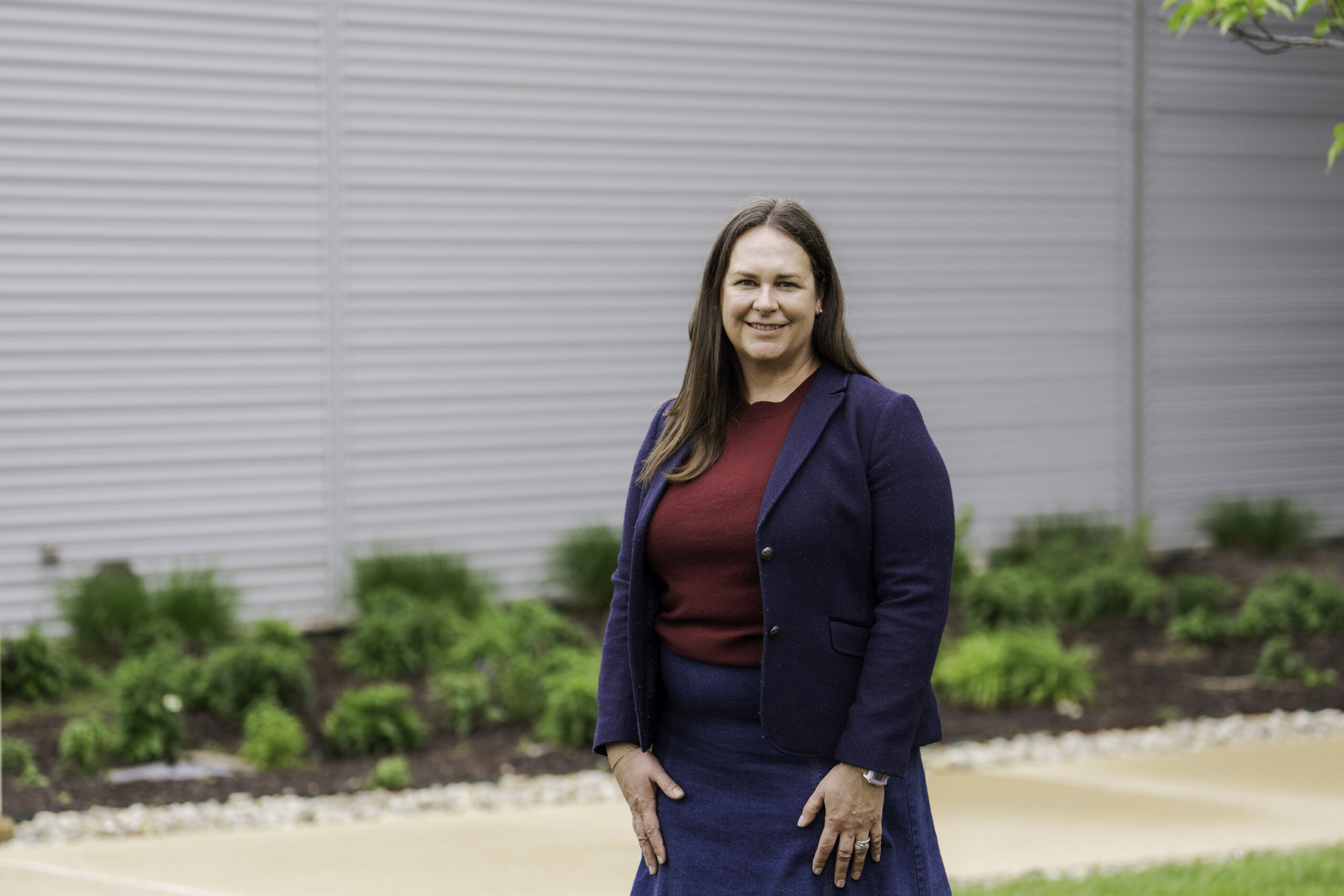
Today, Mandeville builds teams to improve human health and conserve the planet as part of the Office of Innovation team at the Andrew M. and Jane M. Bursky School of Public Health at Washington University in St. Louis. In this role, she focuses on listening and community building across diverse groups, including academia, government, nonprofits, and local partners, making connections among people and organizations with various expertise, goals and strengths so they can work together for a healthier world. Here, she shares about her work, goals, and lessons learned.
Q: What path brought you to WashU?
“I am an ecologist with a master’s in biology from American University, specializing in ecology and evolutionary biology. My early research focused on the effects of climate change on birds, with extensive work in West Africa through the Peace Corps, as well as fieldwork in Papua New Guinea and Australia. I held positions at West Virginia University and others. When my husband took a job at WashU, we moved to St. Louis. I first worked at an Illinois research center studying river systems, then joined WashU’s Living Earth Collaborative, a partnership with the Saint Louis Zoo and Missouri Botanical Garden focused on biodiversity. One pillar of the collaborative explores human health and biodiversity, prompting me to consider how researchers and institutions can help support a healthy planet and healthy people. After about a year with the collaborative, I joined Bursky Public Health in October 2025.”
Q: How do you describe the work you do?
“I work to energize research projects and activities around planetary health. At its core, planetary health asks how we can address two challenges at once: improving population health and human lives while also creating a healthier planet to live on.
“A great deal of my work is community building. I invest in conversations and listen to researchers, community partners, nongovernmental organizations, and government groups. I want to understand the problems they are interested in and their ideas for solutions that benefit both people and the planet. Then I try to build teams that are additive, teams in which new ideas and perspectives emerge, while remaining action-oriented and moving toward solutions.
“Being able to engage with the Ivy Plus Sustainability Collaborative summit at WashU was a good example. It brought together people from many institutions and across many disciplines. Some were researchers, while others worked in campus facilities and focused on reducing waste or energy use. Each person brought technical knowledge that may not appear in a journal article or conference proceeding. Truly multisector teams are essential if we are going to solve difficult problems.”
Q: What is currently keeping you busy?
“Several new funding opportunities are keeping me busy, which is invigorating in the current research landscape. I am bringing together teams to pursue those opportunities and helping people recognize that WashU Bursky Public Health is investing its energy in planetary health.
“Researchers and offices across WashU have long worked at the intersection of the environment and human health and the relationship between people and the planet. What is new is the Bursky School of Public Health’s identification of planetary health as a broad area of emphasis. My role includes raising awareness of the opportunity and inviting them to take it.
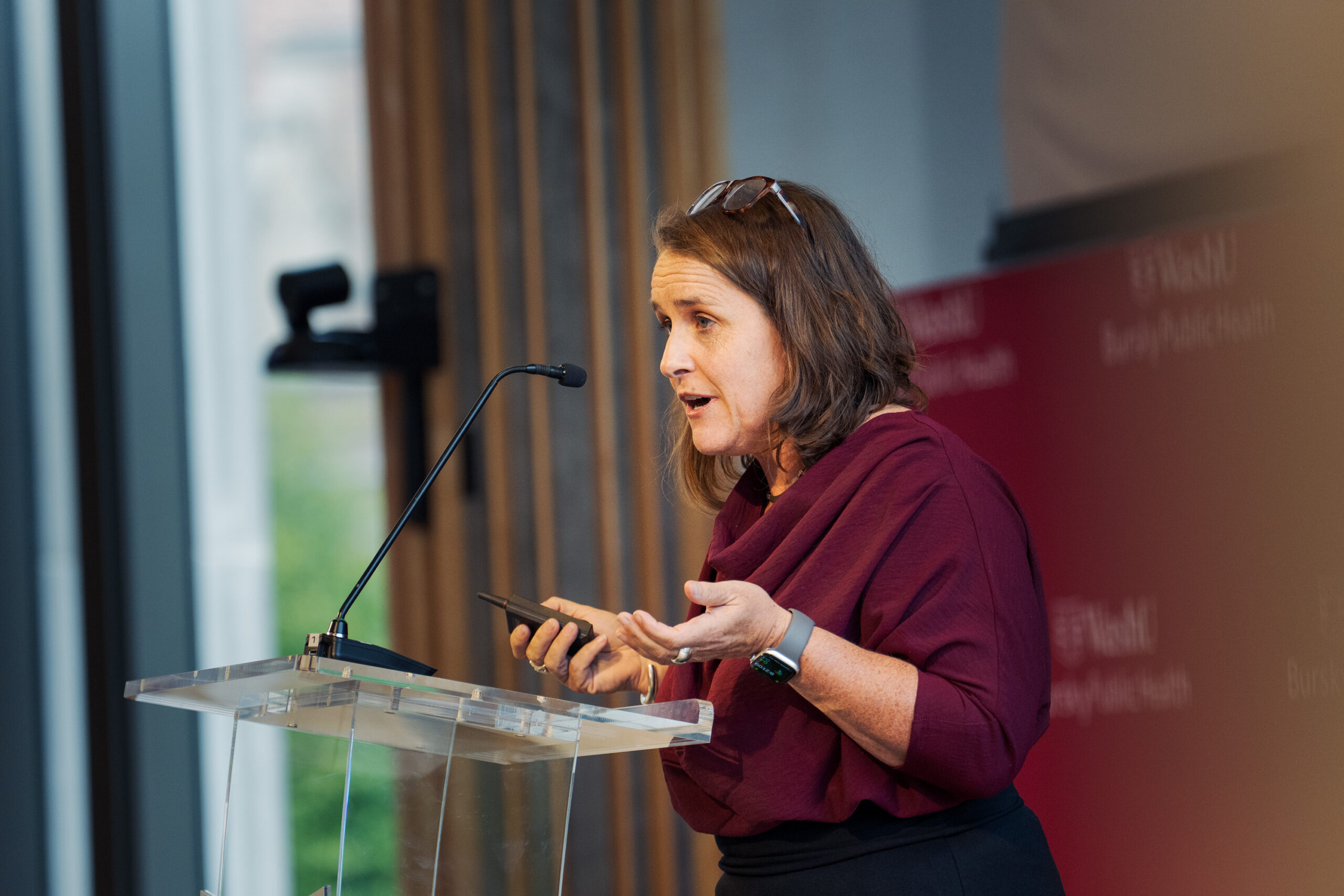
“This fall, I am helping to build teams focused on environmental contaminants, urban food forests, and climate change and health. I’m also welcoming new faculty and learning how their work connects to planetary health. I help connect them with researchers or centers at WashU to advance their work. Additionally, I bring Bursky’s planetary health work to opportunities outside campus, like the Conference on Health and Biodiversity, which brings together broad interdisciplinary and multisectoral experts to advance planetary health solutions to the triple planetary crisis of climate change, biodiversity loss, and pollution.”
Q: What lessons did you carry from your Peace Corps experience?
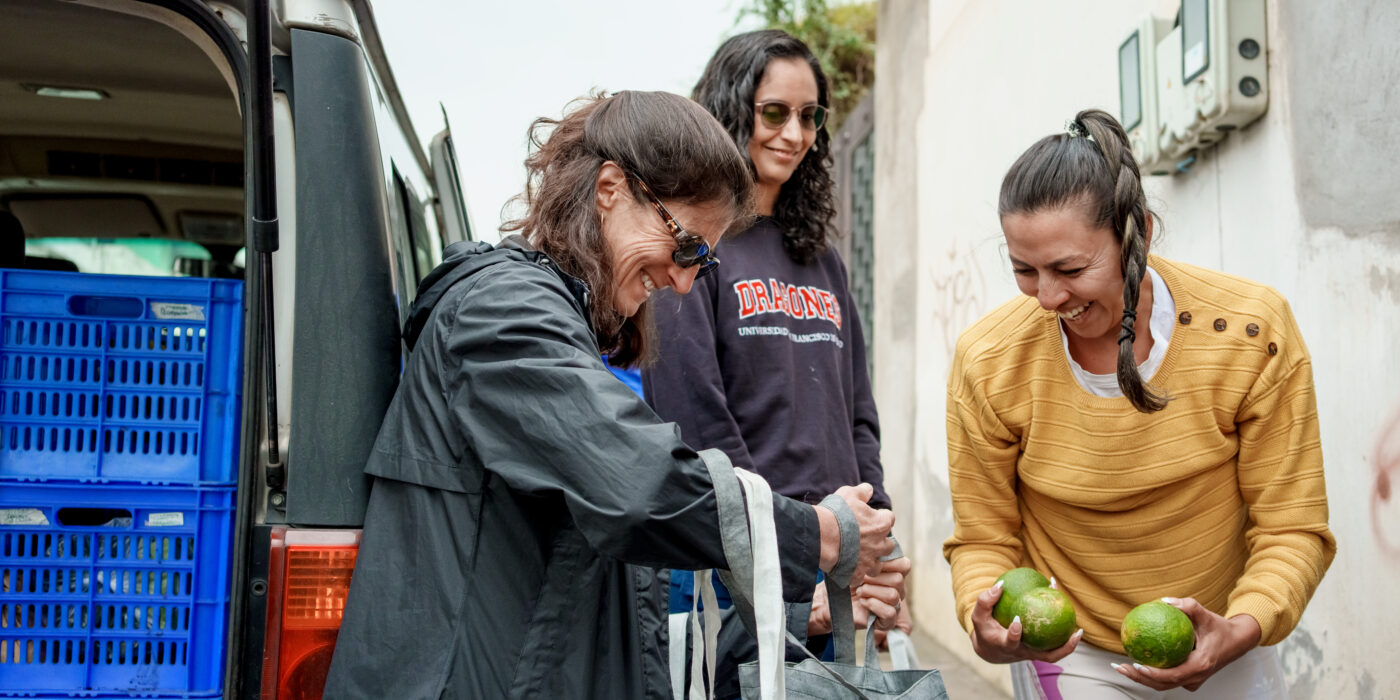
“I served three years in Benin, a small West African country between Togo and Nigeria. After my undergraduate degree, I joined the Peace Corps before graduate school. I needed a break and wanted real-world experience. Eager to make an impact, I quickly realized that starting with listening, building community, and hearing from people was more powerful and sustainable than launching into action. I also needed to learn the local language, Bariba, in addition to French, the national language. Near the border, many also spoke the languages of Togo and Burkina Faso. I still communicate with villagers, mostly in French now. Older residents described environmental changes, such as a drying environment and harder-to-grow crops, showing how people and their environment are connected.”
Q: What do you see as the future of planetary health research at WashU?
“I see the future of planetary health research at WashU as increasingly interdisciplinary, collaborative, and focused on solutions. We have an opportunity to leverage the university’s extraordinary strengths across disciplines to tackle urgent challenges from community resilience and diseases on a changing planet to environmental exposures, and climate change impacts on health. The greatest opportunity lies at the intersections: connecting researchers, communities, and external partners in ways that generate new questions, new collaborations, and ultimately new solutions that improve health.
My hope is to help make WashU a destination for planetary health research and solutions across the Midwest building on the expertise and infrastructure already here while creating new connections and opportunities that extend beyond the university. At the same time, we need to remain nimble, allowing our research agenda to evolve as planetary health challenges and opportunities change."
Q: What do you enjoy outside of work?
“I am a beach person. I love the coast and the feeling of looking out across the ocean, seeing what feels like an endless horizon. Mountains are beautiful, and I enjoyed living and hiking in West Virginia, but the mountains there made everything feel closed in. That experience helped me realize how much I love a long, open view.
“I also love to read and will take almost any opportunity to be outside. I ride my bike, paddleboard, and kayak, and I especially enjoy being on the water. I am naturally curious, love learning new things, and often take classes simply to develop a new skill. In St. Louis the Missouri Botanical Garden is one of my favorite places to spend time, and I visit as often as I can.”
Judith Mwobobia, MPH, is the inaugural Writing Fellow for the Bursky School of Public Health Office of Communications. Mwobobia is a PhD student in public health sciences and previously was a journalist in Kenya. She writes profiles and helps cover the news of the school, with a particular focus on student- and education-related stories.