November 6, 2026
International partnership aims to turn environmental research into health solutions
Steensma travels to Malaysia to advance global collaboration on biodiversity, health and innovation


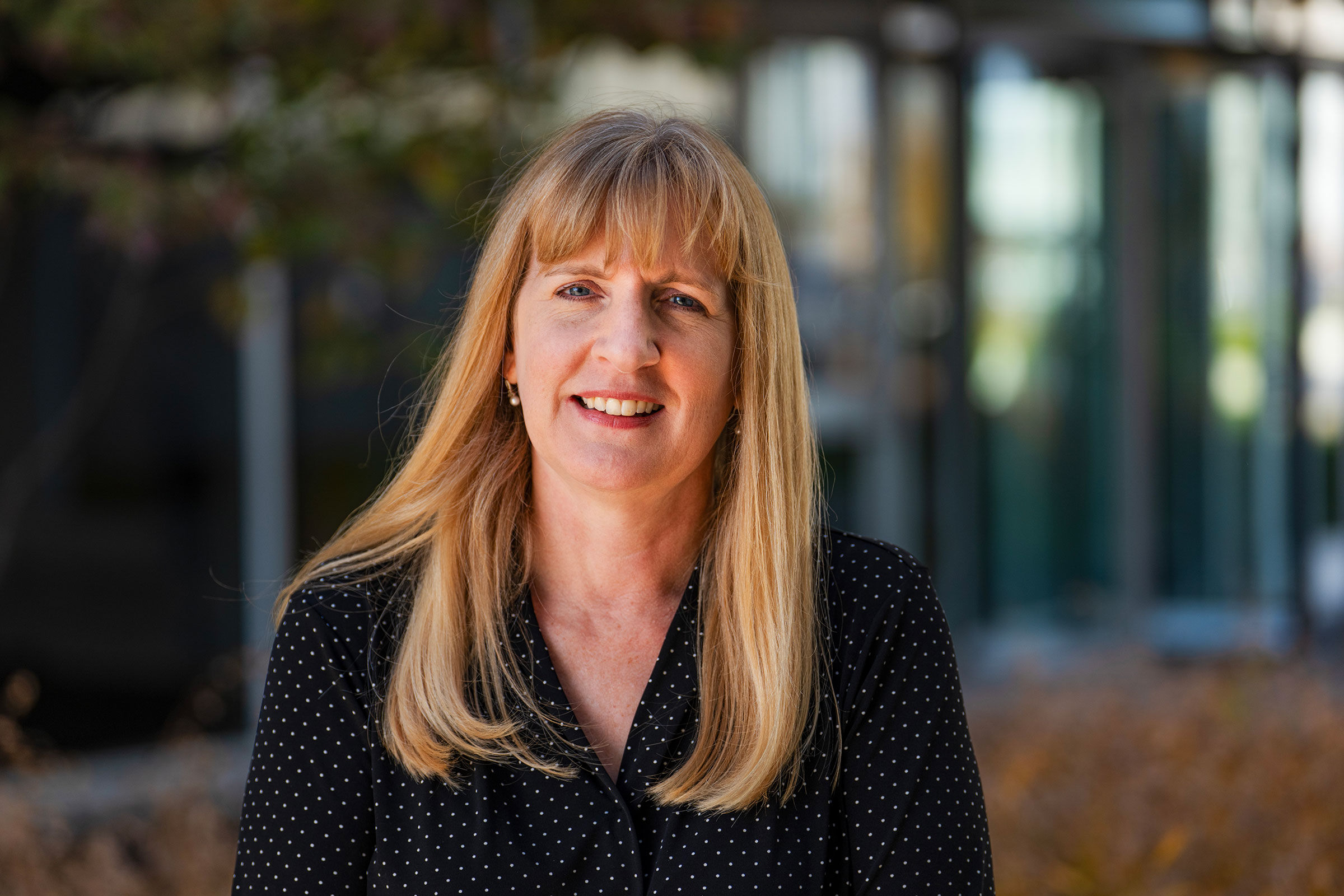
McQueen aims to understand what drives people’s health decisions and encourage healthier behaviors
Why don't people always act on what we know — and, often, they know — is good for their health? That question has been the driving force behind the research agenda of Amy McQueen, PhD, a professor at the Andrew M. and Jane M. Bursky School of Public Health at Washington University in St. Louis. Finding answers has been both fascinating and frustrating.
"One of the biggest things I've realized is that most people aren't thinking about their health nearly as much as we are," McQueen said. "As researchers, we think about health promotion and prevention every day. But most people are just going about their lives. They're not constantly thinking about their health."
That disconnect between public health professionals and the general public is part of the reason changing health behaviors can be so challenging. Even carefully designed interventions don't always produce the results researchers intend. But McQueen has learned that an intervention doesn't have to succeed in every respect to teach researchers something valuable about human behavior and the many ways it shapes health.
“An intervention might not work for everyone, but it may work for a particular group,” McQueen said. “For example, people's identities as mothers or caregivers can influence how they respond to messages about breast cancer screening or HPV vaccination. So we can't assume the same message will work for everyone.”
Over the course of her career, McQueen has studied health topics ranging from colorectal cancer screening and tobacco cessation to HPV vaccination. More recently, she's been studying how people respond to information about alcohol and cancer risk. Here, she reflects on the challenges and rewards of behavioral research and the winding path that brought her to public health.
"I studied psychology as an undergraduate, but I was always interested in health and human behavior. I knew I wanted to work with people, not animals, and I was particularly interested in research.
“I worked on a back pain study at the Department of Veterans Affairs that brought together psychology, psychiatry and physical health. I remember thinking, 'Wow, this is really interesting.' But I struggled to figure out where I fit. People encouraged me to go to medical school or pursue clinical psychology, but neither felt right. I didn't want to counsel patients. I wanted to conduct research.
“Eventually, I found researchers working in health psychology with community and clinical populations. That seemed like the closest fit. I've since built my career collaborating with psychologists, physicians and public health researchers. That's really where I've carved out my niche."
"When I moved to St. Louis, my oldest daughter was about nine months old. We celebrated her first birthday here, and now she's in college! So, I keep track of how long I've been at WashU by her age. I had opportunities to go elsewhere over the years, but I decided to stay. And what's been interesting is how much WashU has changed. Every few years, there's something new, whether it's leadership, research centers or opportunities to collaborate. Even though I've been at the same university for nearly two decades, it hasn't felt like the same job. I've been able to explore different research interests and work with different people, which has kept things exciting."
"That's actually a hard question! I've never had just one elevator pitch. I've always had five or six because I've worked on so many different things. But the common thread is that I'm a health behavior intervention researcher. I focus primarily on cancer prevention, particularly promoting cancer screening and helping people quit smoking. I'm interested in understanding why people make certain health decisions and developing interventions that encourage healthier behaviors. I use both quantitative and qualitative research to design and evaluate interventions. Those skills also allow me to collaborate on projects outside my main research areas, helping other researchers with study design, measurement and understanding human behavior. I've always enjoyed bringing my skills and perspective to different kinds of research. Also, gaining experience in new areas often sparks new ideas I can bring to the next study."
"I think we sometimes assume that giving people the right information will change their behavior. But knowledge alone isn't enough, even though awareness is an important first step. Take my recent work on alcohol as a cancer risk factor. Some people genuinely don't want to know because they enjoy drinking, and learning about the risks creates an uncomfortable conflict. But once people understand those risks, we can help them consider alternatives, like trying mocktails or socializing without alcohol. It doesn't have to mean changing everything overnight. That's what interests me: understanding how people respond to health information and finding ways to help them make informed decisions.
“Many behavioral intervention trials don't produce the results we hope for, and that can be discouraging. But we almost always learn something. I've had my share of studies that didn't work as expected and so have my mentors. I remember my postdoctoral mentor joking that she hoped to have a statistically significant intervention before she retired! But that's what makes the work both frustrating and interesting. Even when an intervention doesn't succeed as we'd hoped, we learn something that helps us develop the next one."
"Oh, about 19 other projects! That’s only a slight exaggeration. I contribute to seven grant-funded projects in different ways and am constantly collaborating on evolving work and research proposals. Besides the alcohol and cancer risk study, I'm also collaborating with researchers outside WashU on how anticipated regret influences health decisions. For example, if parents imagined how they might feel if their child developed an HPV-related cancer after they chose not to vaccinate them, would that encourage them to reconsider? Would they ask more questions or seek information from their doctor? And how do we communicate that in a way that encourages action?
“Beyond my own research, I mentor several junior faculty members and collaborate on projects through the Health Communication Research Laboratory such as the Trusted Tap project with the Center for the Environment. Their research topics aren't always the same as mine, but I can contribute my experience with study design and research methods. I really enjoy that variety."
"That's a good question, and I don't necessarily recommend doing as many different things as I do! As you become more senior, you learn to rely on research staff and students to manage the day-to-day details. Having a good team makes an enormous difference. I love seeing people contribute their skills while also learning and growing. But it does get challenging. One of the hardest parts is keeping up with the literature across so many different topics. It takes a lot of nights and weekends, and a lot of lists! Still, I always try to make time for students who reach out for career advice, especially those trying to figure out where they fit between medicine, psychology and public health. I remember being in that position myself.”
"When my kids were younger, we spent a lot of time taking them to places like the Missouri Botanical Garden, the zoo, and Forest Park. Now that they're older, I still love going to those places, even on my own. I enjoy walking around and appreciating nature. My husband prefers the less curated kind, like wandering through the woods. But I'm like, 'No, I like curated nature!' Give me the beautiful paths at Forest Park or the botanical garden, where I can enjoy the beauty without worrying about getting lost or eaten by something!"
Judith Mwobobia, MPH, is the inaugural Writing Fellow for the Bursky School of Public Health Office of Communications. Mwobobia is a PhD student in public health sciences and previously was a journalist in Kenya. She writes profiles and helps cover the news of the school, with a particular focus on student- and education-related stories.
November 6, 2026
Steensma travels to Malaysia to advance global collaboration on biodiversity, health and innovation
November 6, 2026
Experts convene at WashU to discuss election’s impact on health policy, public health

November 6, 2026
52 primary and secondary faculty members are among the most-impactful researchers globally