November 13, 2026
Insurance changes may reduce financial burden of cancer-causing mutations
People who are predisposed to cancer face high, lifelong costs for preventive care



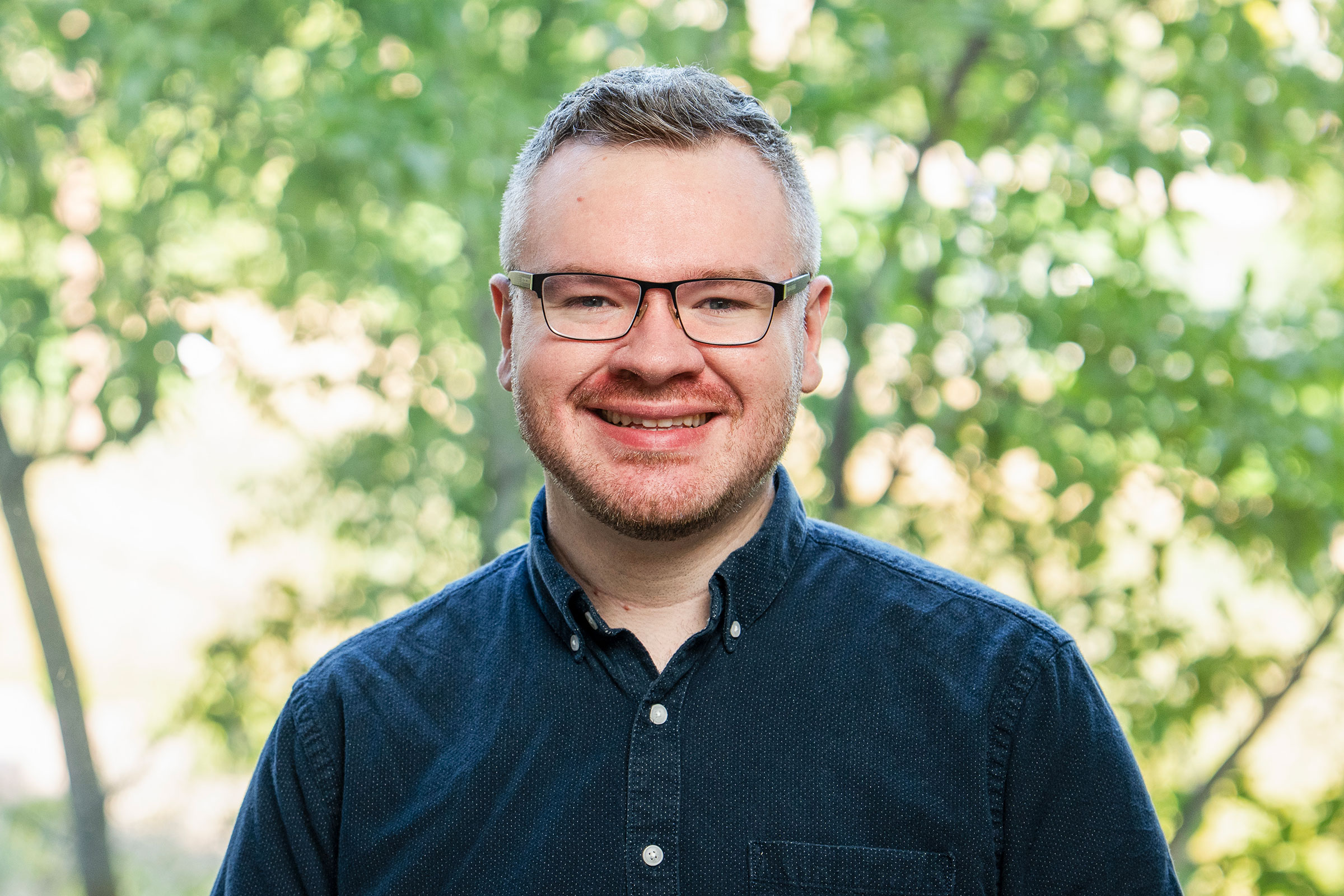
Flauaus combines curiosity and a problem-solving mindset to build the school's digital presence and connect its work with the wider world.
Zach Flauaus was fascinated by technology from a young age. That curiosity led him to coding and web design, and eventually to the Andrew M. and Jane M. Bursky School of Public Health at Washington University in St. Louis. Now, he helps shape the school’s digital presence as the senior web developer, designer and digital strategist in the Office of Marketing and Communications.
"Growing up in a rural community, technology always felt novel because we didn't necessarily have access to the newest or most exciting things," said Flauaus, who is from a small town in Southern Illinois. "My family home didn't have decent high-speed internet until around 2010. I was fascinated by new tech, thinking about how it works, how to use it and what interesting things I could do with it."
At first, Flauaus imagined a future predicting the weather, drawn to meteorology by the idea of using data and technology to forecast what might happen next. There was just one problem: He thought being a meteorologist meant appearing on television, which he wasn't interested in.
So instead, he taught himself to code, starting with a website for a community summer exercise program in rural Illinois. One project led to another, and before long, he was building websites for local businesses and organizations.
"I attended the University of Illinois Urbana-Champaign for a year, but it just didn't end up being the right fit for me," he said. "Pretty much everything I know is self-taught. A lot of it has been trial and error, looking at what other people have done and figuring out how to adapt those approaches to different problems."
After several years of freelancing, Flauaus joined WashU Medicine in 2016 as a web developer, then moved over to Bursky Public Health in early 2025. As one of the first employees, Flauaus played a key role in getting the brand-new school up and running. Among other things, he oversaw the design and build of the school’s website — no small task for a school that was growing rapidly and continually changing in unexpected ways.
“When the school started, there wasn't really a digital presence beyond a few pages on the university website. Being trusted to build that presence from the ground up is something I'm very proud of. And it's always growing. The school is constantly evolving, with new offices and initiatives, so there's always something new to create or an existing project to improve. That's one of the things I like about my work," he said.
Here, he reflects on his unconventional career journey, the changing role of creativity in the age of artificial intelligence, and how he keeps learning and finding inspiration.
“Sometimes I'd see something that worked well in one situation but didn't quite fit what I was trying to solve. So I'd ask myself, 'What if we changed it a little bit?' What kept me interested was almost this dopamine chase of encountering a new problem. Maybe it was a type of business I hadn't worked with before, or someone had a challenge I hadn't encountered. I would think, 'How can I help extend the reach of this business?'
“Initially, I focused primarily on programming. People would send me website designs or mockups, and I'd turn them into functioning websites. Eventually, I started offering suggestions about the designs themselves. That's how I became interested in design and, eventually, digital strategy. I'm still constantly learning. I keep a running list of interesting designs, ideas and things I'd like to explore. It's essentially my brain dump, somewhere to capture ideas before I forget them.”
“There really is no typical day. Some days I'm updating existing webpages with information about new events, convenings or other activities across the school. I also help put together The Moment and Inside Bursky Public Health, the school's weekly newsletters, so my Fridays are largely dedicated to making sure the content displays correctly in people's inboxes.
“Other days, I'm working on requests for new webpages. I like to look at how other schools and institutions have approached similar challenges, not to copy them, but to draw inspiration and figure out what works best for us. I also review designs and offer feedback, just being a fresh set of eyes.
“I think that's what I enjoy most about the job. Every day feels different. There's never a shortage of things to work on!”
"As a freelancer, finding new clients was always the hardest part for me. I'm not a salesperson, and I'm naturally introverted, so that wasn't something I particularly enjoyed. Around 2015, I realized I wanted to do this work more sustainably. I saw a job opening at WashU School of Medicine, applied, and joined in January 2016. It was my first full-time job with a salary, benefits, and everything that comes with regular employment. A very nice adjustment from freelancing!"
"AI is a huge disruptor for creative people. We're seeing it used for art, writing, coding, and all sorts of things. I see people becoming disheartened and asking, 'Why am I even going into this field if people are going to take my work for granted?' I've had those moments myself.
“But bringing the human element into creative work matters. So much of the conversation around AI is about automation, but I think we underestimate the power of simply listening to people, understanding what they need, and putting that into practice. There’s a lot of nuances that a good conversation can unearth that can’t be replicated with AI.
“I use AI as a tool, often for crunching large amounts of data. But I use it with the ‘measure twice, cut once’ mindset and I don't want it to do everything for me. I still want to exercise my creative and problem-solving skills. If AI can save me time on busywork, great! That frees me up for the critical thinking that really matters."
"Oh, I'm a terrible morning person! I wish the world started later than it does. I tend to find my creative flow from late morning into early afternoon. I can get so fixated on solving a problem that before I know it, the whole day is gone.
“I also like having music or a familiar YouTube video playing in the background. I'm a sucker for pop, house and electronic dance music. Anything that has a good beat helps me find that flow and keeps me focused."
"I enjoy spending time with my family as much as I can. My mom lives nearby, and my sister lives in Chicago, so we see each other a few times a year when she's down here or when we can get together. I also really enjoy astronomy. I love watching videos and reading articles from astronomers talking about new discoveries in the field, new and upcoming telescope launches. Space is just really cool! But the big thing that really helps me disconnect are games. Either video games or tabletop roleplaying games; whatever gets me extra time with friends is well worth it.”
Judith Mwobobia, MPH, is the inaugural Writing Fellow for the Bursky School of Public Health Office of Communications. Mwobobia is a PhD student in public health sciences and previously was a journalist in Kenya. She writes profiles and helps cover the news of the school, with a particular focus on student- and education-related stories.
November 13, 2026
People who are predisposed to cancer face high, lifelong costs for preventive care
November 6, 2026
McQueen aims to understand what drives people’s health decisions and encourage healthier behaviors
November 6, 2026
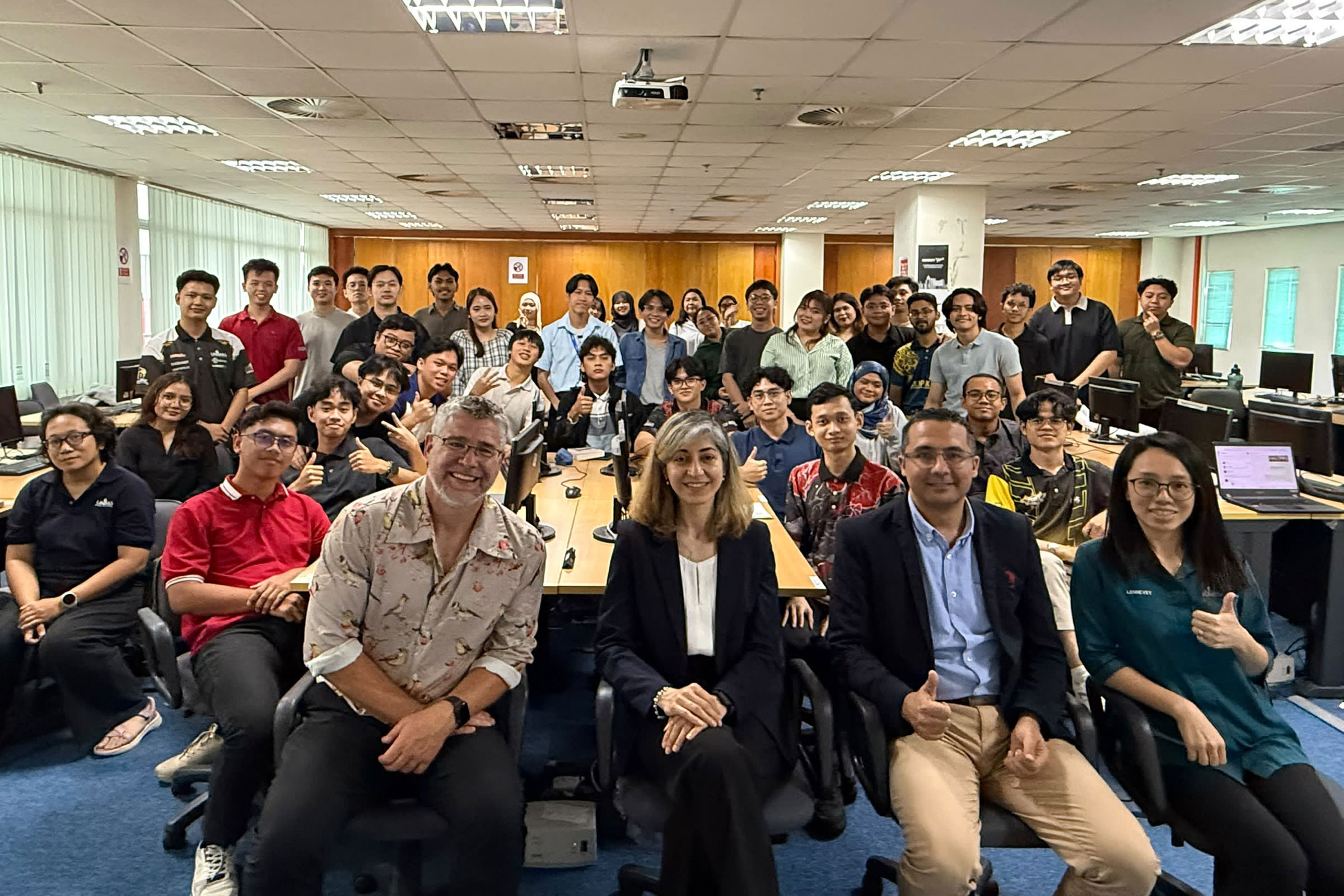
Steensma travels to Malaysia to advance global collaboration on biodiversity, health and innovation