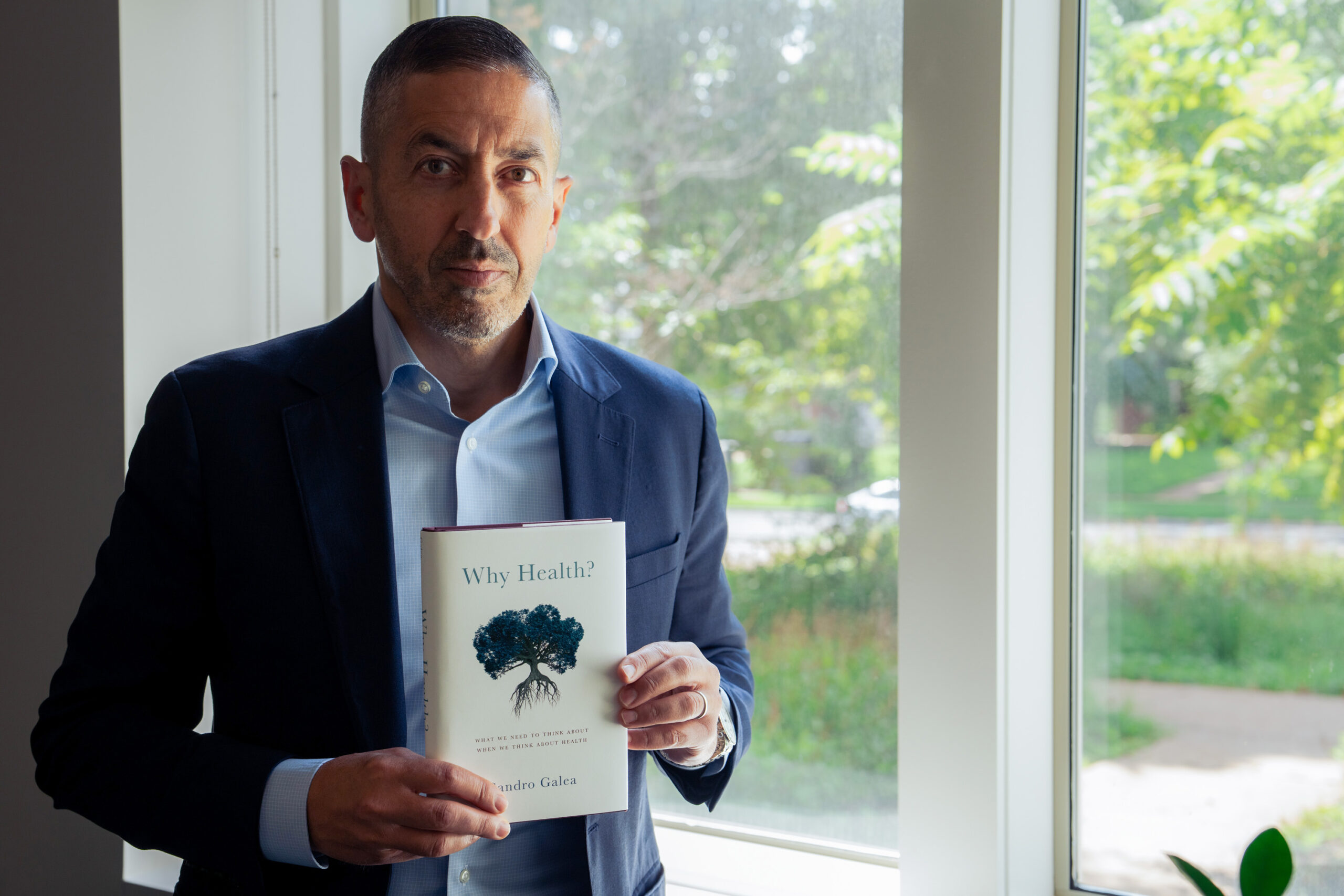
“Why Health?” explores new way of thinking about public health
Dean Sandro Galea’s latest book offers ‘a practical philosophy of public health’
September 4, 2026


‘Teaching Public Health, Volume 2’ took shape following lessons of the pandemic

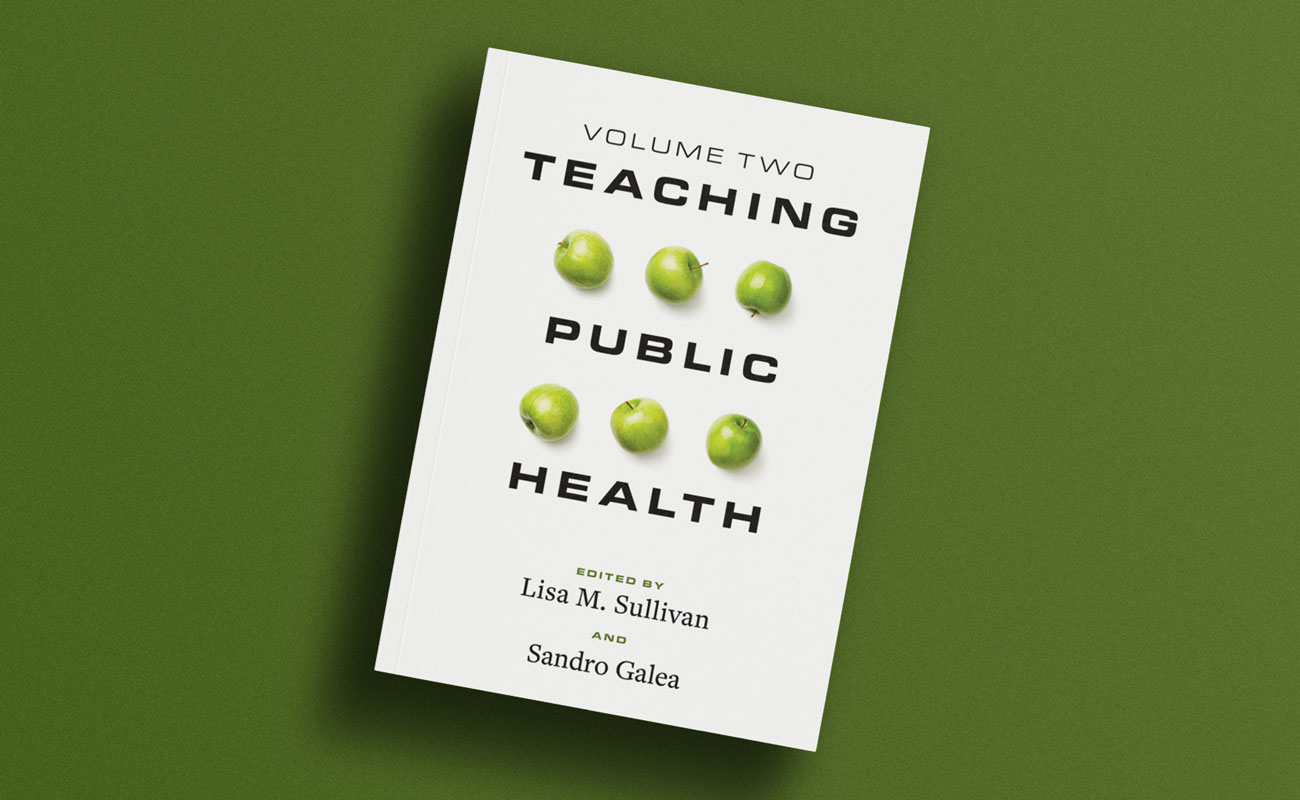
Sandro Galea and Lisa M. Sullivan are co-editors of "Teaching Public Health, Volume 2," a follow-up to their 2019 book, "Teaching Public Health." Volume 2 was structured following lessons of the COVID-19 pandemic. (Photo: Johns Hopkins University Press/WashU Public Health)
The first volume of “Teaching Public Health” took shape in response to notable growth in the number of public health professionals, students drawn to the field, and programs and schools offering to teach this field of study. It was against that backdrop that co-editors Sandro Galea, MD, DrPH, and Lisa M. Sullivan, PhD, structured the book, a primer of sorts intended to help new and experienced teachers meet the changing needs of students in preparing them for careers in public health.
The book, published in 2019, was a success. But then came the pandemic.
As much ground as “Teaching Public Health” had covered and foundational work it had defined, the book did not anticipate the many lessons of COVID-19 and the profound impact the pandemic would have on the field and on academic public health.
“The pandemic brought with it a seismic change to academic engagement worldwide, in all disciplines — but particularly in academic public health,” said Galea, who was dean of Boston University School of Public Health when the first volume was published, and is now the Margaret C. Ryan Dean of Washington University School of Public Health in St. Louis. “COVID-19 prompted the transformation of essentially all public health teaching, and a re-examination of the foundations of teaching public health.”
Consequently, Galea and Sullivan set to work on “Teaching Public Health, Volume 2,” a follow-up built on the foundation of the first book, but with additional writings that take into account the field’s rapid evolution. Volume 2 — released April 7 by Johns Hopkins University Press — summarizes changes in the field over time, and challenges presented in teaching public health now; and addresses the principles and practice of cutting-edge teaching at each level of education in public health. Further, it takes a forward-looking stance, and boosts innovation in public health education.
The 28-chapter collection addresses core themes in public health — among them, racial justice, advocacy, law, data literary, science communication, and systems thinking. And it explores changes in the field’s teaching and learning culture. Galea and Sullivan — the associate dean for education and a professor at Boston University School of Public Health — tapped 51 experts in public health to author Volume 2.
“We have learned a great deal from the pandemic, but if COVID-19 has taught us anything, it is that having well-versed public health professionals in the future is good for the world,” Galea said.
For more on the new book, see here.
Dean Sandro Galea’s latest book offers ‘a practical philosophy of public health’
September 4, 2026
Faculty Scholars program aims to accelerate the translation of ideas into solutions
September 4, 2026

Chinese edition helps spread to global audiences the science of bridging the gap between evidence and practice
September 4, 2026