October 30, 2026
Bursky Public Health attends APHA in San Antonio
Four-day event includes Champion Conversations, book signings, research presentations and a happy hour
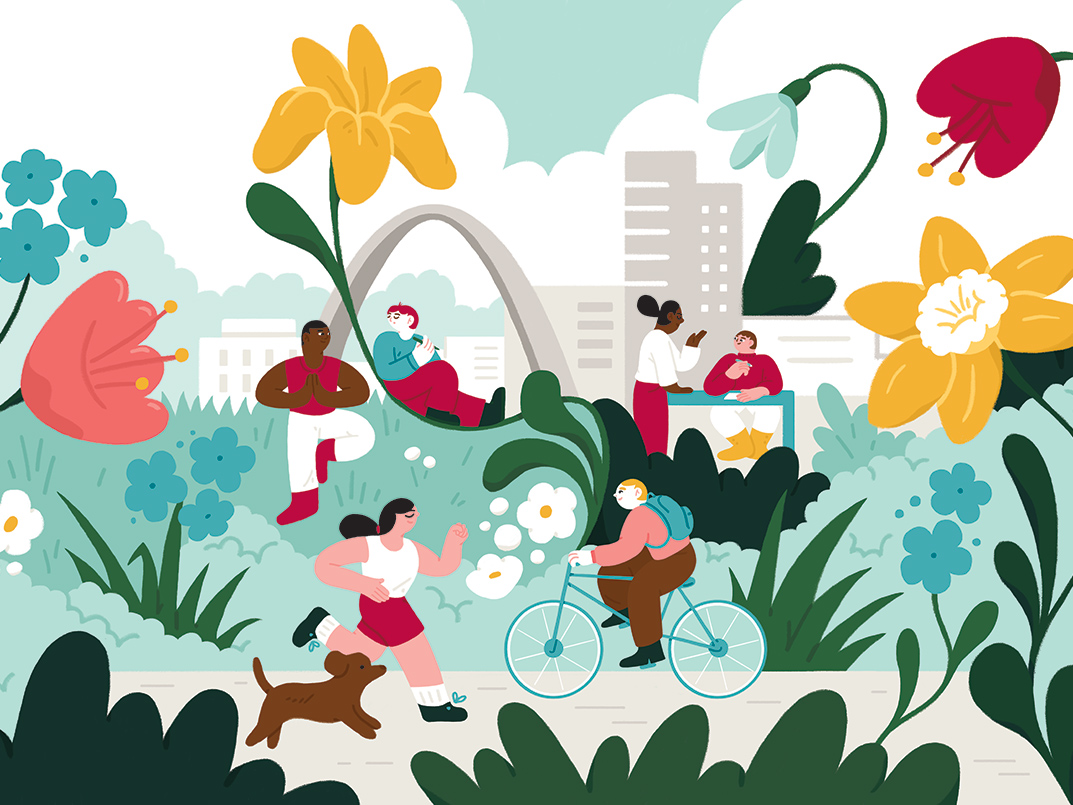


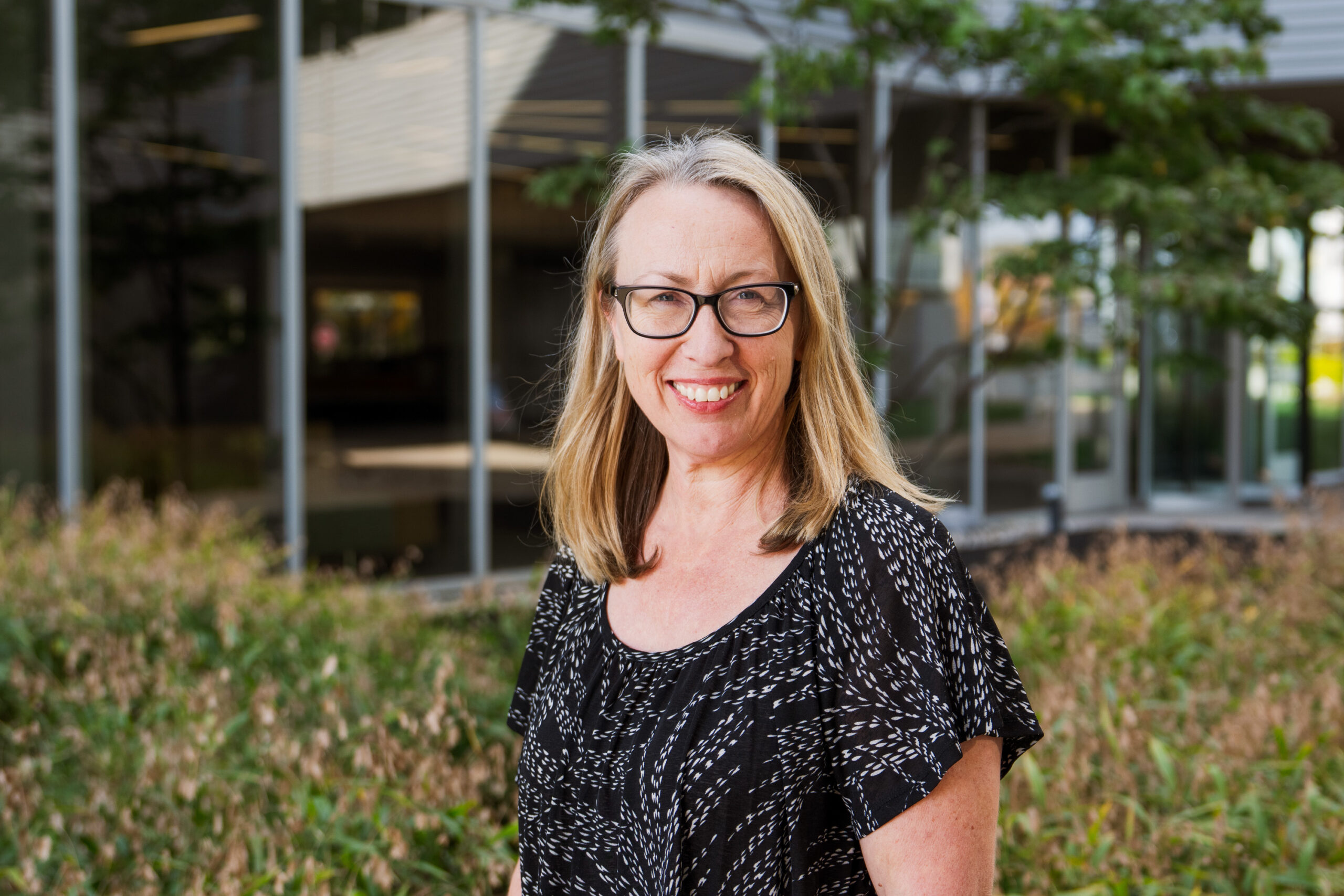
Breton studies how environmental exposures affect human health, particularly during pregnancy and childhood
One morning many years ago in Los Angeles, a teenage Carrie Breton laced up her running shoes and headed outside. She wasn't much of a runner, but she was trying to become one. The air was thick with wildfire smoke, yet she decided to run anyway.
“The sun was this orange glow through the smoke, and the smoke was settling on everything,” she recalled. “It smelled horrible and I couldn't breathe, but I kept running. I think about the damage I must have done to myself that day.”
Today, Breton, ScD, is a professor at the Andrew M. and Jane M. Bursky School of Public Health at Washington University in St. Louis. Her research examines how environmental exposures, including air pollution, affect health, particularly during pregnancy and childhood.
That morning's memory has taken on new meaning as wildfires and their health effects have become an increasingly urgent public health concern. After roughly 15 years at the University of Southern California, Breton joined WashU, drawn by the opportunity to help build a new school of public health.
“Being part of building something new that's full of hope was the biggest draw,” she said.
Here, Breton shares about her research, the new paths she is exploring and what keeps her motivated.
“I grew up in California, although I've also lived on the East Coast. People imagine California's beautiful beaches, and those are real, but everyday life can be very different. I think about wildfire risks a lot, professionally and personally. I was evacuated during the Eaton Fire last year, and the fire came pretty close to my home. I also worried about things like sending my children to camp during wildfire season or a heat wave, and whether they'd be playing soccer in 100-degree heat. Maybe I worried about those things more because of my work.”
“In high school, I cared about the environment. Growing up in Los Angeles, I joined beach cleanups and began wondering how the environment affects us and how I could help, though I wasn’t sure how to pursue that interest.
“In college, I followed a pre-med track because I loved science and thought I might become a physician, but my heart wasn't in it. After graduation, I worked in a developmental biology lab at Stanford. Bench science showed me I didn't want a career narrowly focused on studying organisms. A visiting professor suggested I speak with his wife, a physician with a master's in public health, introducing me to a field I hadn't encountered in college. I was drawn to studying populations and broader questions about human health, leading me to epidemiology and public health.
“I later joined USC’s medical school environmental health division, working with a community engagement leader at a research center. I helped translate environmental health research for communities and general audiences and taught brief classroom lessons. That work led me to pursue a master's and PhD in epidemiology, specializing in environmental epidemiology, and ultimately defined my career path.”
“Two moments stand out. The first came when my childhood intersected with my research. I grew up in Southern California and returned to USC after my PhD to study air pollution and children's health. One study community was my hometown. While helping a technician calibrate lung-function equipment, I was tested and he said, ‘Your lung function isn't as high as I would expect.’ I replied, ‘Well, I grew up in one of the communities you're studying. Maybe there's a reason for that.’ Having grown up with Los Angeles smog alerts, I found it striking to see that personal connection to my research.
“The second was establishing the Maternal and Developmental Risks from Environmental and Social Stressors (MADRES) Center, which I co-founded and co-direct with Tracy Bastain. We began by asking why children in some Latino communities in Los Angeles showed signs of obesity as early as age two or three, and how pregnancy exposures might affect childhood obesity and maternal health. That question grew into a decade of research on how environmental exposures and psychosocial stressors during pregnancy affect mothers and children. It's rewarding to see what we built from the ground up become a sustained research program.”
“I'm really interested in understanding what happens biologically when people are exposed to air pollution or other pollutants and stress. Could they activate some of the same biological pathways? Could their combined effects overwhelm the body's systems? We use epigenomic research to explore those questions. I'm also interested in how early these effects begin. I started by studying air pollution and children's health, but I kept asking, ‘Where does it start?’ At age five? Age two? At birth? Or even before birth?’ Those questions led me to study exposures during pregnancy. Now we're thinking about whether exposures even before pregnancy might matter. Some research suggests they could influence the maternal environment and vulnerability to later exposures. It's an area I'd like to understand better.”
“Building new partnerships and exploring new research opportunities. Tracy and I would like to build upon what we started in MADRES and continue to focus on solutions to environmental problems. We have plans for a new project called EMBRACE, which stands for Environmental Mechanisms Bridging Reproductive And Child Health Endpoints. Together with colleagues Toni Frolova (medical school) and Christine O’Brien (engineering) we plan to build a consortium of maternal and child health experts addressing the most pressing environmental health concerns in St. Louis and the Midwest.
“I also have what I call my ‘hobby project’ on celiac disease, inspired by a family member’s diagnosis. Our family had a crash course in how much the disease can affect daily life, and I realized I could use my epidemiologic training to explore some unanswered questions. I'm particularly interested in what triggers celiac autoimmunity. Environmental exposures may play a role, given their effects on the immune system, but we don't fully understand how. It's a new area for me, and I'm excited to explore it.”
“I'll give you a couple of examples, but I want to acknowledge that these decisions reflect a certain amount of privilege.
“When my children were babies, I chose organic mattresses to avoid certain flame retardants. But choices like that cost more. That's a major problem: People often have to pay more for options they consider healthier. The same question comes up with organic food. Why is it more expensive? There are incentives in the system that need attention, and it takes policy, agriculture and other experts working together to address them.”
“If you're going to spend a lot of time writing grants and trying to get funding for a scientific project, make sure you're asking a question that truly interests you and working with a team you like. You're going to spend a lot of time with those people and with that question. That advice came when I was a postdoc or a very early faculty member, as I was starting this career path.”
“My three children keep me busy. I love being outdoors. We have a bigger backyard now, and I'm learning to care for plants that are very different from those in California. We also have a pond, which I'm trying to maintain without killing anything!
“My family enjoys hiking, so we've started exploring trails around St. Louis, including Castlewood State Park. We're enjoying getting to know the area, although I'm still figuring out how to prepare for a Missouri winter.”
Judith Mwobobia, MPH, is the inaugural Writing Fellow for the Bursky School of Public Health Office of Communications. Mwobobia is a PhD student in public health sciences and previously was a journalist in Kenya. She writes profiles and helps cover the news of the school, with a particular focus on student- and education-related stories.
October 30, 2026
Four-day event includes Champion Conversations, book signings, research presentations and a happy hour
October 30, 2026
Election results to be discussed at WashU convening later this month
October 22, 2026
Colón-Ramos examines how policy and food environments interact to influence what people eat and how to effect lasting change