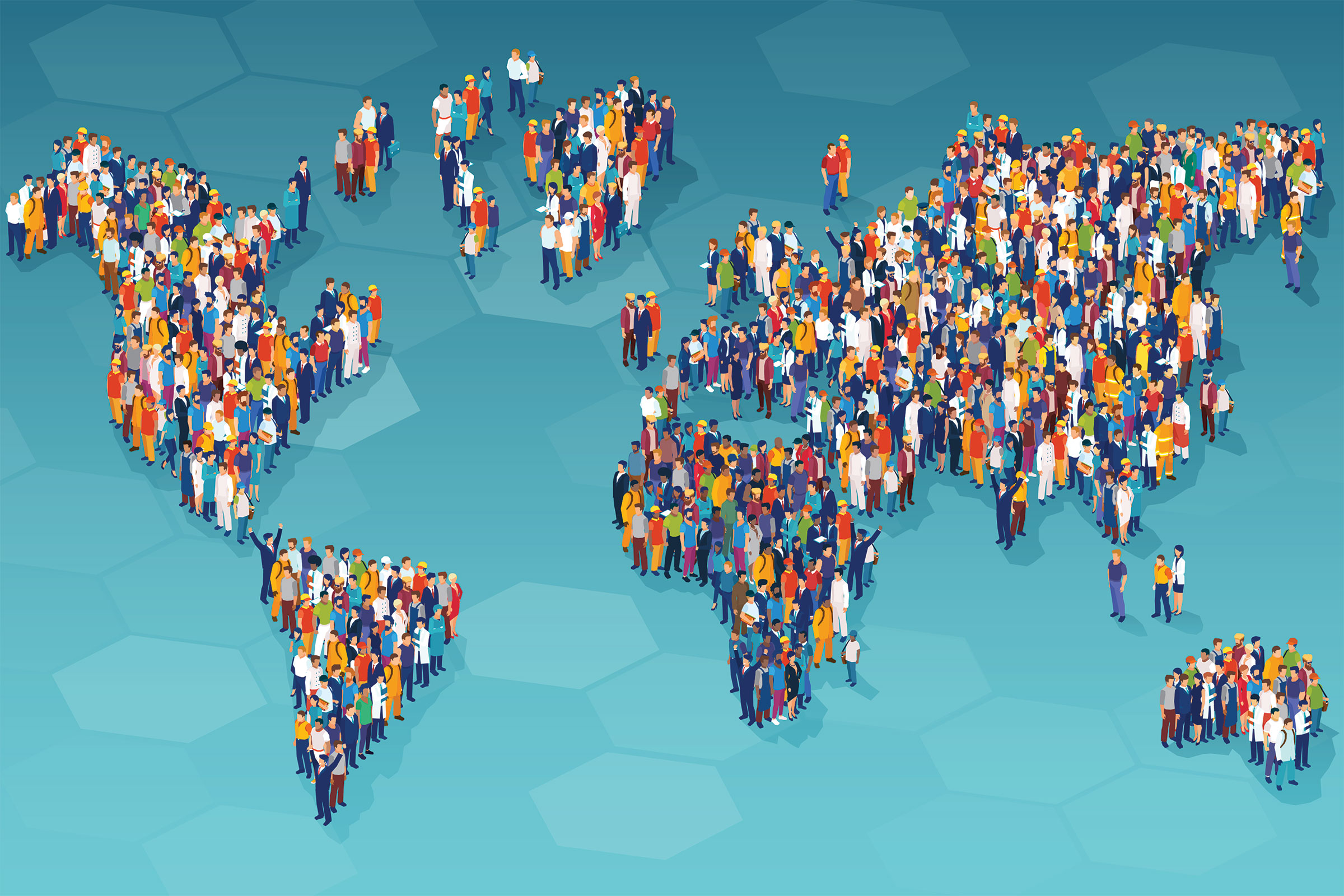
Most adults worldwide report low levels of trust in institutions and individuals in general, while reserving their highest levels of trust for scientists and academia, according to a new study across eight countries by researchers at the Andrew M. and Jane M. Bursky School of Public Health at Washington University in St. Louis.
As trust is a key factor in the success of health interventions, such as vaccine compliance, the study offers new clues for building trust to improve health outcomes, the researchers said. The study is published in Humanities and Social Sciences Communications.
The study supports existing data showing that trust is at low levels worldwide and is one of the few studies to measure trust during the post-COVID era, the researchers said.
The Global Social Determinants of Health Survey collected data on trust among 8,198 adults aged 18 years or older across eight countries: Brazil, France, India, Indonesia, Nigeria, the Philippines, Türkiye, and the United States. Researchers conducted their survey over a three-month period between November 2023 and February 2024, nearly four years after the COVID-19 pandemic began.
The scientists evaluated trust in government, international organizations, scientists and academia, corporations, mass media, and society — which the researchers described as social trust or “most people in the country” — and the differences in trust levels by demographic group, including education and income levels.
Levels of trust varied across the categories evaluated. Nearly two-thirds of those surveyed expressed low trust across at least one of the six categories. People had the least amount of trust in society, government, mass media, international organizations, and corporations and businesses. Scientists and academia, on the other hand, were the most trusted institutions in most of the countries studied.
“Our findings reveal that trust in scientists and academia remains notably high compared to other groups,” said lead author Salma Abdalla, MBBS, MPH, DrPH, an associate professor. “This persistent trust serves as an important anchor for the field.”
The exception is the United States. The U.S. was the only country where fewer than half of respondents reported high trust in scientists and academia.
“The U.S. seems to be performing the worst in terms of trust across all the institutions studied,” Abdalla said. “In the U.S., trust among scientists and academia was less than 50%, compared to two-thirds or more in other countries. That tells us we need to do more to restore the public’s trust of scientists and academia in this country.”
Trust also varied by the respondents’ educational levels and income levels. People with more education were less trusting of all institutions than those with less education, with the notable exception of science and academia where those with higher education had greater trust. While income level largely did not have a strong association with institutional trust, people with the lowest income levels tended to have lower trust in scientists and academia compared to those with higher income levels.
The exact reasons why trust is at low levels worldwide is unclear. Possible reasons include political polarization, economic inequality, and divisive messaging on social media, Abdalla said, noting that the current study did not explore the reasons behind the low trust levels. Additional studies are anticipated, she said.
“It’s clear to me that trust is one of the signature topics that we need to think about moving forward in public health,” said senior author Sandro Galea, MD, DrPH, the Margaret C. Ryan Dean, the Eugene S. and Constance Kahn Distinguished Professor in Public Health. “Trust is easily diminished, but it is so much harder to regain it. That is why we need to start working on this issue now. It will take time for institutions to regain trust.”
The study has some caveats: It provides a snapshot in time and does not provide data on changes over time. About 20% of the study sample did not report on their income, which means results related to income may be incomplete.
Co-authors included Bursky Public Health’s Catalina Melendez Contreras, MD, MPH, a senior research manager, and Yuxuan Wang, a statistical analyst; as well as Boston University School of Public Health’s Samuel B. Rosenberg, MPH, and Syed Arman Rasool.
Abdalla S, Melendez Contreras C, Wang Y, Rosenberg SB, Rasool SA, Galea S. “Institutional and social trust across eight countries: distribution across sociodemographic groups and relevance for population health.” Humanities and Social Sciences Communications. May 30, 2026. DOI: 10.1057/s41599-026-07684-0
The study was funded by the Rockefeller Foundation.
Mark Sampson is a freelance science writer. Before becoming a freelancer, he worked as a science writer at the American Chemical Society and the National Institutes of Health (NIH).