Experts from public health and other fields came together to discuss how and why to build a listening infrastructure
Creating a public health system that truly meets the needs of the public requires first understanding what communities know, believe and value in regard to health. On September 23, 2026, experts from public health and other fields came together at the Andrew M. and Jane M. Bursky School of Public Health at Washington University in St. Louis to discuss how and why to build a public health listening infrastructure. The conversation at the Leading with Listening convening touched on the dangers of performative listening that doesn't lead to action, the diversity of listening systems that already exist and how to integrate them and the fine line between listening and surveillance.
"What I've learned is that you can listen really badly, and if you do so, it can really cause harms and long-term consequences around trust," said Claire Wardle, MA, PhD, an associate professor in the Department of Communication at Cornell University in the keynote speech. "But if you do it well, it can actually have some pretty quick, immediate positive responses, as long as you're demonstrating that it means something....I honestly think, at this particular moment in history, I couldn't think of another thing that could really make so much of a difference."
See below for highlights from the event.
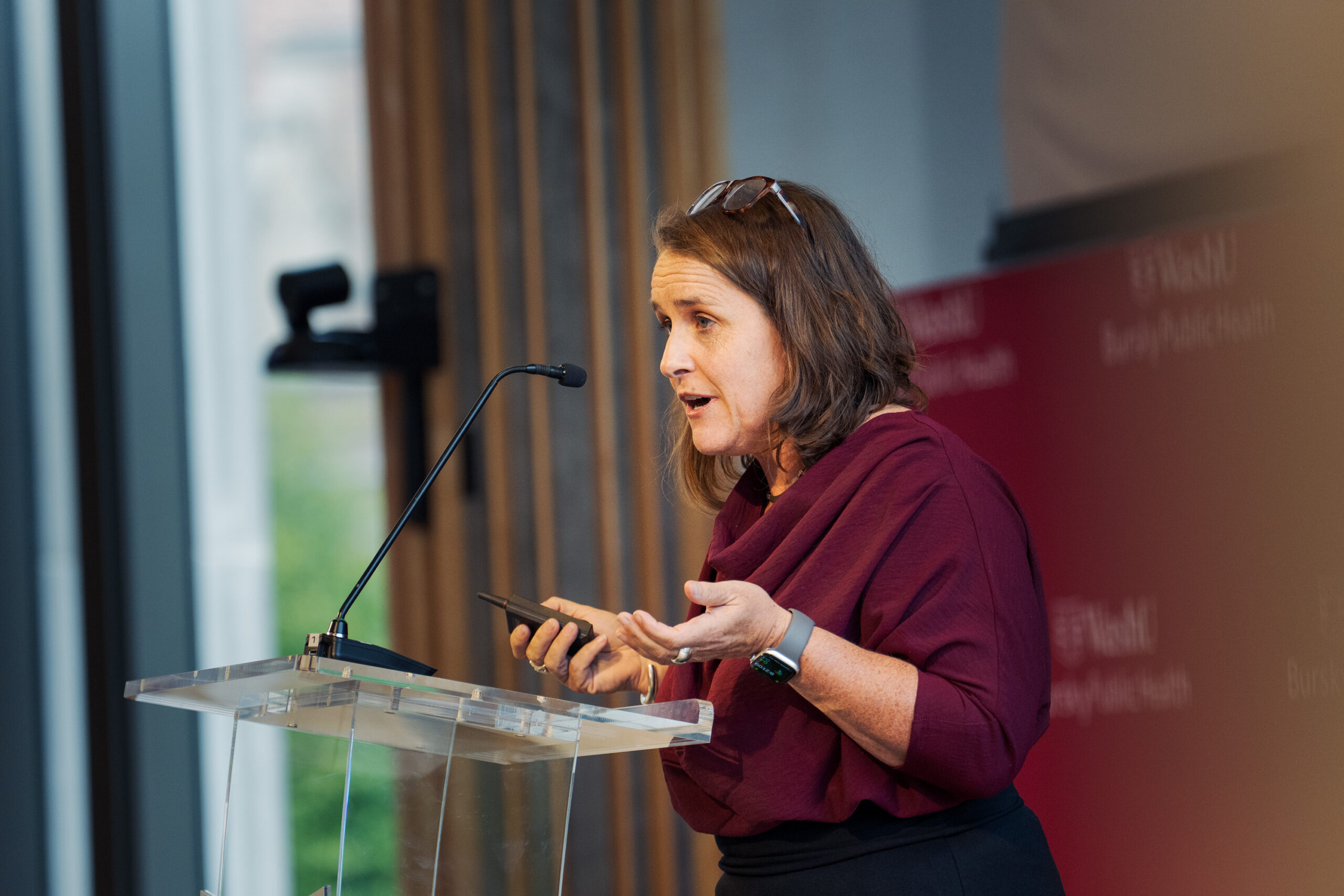
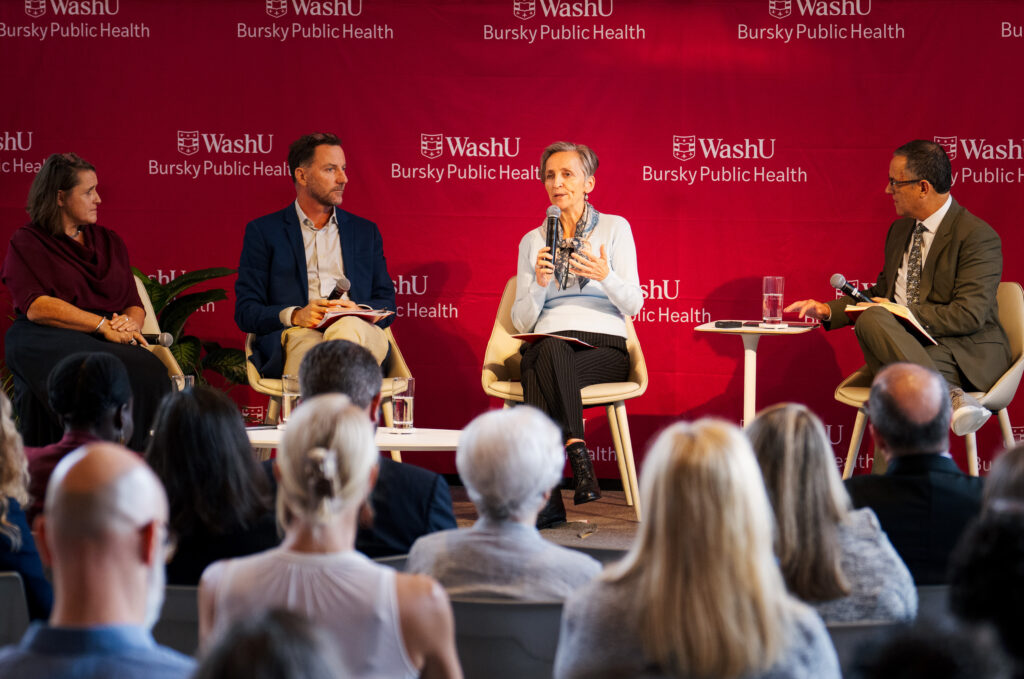
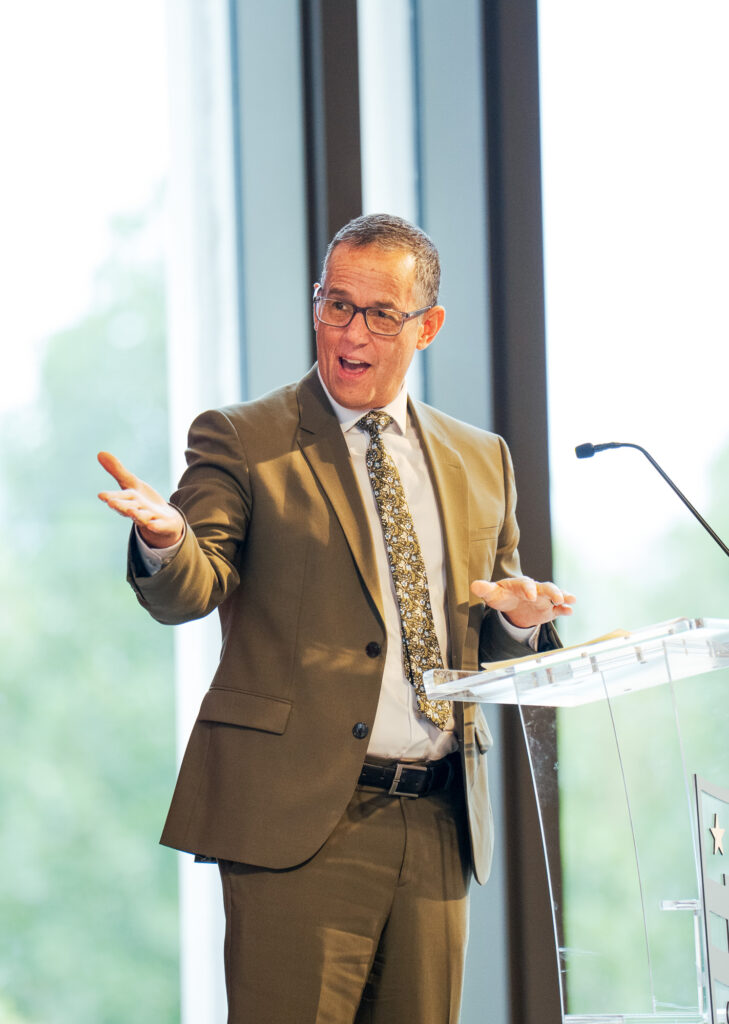
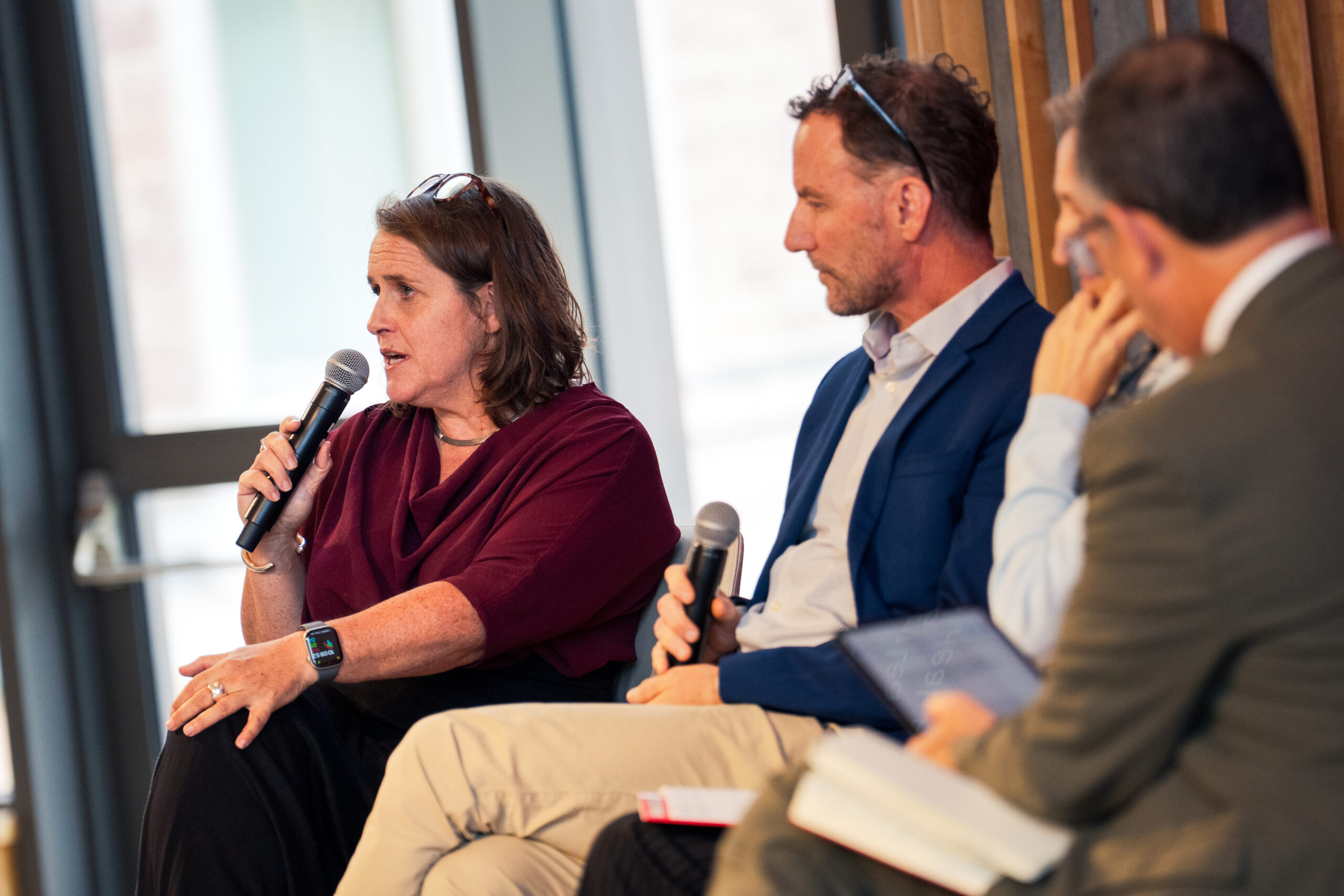
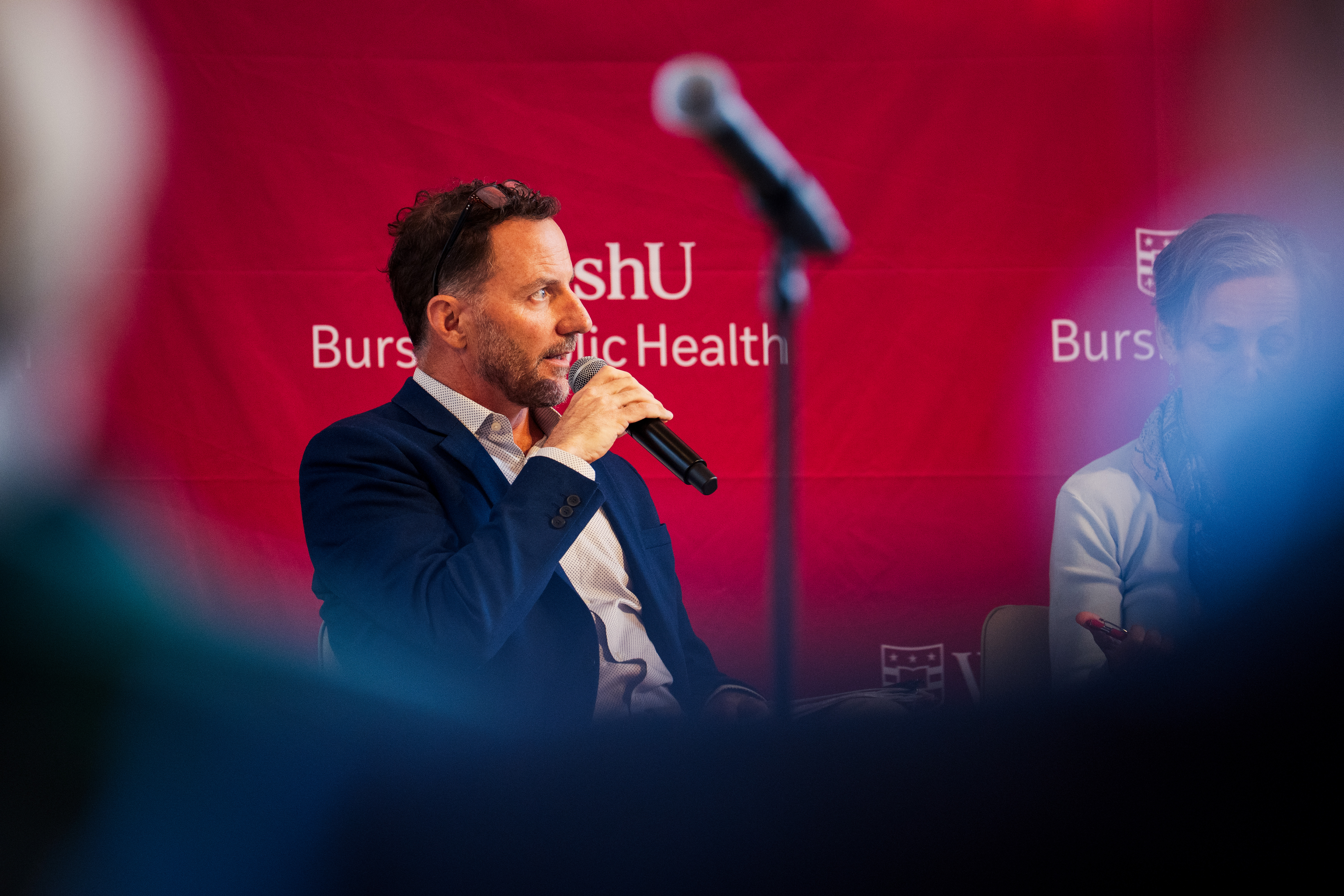
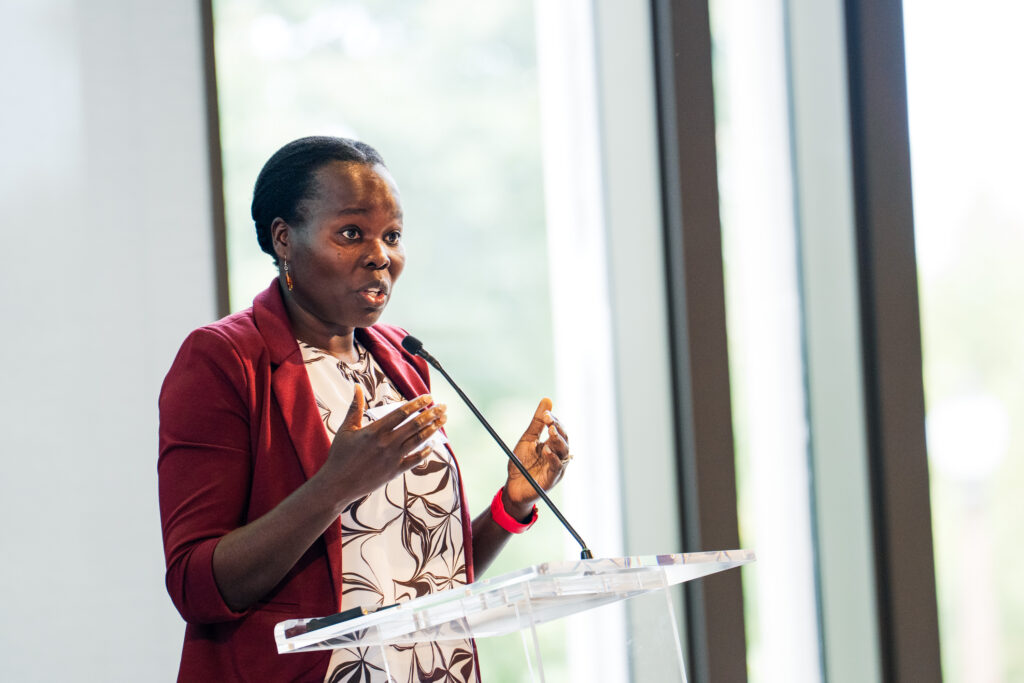
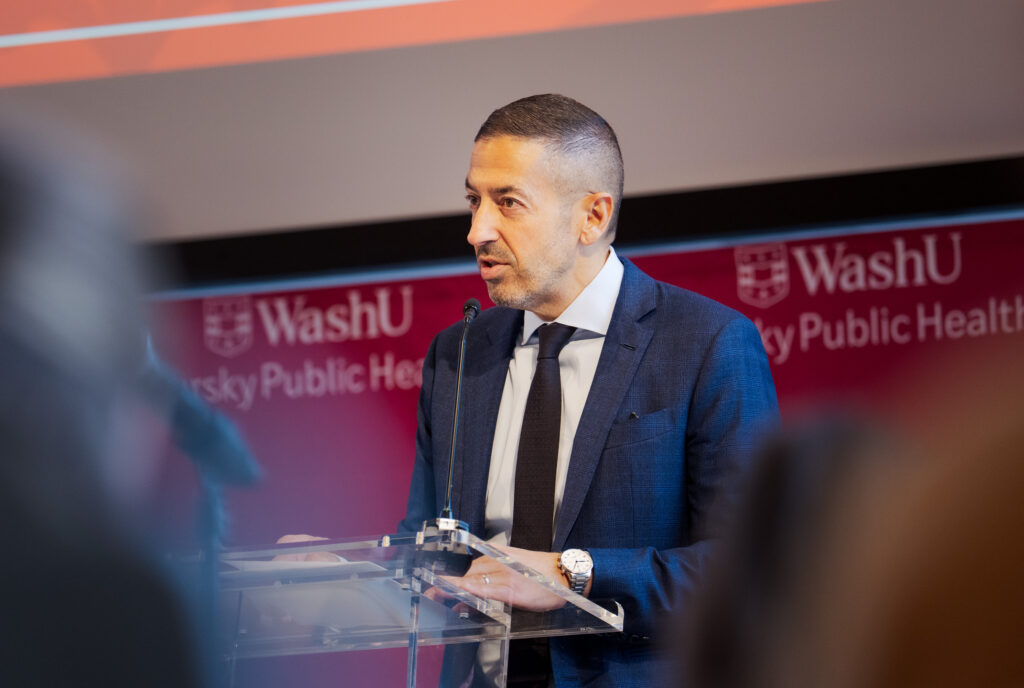
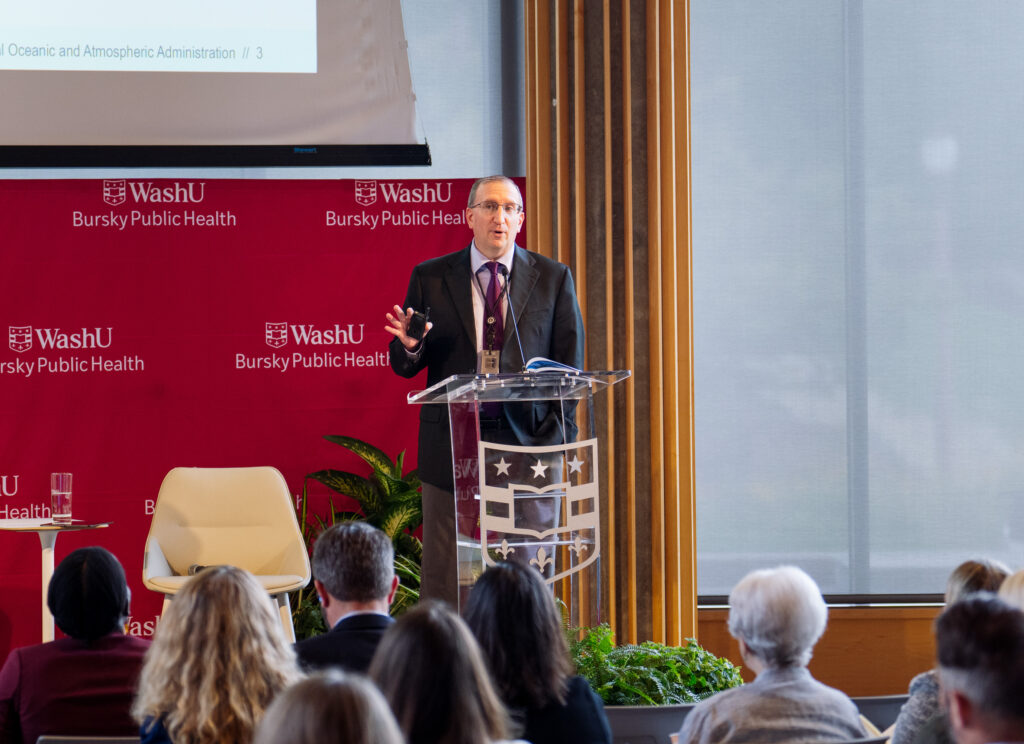
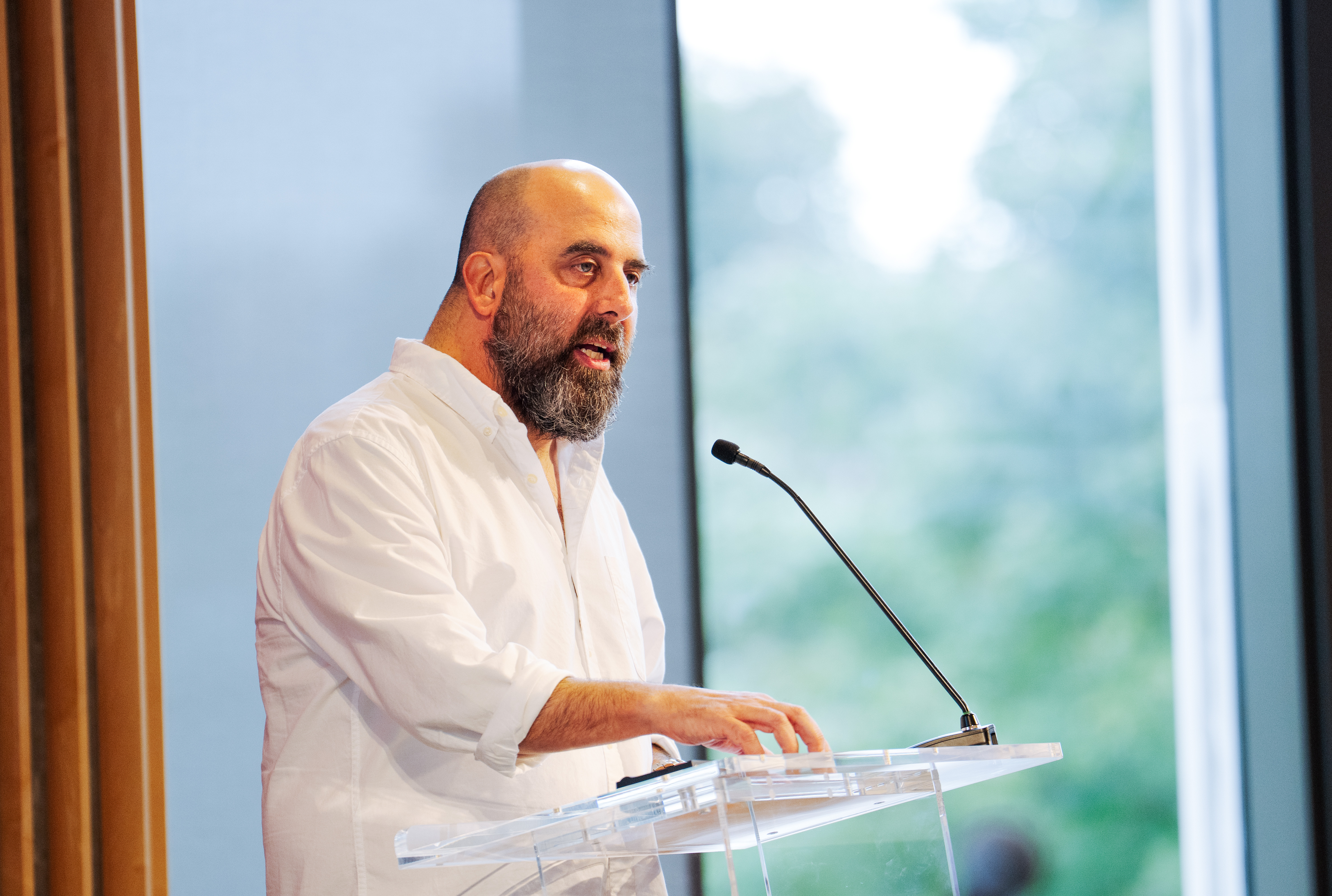
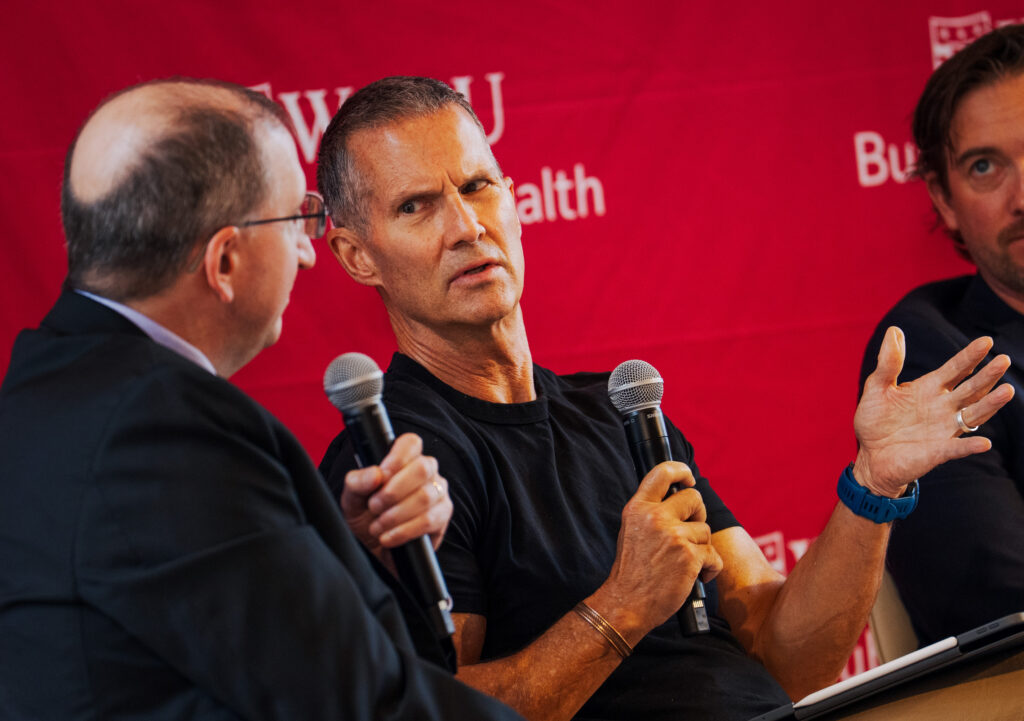
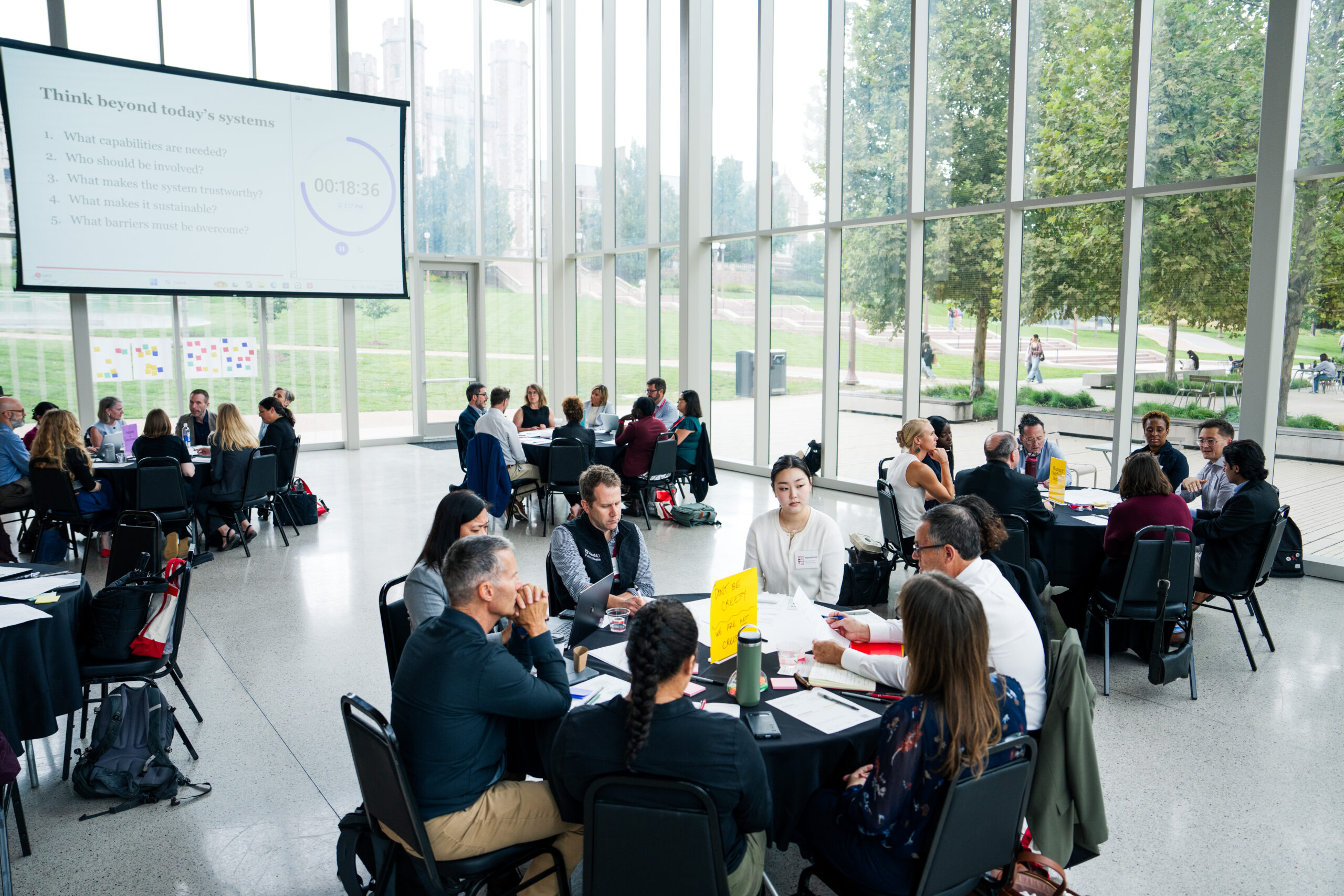
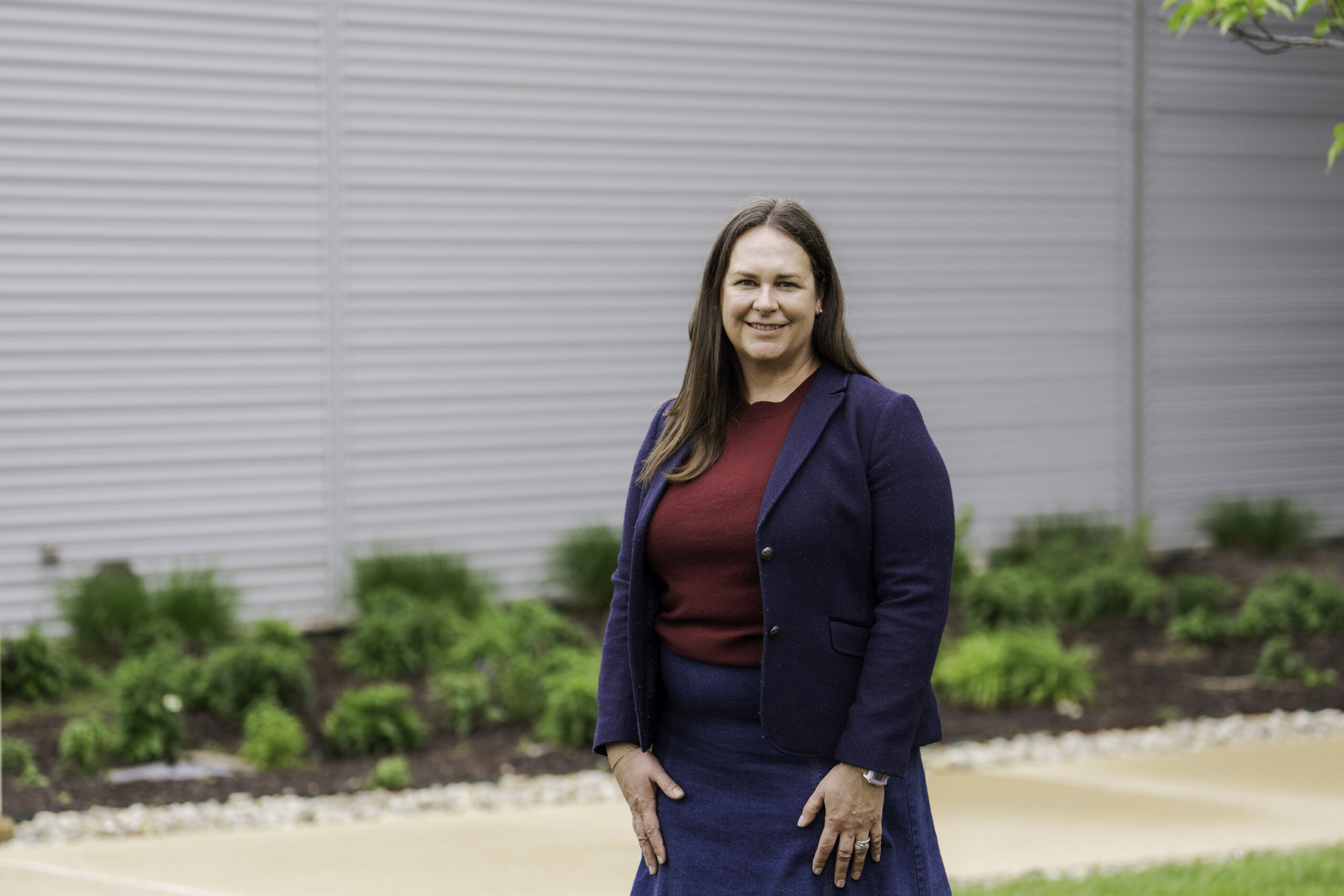
“I think it is really important for us to acknowledge that there has been a lot of performative listening, and that communities are sort of rebelling against that, and they're saying, ‘This is not really what we were talking about, because listening without action, listening without partnership isn't what we're all working towards’,” said panelist Stefanie Friedhoff, the director of the Information Futures Lab and a professor of the practice at Brown University School of Public Health. (Photo credit: Zachary Linhares/WashU Bursky Public Health)Matt Kreuter, MPH, PhD, the Kahn Family Professor of Public Health and the co-director of the Health Communication Collaborative, leads a community listening project called iHeard that collects insights from about 200 people in the St. Louis area every week. “We have precious little infrastructure to systematically listen to and understand the public, what they know and what they don't know, their concerns, their questions, their values, the health, and not just health, but other problems,” Kreuter said. ”And so we answer the wrong questions, not because we don't care and aren't trying to help, but because we didn't bother to learn and to ask what people are actually hearing and thinking about in their own daily lives.” (Photo credit: Zachary Linhares/WashU Bursky Public Health)An effective listening system has to be co-created with the community, said Claire Wardle, MA, PhD, a leading researcher on information and the convening’s keynote speaker. “Not just, ‘We’re doing this; are you in agreement?’ but ‘Why are we doing this? What do the outcomes look like?’ It has to be not just needs, but the questions. What questions do people have?,” Wardle said. (Photo credit: Zachary Linhares/WashU Bursky Public Health)Panelist Pat Kilby, MBA, a strategy lead at Eyes on Health, related a story about a local community that reported concern over teen sleep habits. The first solution considered was to change school start times, but that turned out to be prohibitively complicated. “But in some of the school data, they found something much simpler to change,” Kilby said. “When papers were due at midnight, students turned them in between 11 and 12. So they made the due date times 8 p.m.” The action may not have entirely solved the problem of teen sleep deprivation, but it meaningfully addressed a real community health concern, he said. (Photo credit: Zachary Linhares/WashU Bursky Public Health)Now is the time for action, said Penina Acayo Laker, MFA, an associate professor at WashU’s Sam Fox School and the co-director of Bursky Public Health’s Health Communication Collaborative. “If this was a design project, I'd say, at this stage in the design process we have learned, we have a sense of what the opportunities are, what the problem is. Now we need to turn our attention to really thinking about building and thinking about how we can learn through failure." (Photo credit: Zachary Linhares/WashU Bursky Public Health)Bursky Public Health Dean Sandro Galea opened the convening. “What happens if communication does not begin with what we want to say, but with what we are willing to hear?” he asked. “What happens if, before deciding what the public needs to know, we ask what the public already knows? What people believe, what they value, what they fear, what they need from us. This is a different conception of communication, and I would argue it is also a different conception of public health.” (Photo credit: Zachary Linhares/WashU Bursky Public Health)Meteorologist Brian Montgomery described the listening system established by the National Weather Service to gather local information and share it back where and when people need it. “Heat has been a huge part of our problem across the lower 48, and heat is only getting more prolific as we move along,” he said. The National Weather Service collaborated with the Centers for Disease Control and Prevention to develop a way to warn people about extreme heat events. “We have a new heat risk map, and it incorporates all that research and collaborative work. The darker the color, the more intense the heat can be and the more impact you can see to a person outside. The goal here is to convey information out to our community leaders, so when things are getting really super warm, we can get people to cooling shelters or reschedule events to a time when it’s not so dangerous to be outside.” (Photo credit: Zachary Linhares/WashU Bursky Public Health)Dean Charlie White of WashU’s Sam Fox School of Design & Visual Arts emphasized the connection between public health and design. “And what we find is that there is, more often than not, a substantial distance between how a system was meant to function and the manner in which it actually does,” White said. “And it is in this gulf, in this problem, that we begin to seek solutions. And this is where public health and design come together beautifully.” (Photo credit: Zachary Linhares/WashU Bursky Public Health) Dale Sanders, a former Air Force officer who had a long career in intelligence before moving to healthcare, spoke about the similarities between public health listening and intelligence gathering. “The questions are more valuable than the answers,” said Sanders (center). “The phrase ‘Follow the science’ doesn't tell us whose risks, livelihoods, and freedoms should take priority, right? And too often, I think, as scientists, we fall back on evidence and data and things like that, when what we should be thinking about is how we relate to people and what really matters.” (Photo credit: Zachary Linhares/WashU Bursky Public Health)After the morning discussions, panelists and colleagues sat down to start drawing up plans for an integrated public health listening system. “We’ve done the hard part of identifying and understanding that there is a need for us to listen better,” said Penina Acayo Laker, MFA, an associate professor at the Sam Fox School and the co-director of the Health Communication Collaborative. “Now that we have all this great knowledge, I say let's turn to the messy side of things. Let's think about how we can move into action. What does it look like for us to learn from the messy stages of building, attempting to build prototypes, to test, to iterate, to refine, to listen through making?” (Photo credit: Zachary Linhares/WashU Bursky Public Health)
Tamara Schneider, MPH, PhD, is the assistant director of communications and senior science writer at Bursky Public Health. She holds a bachelor’s degree in molecular biophysics & biochemistry and in sociology from Yale University, a master’s in public health from the University of California, Berkeley, and a PhD in biomedical science from the University of California, San Diego. She joined WashU as a science writer in 2016.
Related News
The Source
September 25, 2026
Pregnancy nutrition trial in Ecuador improves fetal brain growth
Bursky Public Health's Lora Iannotti and colleagues tested whether a diverse diet inspired by ancestral eating patterns could support maternal nutrition and fetal development.
From listening to farmers in Benin to training community researchers in Papua New Guinea to connecting planetary health scholars at WashU, Mandeville works to create a healthy planet for populations
Drawing on her experiences in Nigeria and the U.S., Mahmoud has dedicated her career to improving women’s cardiovascular health during and after pregnancy