Inaugural student symposium showcases range of projects
Judith Mwobobia
May 8, 2026
Copied!
MPH, dual-degree and PhD students present research and practicum posters at SPH Student Research and Practicum Symposium
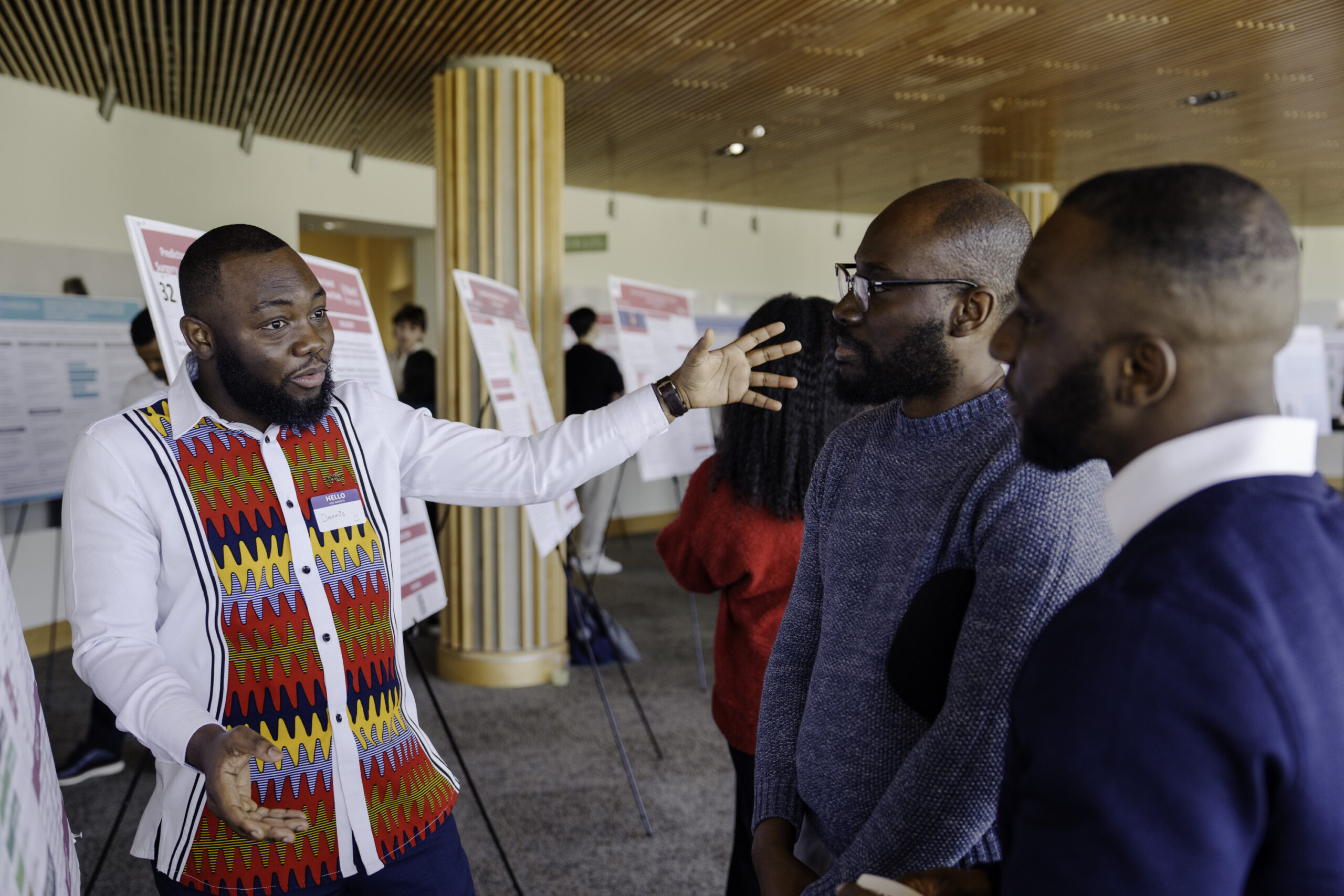
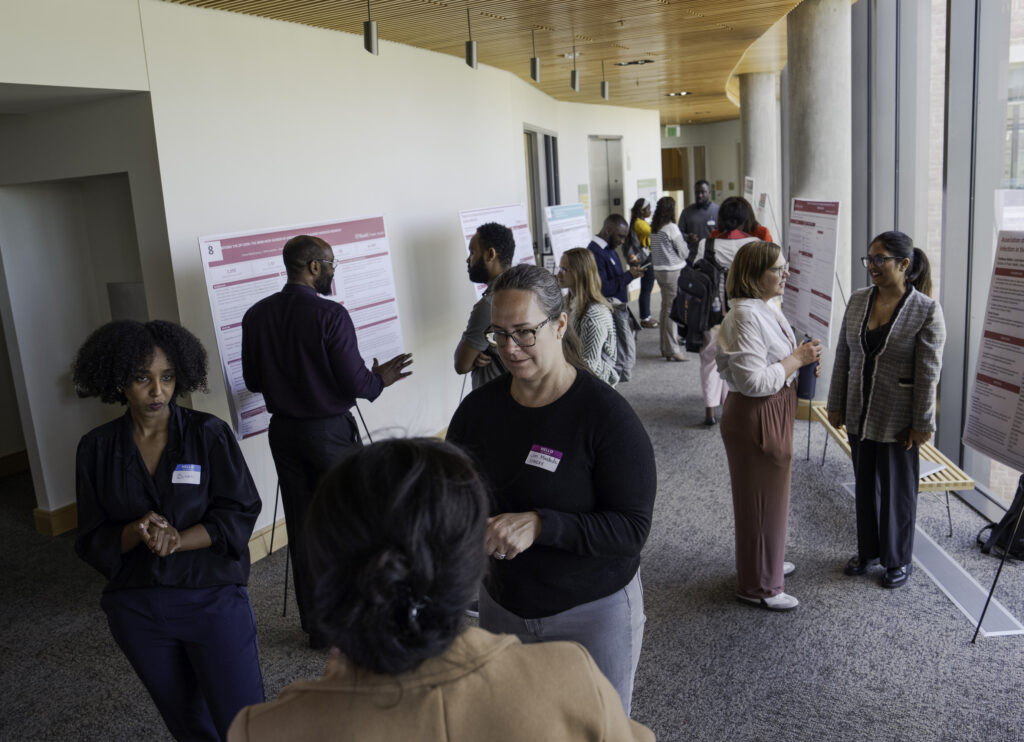
WashU School of Public Health’s inaugural Student Research and Practicum Symposium included 38 posters presented by the school’s MPH, dual degree and PhD students, with topics ranging from health insurance gaps in Missouri, to maternal and infant health disparities. The research and practicum projects presented at the symposium Wednesday, May 6, in Hillman Hall, reflected the school’s emphasis on research that is data-driven and aiming for real-world impact.
“Opportunities for hands-on research and practice are a focus of our degree programs, and gaining experience communicating about public health in different ways is a key part of that,” said Todd Combs, MA, PhD, a research assistant professor at the School of Public Health and one of the symposium's organizers. “The event gives students a venue to share their knowledge and perspectives on work they care about with staff, faculty, and the broader School of Public Health community.”
For the students presenting work, the posters represented more than academic projects. They reflected emerging efforts to better understand communities, reduce disparities, and improve lives through public health research and practice.
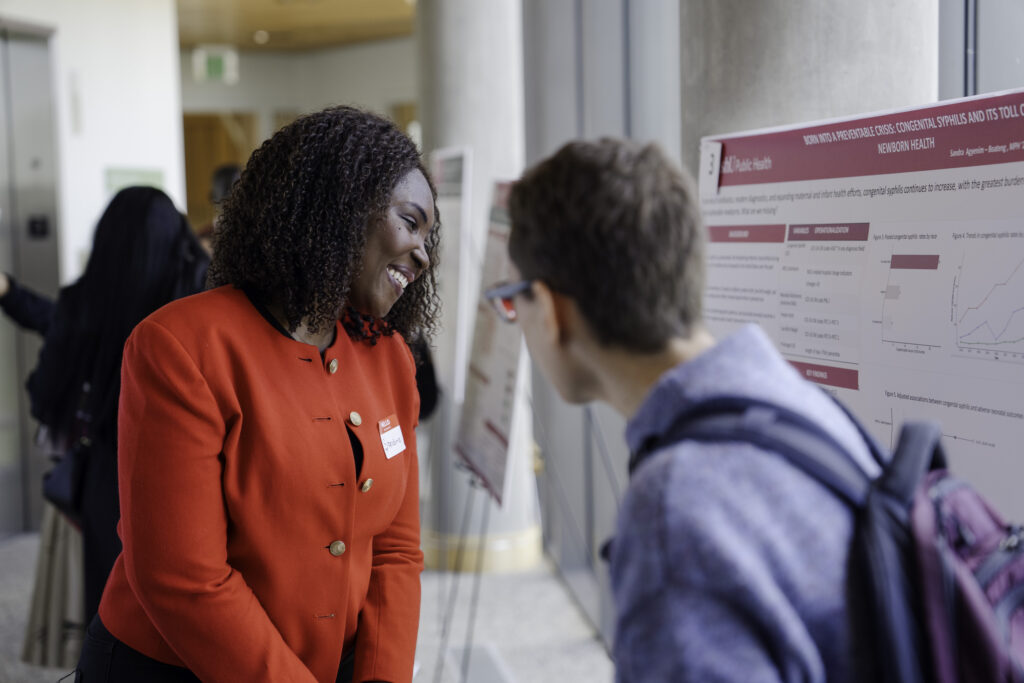
“I’ve always been interested in health disparities, and when I had the opportunity to work with my mentor, Associate Professor Rachel Tabak, congenital syphilis stood out to me because it’s almost entirely preventable,” said MPH student Sandra Agyenim-Boateng, MBBS. “Seeing a condition like this persist and even increase made me want to understand who we’re still failing to reach and what is driving these maternal and perinatal health disparities.”
The posters and presentations were judged by members of the school’s faculty and staff, who assessed the quality of the work as well as how eloquently it was explained. Announced as winners were:
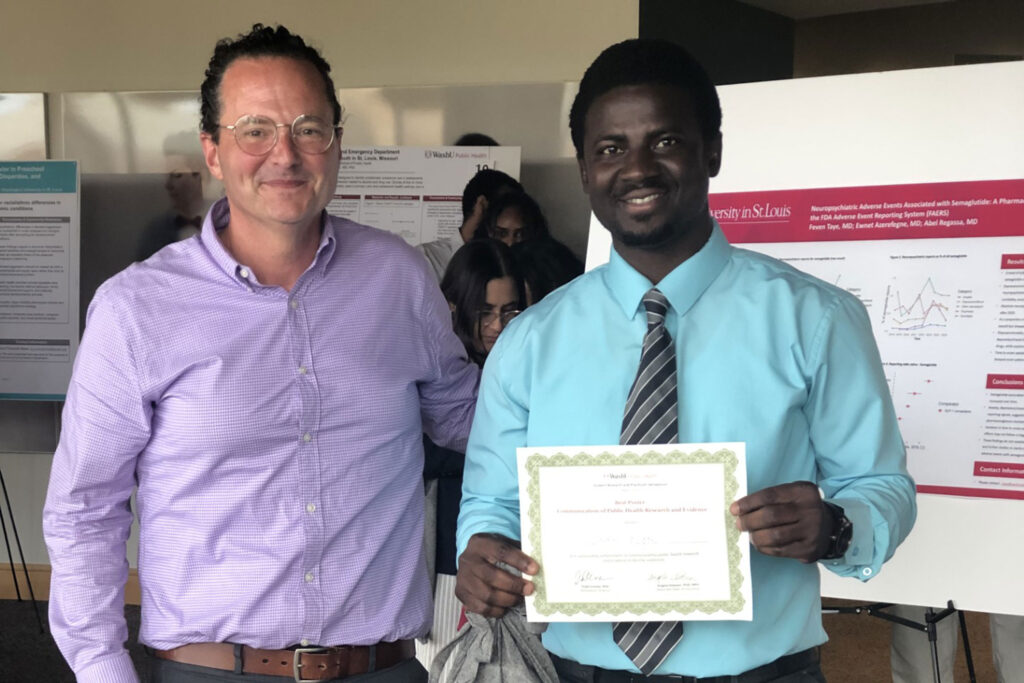
Best communication of public health research and evidence: MPH students Caven Ngoe, MD, and Bezaye Dessie, MD, for “Prevalence and severity of mental health disorders among U.S. veterans: a cross-sectional analysis using BRFSS 2023 data.”
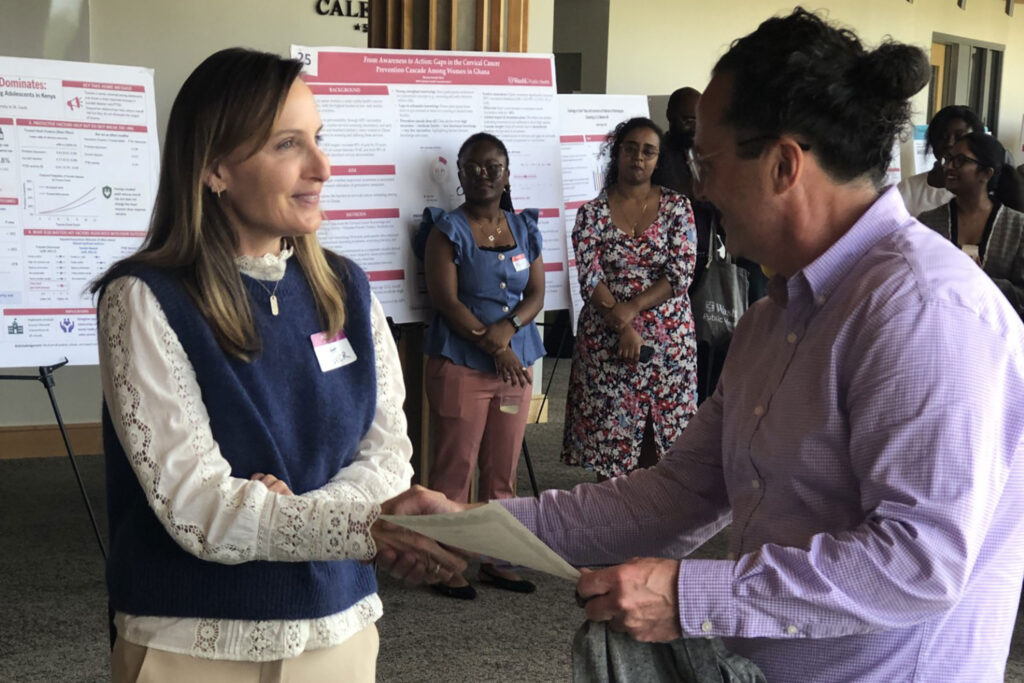
Best overall public health data analysis: PhD student Sarah Stolker, MSPT, for “Adoption of indocyanine green lymphography imaging in lymphedema care: A national survey of U.S. lymphedema therapists and implications for access to evidence-based care.”
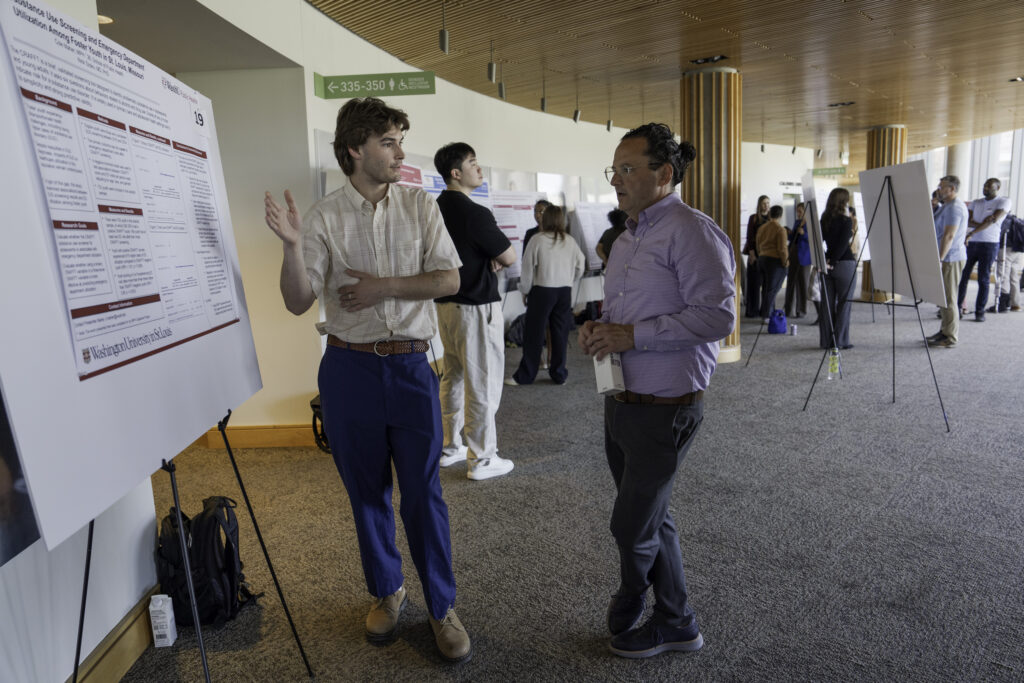
Best research to understand the broader determinants of health: MPH student Cole Maher, for “Substance use screening and emergency department utilization among foster youth in St. Louis, Missouri: A retrospective cohort study.”
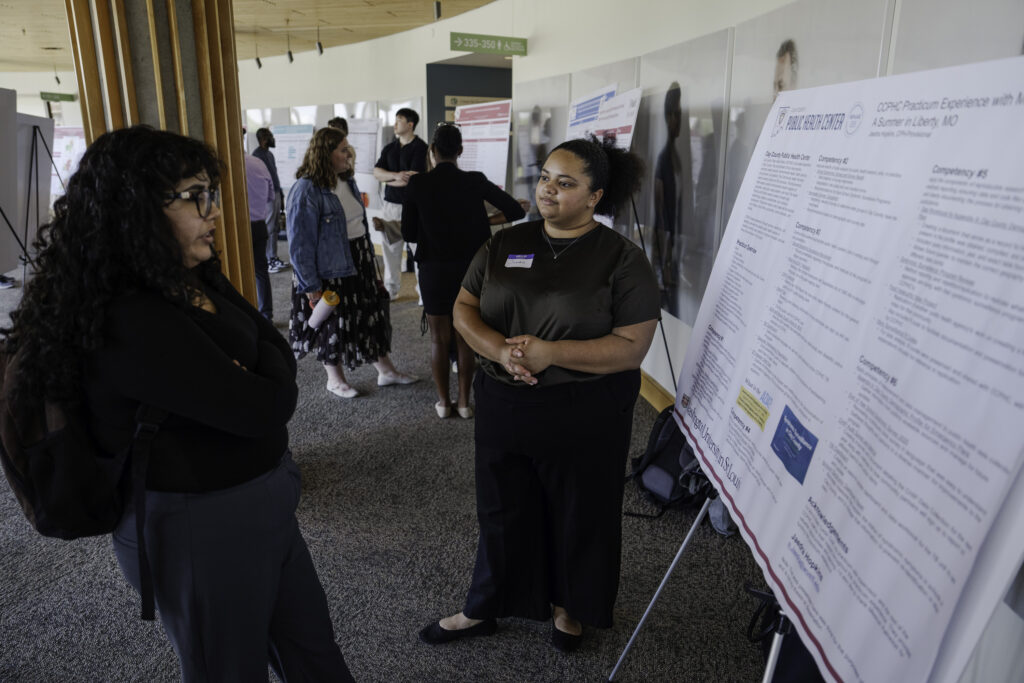
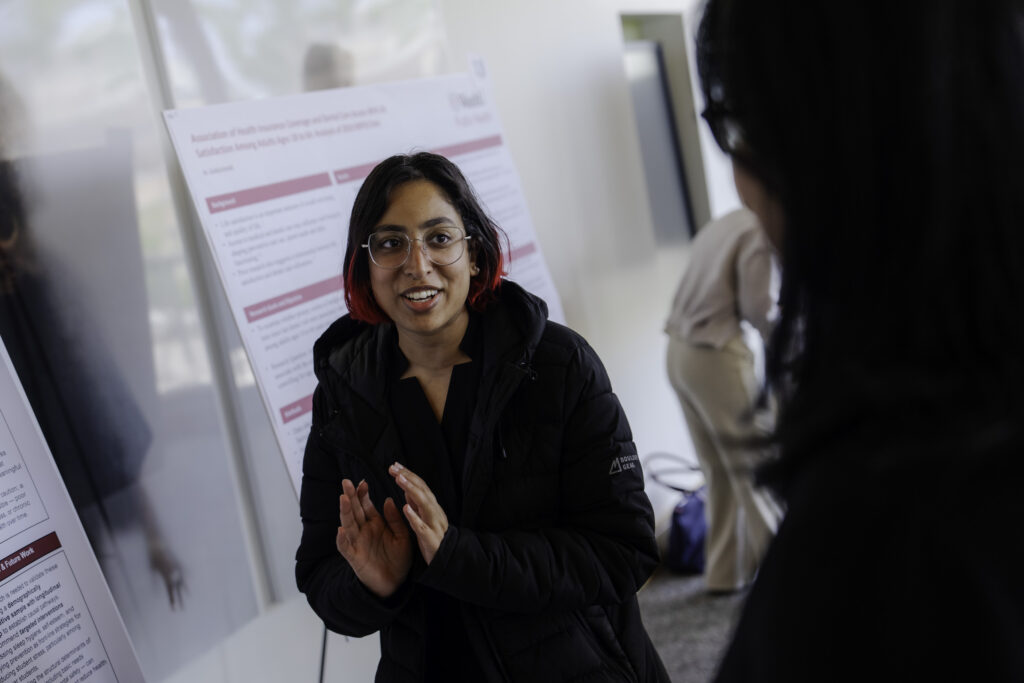
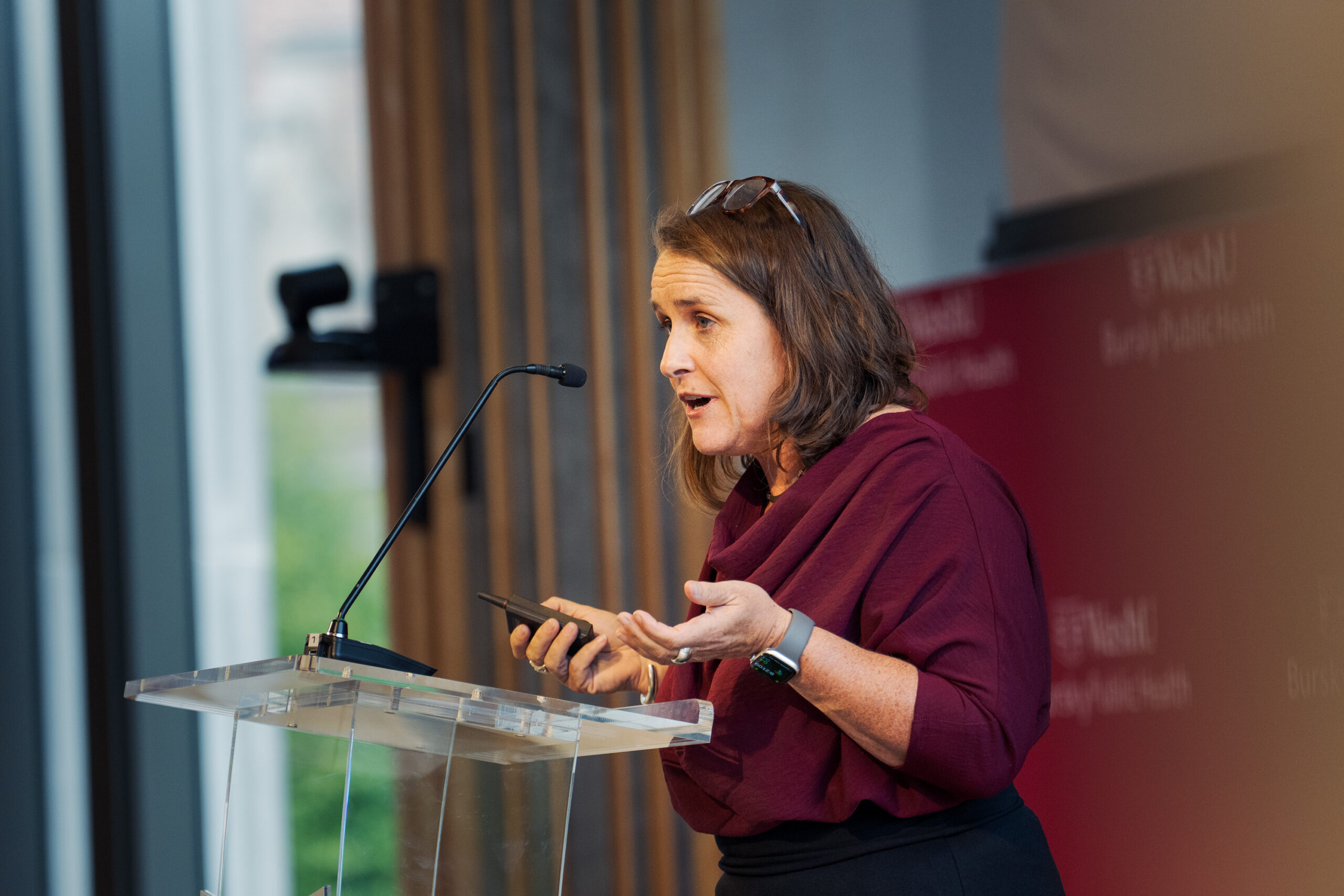
Jaedra Hopkins (right), a second-year MPH student, explains her applied practice experience project to Alejandra Muñoz Rivera, MPH, MSP, the evaluation manager at WashU’s Center for Diabetes Translation Research. Hopkins did her practicum with the epidemiology team at Clay County Public Health Center. Among other projects, she created a community health assessment (CHA) dashboard to collate and display data on health-related strengths and challenges in the community so local health organizations can better meet the community’s health needs. "The project that resonated most with me was the CHA Dashboard, which went live shortly after I departed and demonstrated that my efforts directly benefited the community,” Hopkins said. (Photo: Zachary Linhares/WashU Public Health)Isheeta Gupta, MD, a third-year dual degree MPH/MSW student, discusses how psychological, academic, and social factors interplay to influence student stress and well-being. “As a teaching assistant, I've observed undergraduate students experience intense stress during exams, often balancing multiple demands. It became evident that stress extends beyond academics. We've seen this in grad school, too, where stress results from a wide range of pressures affecting our lives,” Gupta explained. (Photo: Zachary Linhares/WashU Public Health)Master’s and doctoral students took part in the School of Public Health’s inaugural Student Research and Practicum Symposium. Faculty, staff and fellow students turned out to view posters, discuss research and support the school’s students. (Photo: Zachary Linhares/WashU Public Health) MPH students Caven Ngoe, MD, (pictured at right with Research Assistant Professor Todd Combs, MA, PhD) and Bezaye Dessie, MD, received the Best Communication of Public Health Research and Evidence award for their project, titled “Prevalence and severity of mental health disorders among U.S. veterans: a cross-sectional analysis using BRFSS 2023 data.” (Photo: Angela Hobson/WashU Public Health)Cole Maher, a second-year MPH student, discusses the results of his research with Todd Combs, MA, PhD, a research assistant professor. Maher’s study, which won the award for Best Research to Understand the Broader Determinants of Health, explored whether the popular substance-use screening tool CRAFFT (Car, Relax, Alone, Forget, Family/Friends, and Trouble) could identify foster youth at greater risk of emergency department visits. "Our findings indicate that the CRAFFT screener might serve a dual purpose — not only as a substance-use assessment but also as a means to spot youth who require additional support or guidance on where to seek care,” Maher said. (Photo: Zachary Linhares/WashU Public Health)MPH student Sandra Agyenim-Boateng, MBBS, discusses her study on congenital syphilis, a severe infection of newborns acquired from the mother during pregnancy or childbirth. Agyenim-Boateng’s research showed that many women in marginalized communities do not receive the screening or prenatal treatment that could prevent them from passing the infection to their children. (Photo: Zachary Linhares/WashU Public Health)PhD student Sarah Stolker, MSPT, receives the Best Overall Public Health Data Analysis award from Todd Combs, MA, PhD, a research assistant professor, for her project titled, “Adoption of indocyanine green lymphography imaging in lymphedema care: A national survey of U.S. lymphedema therapists and implications for access to evidence-based care.” (Photo: Angela Hobson/WashU Public Health).
Judith Mwobobia, MPH, is the inaugural Writing Fellow for the Bursky School of Public Health Office of Communications. Mwobobia is a PhD student in public health sciences and previously was a journalist in Kenya. She writes profiles and helps cover the news of the school, with a particular focus on student- and education-related stories.
Related News
The Source
September 25, 2026
Pregnancy nutrition trial in Ecuador improves fetal brain growth
Bursky Public Health's Lora Iannotti and colleagues tested whether a diverse diet inspired by ancestral eating patterns could support maternal nutrition and fetal development.
From listening to farmers in Benin to training community researchers in Papua New Guinea to connecting planetary health scholars at WashU, Mandeville works to create a healthy planet for populations