October 16, 2026
Five WashU research teams receive 2026 FARM Cultivate grants
Projects explore the connections among food, agriculture, environmental sustainability and human health


Discussion hosted in Geneva by Bursky Public Health seeks new approaches to global health in a changing world
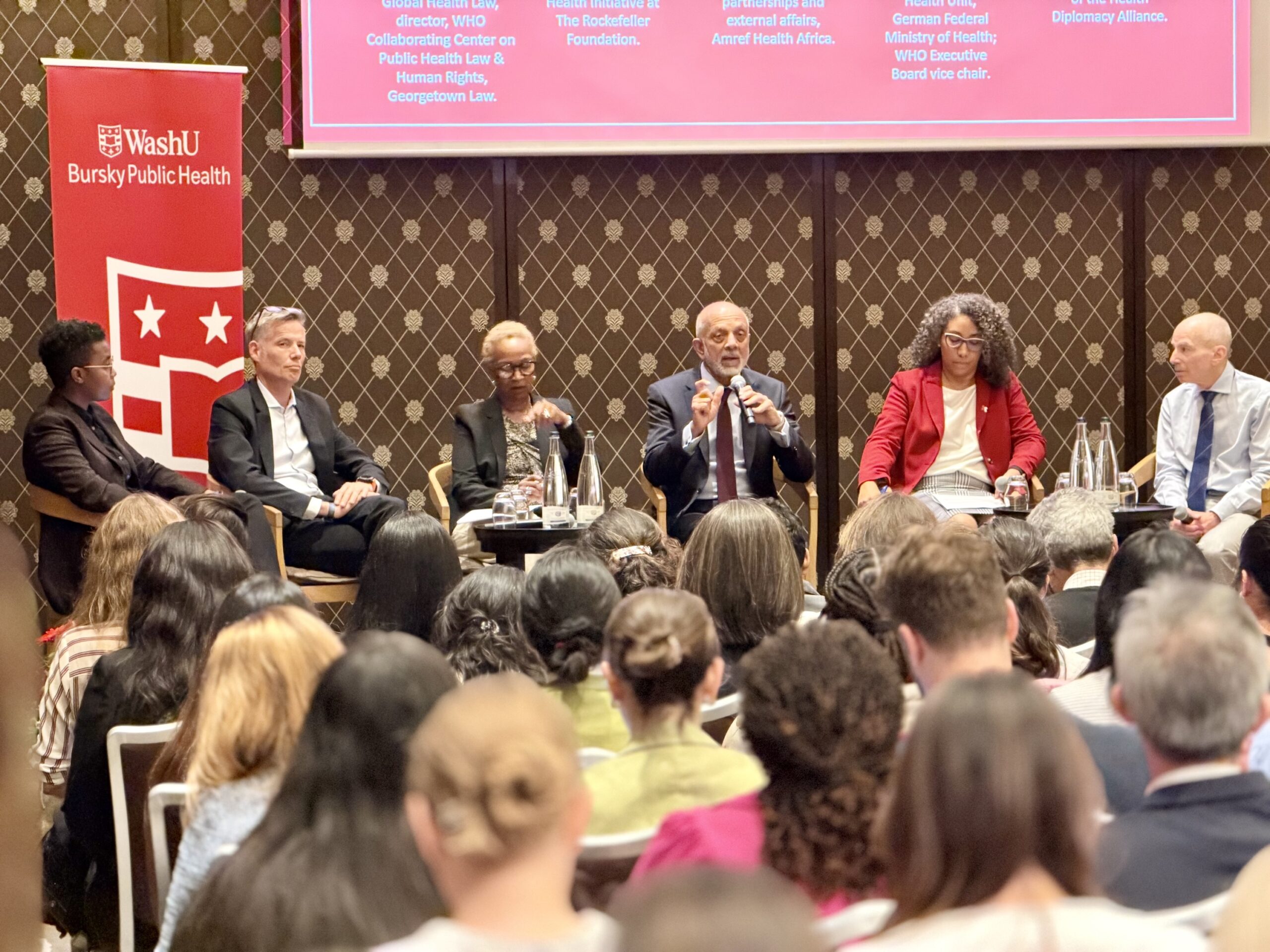
A panel discussion in Geneva on Wednesday, May 20, brought together leaders from academia, philanthropy, government, policy, and global health practice to ponder questions that weigh heavily on the many worldwide who work to advance, or even maintain, global health.
The effects of erased or reduced funding, geopolitical influences, and changing governance models have landed global health at a pivotal moment. The institutions that led the charge in global health are under strain or no longer exist, and new voices tell of recast priorities.
The discussion in Geneva, a World Health Assembly side event hosted by the Bursky School of Public Health at Washington University in St. Louis, centered on some of the key challenges facing global health: sustainable funding, shifting power dynamics, new partnership models, and how best to generate and use knowledge to improve population health. The event, with the theme of “Rethinking Global Health in a Changing World,” elicited thoughtful discourse and, perhaps surprisingly, largely glass-half-full sentiments about what is to come.
Salma Abdalla, MBBS, MPH, DrPH, an assistant professor at WashU’s Bursky School of Public Health, moderated the discussion.
Asked by Abdalla where he sees the governance of global health heading in the next 10 years, panelist Lawrence Gostin, JD, the Linda D. & Timothy J. O’Neill Professor of Global Health Law at Georgetown, and director of the World Health Organization (WHO) Collaborating Center on Public Health Law & Human Rights, pointed out that on the first day of the World Health Assembly’s meetings, an emergency committee was convened to discuss an alarming outbreak of a rare strain of the Ebola virus in the Democratic Republic of Congo. Along with a cluster of hantavirus cases caused by a rare strain with the ability to spread between humans, the world is now battling two major health emergencies, Gostin noted.
“We're seeing in real time the amplification of zoonotic risk,” he said. “This is driven by climate, animal-human interchange, a whole range of different areas. And so, the pandemic risks are higher than they've ever been. At the same time, these two emergency outbreaks have really revealed incredible weaknesses. …
“What we do know is we can't go about things the way we've been going about them,” he added. “Countries and regions, particularly resource-constrained ones, need to take control of their own health and their own security interests.”
Health sovereignty — the right and capability of nations to independently govern their own health decisions, policies and systems, with an emphasis on self-reliance — was a much-visited theme in the discussion.
“What does it mean to allow countries to set their priorities, make the decisions, measure the outcomes, be accountable, and become partners in this, and get off the whole (type of) aid where there was a donor, and there were agendas set by the donor, and then there were the communities that took the aid, but also took all of the conditions that came with it?” asked panelist Naveen Rao, MD, senior vice president of the health initiative at The Rockefeller Foundation. “It’s time to break out of that; we have no choice. We are not going to go back to the old days of a donor-driven aid model. Health sovereignty is at the center of it, and the question is, 'How are we going to come together to help the countries transition to that health sovereign space?'”
Panelist Desta Lakew, MPH, former group director of partnerships and external affairs for Amref Health Africa, offered the perspective of a public health expert who has worked at the community level for many years. Most of the communities she has worked with received donor aid in verticals, meaning as intervention-specific initiatives.
“Programs are set up in verticals; they never are comprehensive, they never are connected,” she said. “So, I think right now that the shift we're making to look at the health architecture differently — it's time for that to happen because there are so many verticals. There are so many lost opportunities.”
But there are also communities taking it upon themselves to try to close gaps on their own, she noted. “I'm hoping that we are able to support the decision-making in a meaningful way.”
Panelist Björn Kümmel, WHO Executive Board vice chair, and head of the Global and Multilateral Health Unit of the German Federal Ministry of Health, said he could not predict what the global health architecture will look like in 10 years.
What he does see, Kümmel said, is the end of the current global health architecture, the classical Official Development Assistance (ODA) agenda. ODA refers to government aid and funding designed to promote the economic development and welfare of developing nations.
“Most of the most financially capable actors were shaped by the ODA agenda,” he said. “I think that what I can say for sure is that the global health landscape and global health will look completely different,” noting that the current global health architecture was shaped by donors and that the largest donor (the United States) has decided not to participate anymore.
“I think the largest crisis that we are currently seeing, it's an existential crisis. Politically, member states want to leave. Financially, the funding is tremendously going down, and I think it's not coming back, as we have known it. I think there is also a structural challenge."
Still, Kümmel added, he feels very optimistic, particularly about WHO’s roles and survivability.
“The world needs an organization such as the WHO, convening, setting norms and standards, being there for health security.”
Panelist Katherine Urbáez, MSc, founder and executive director of the Health Diplomacy Alliance, said she, like Kümmel, cannot guess where global health will be in a decade. But the global health crisis offers an opportunity to reflect on various reforms and accountability, she said.
“We have to prioritize what the main challenges are that we are seeing,” she added. “We have climate change, antimicrobial resistance, and many infectious diseases that (we) are really tackling in low-to middle-income countries. So that's what we have to tackle in the next 10 years, and to really find ways that countries are able to really step up into those processes.”
To view a recording of the discussion, see here.
October 16, 2026
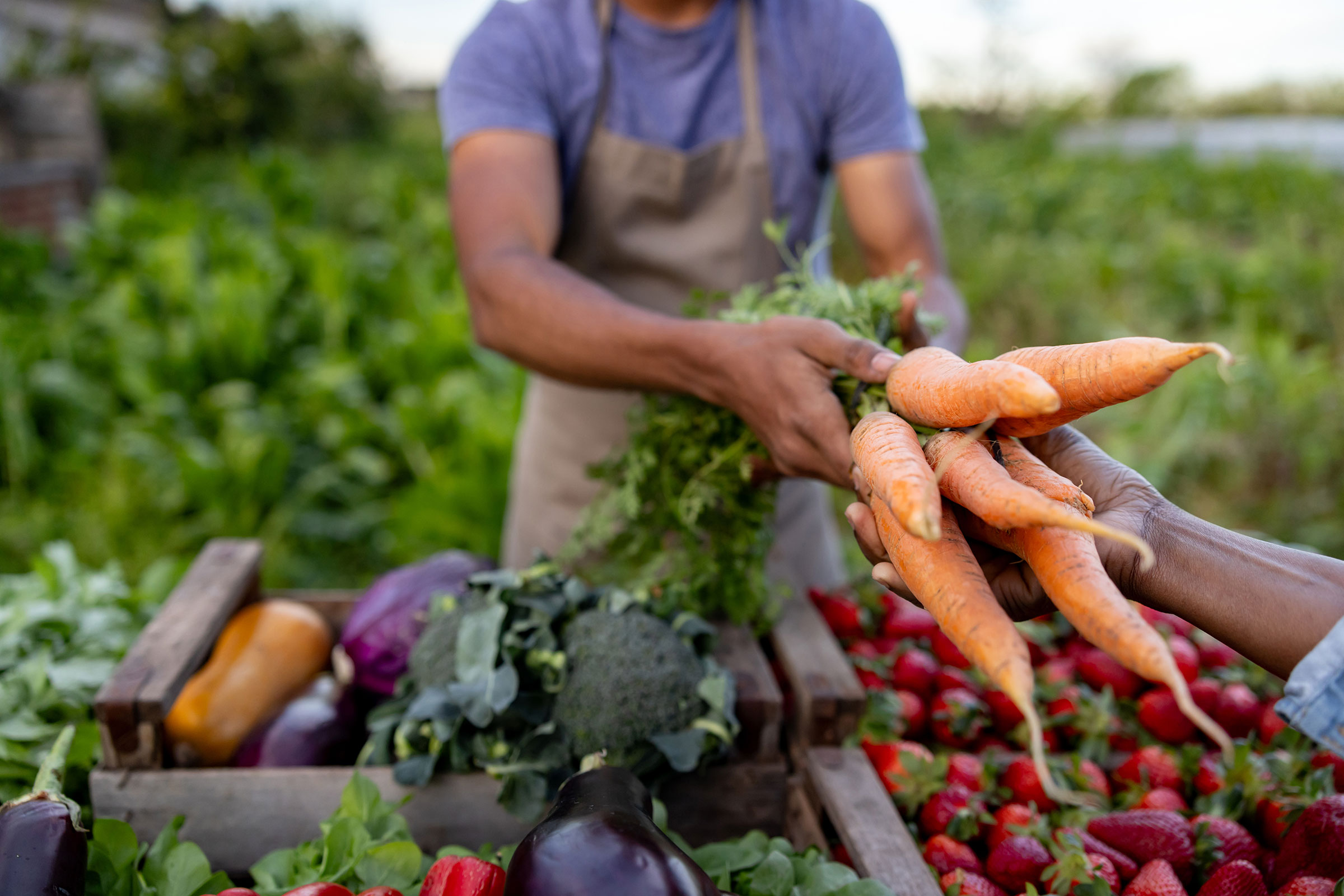
Projects explore the connections among food, agriculture, environmental sustainability and human health
October 16, 2026
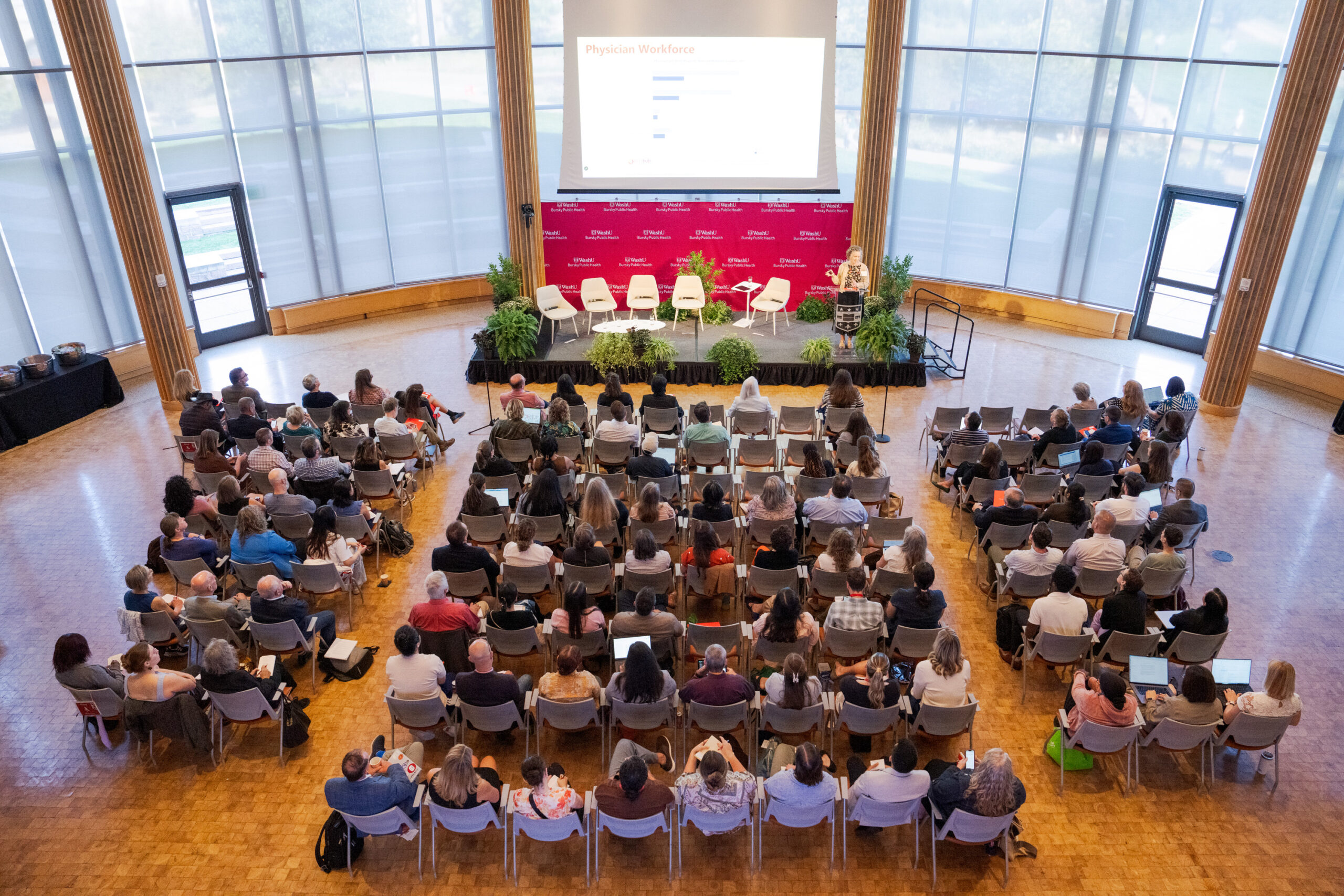
Forum explored how rural health, food systems, agriculture and nutrition interact to impact public health and well-being
WashU's The Source
October 16, 2026
Spielman brings decades of experience in global food policy and economics to his current research on food systems, innovation and rural health