Finding a way to healthy food systems and healthy people
Tamara Schneider
October 16, 2026
Copied!
Forum explored how rural health, food systems, agriculture and nutrition interact to impact public health and well-being
Rural health and community well-being, agriculture, food security and nutrition are component parts of our food systems, and efforts to improve any one element must take into consideration effects on the other parts. Such was the main takeaway of the FARM Food Futures Forum: From Rural Health to Food Security, held at the Andrew M. and Jane M. Bursky School of Public Health at Washington University in St. Louis on October 13 and 14, 2026.
“Rural places are the middle of everywhere,” said Carrie Henning-Smith, PhD, MPH, MSW, the president of the Rural Health Association and a professor at the University of Minnesota School of Public Health and co-director of the University of Minnesota Rural Health Research Center. Henning-Smith gave the first keynote address at the convening. “Rural places are sources of all of the things that we need to live and have good quality of life, including food, but also beauty and recreation and creativity and wisdom. And rural places are integral to the future and well-being of the nation and the globe. I'd like to see us see rural and urban in more symbiotic relationships, not pitted against each other. We need to start by recognizing the assets in rural places, not just the deficits.”
The two-day event spanned rural health, crop diversity, nutrition, and supply chain innovation, bringing together diverse perspectives to generate new ideas and promote healthier communities and food systems. The event drew 650 registered participants, representing countries across North America, South America, Europe, Africa, and Asia as well as dozens of U.S. states. Some of the key insights that emerged from discussions are:
Health is shaped at every stage of the food system: from soil health to seeds, farming, processing, retail and consumption.
Farmers and rural workers are under strain. Supporting farmers means supporting the health and sustainability of rural communities overall.
Food is Medicine programs can improve nutrition while making healthy food systems financially sustainable, but they need more evidence, support and advocacy.
The U.S. National Plant Germplasm System is an essential national and global infrastructure — the biological foundation for crop improvement, food security, climate resilience, nutrition, and long-term agricultural innovation. Genetic diversity is what makes agriculture resilient to climate change, crop diseases and changing consumer preferences and nutritional goals.
Food decisions are driven by prices, margins, demand, logistics, risk, and regulation. Health is important, but in practice it competes with other business priorities such as cost, shelf life, reliability and consumer preference.
Reducing food waste is a major opportunity. Large amounts of food are lost at consumer, retail and supply chain stages. Imperfect produce and surplus food can be redirected, but logistics and packaging matter.
Children are another major opportunity. Children influence household purchasing, and early exposure to healthy eating, at home or at school, builds lifelong habits.
Rural communities must be architects, not recipients, of solutions. State extension programs and local nonprofits can serve as key bridges between academia and rural communities to advance efforts to co-design and co-implement solutions.
See below for highlights from the event.
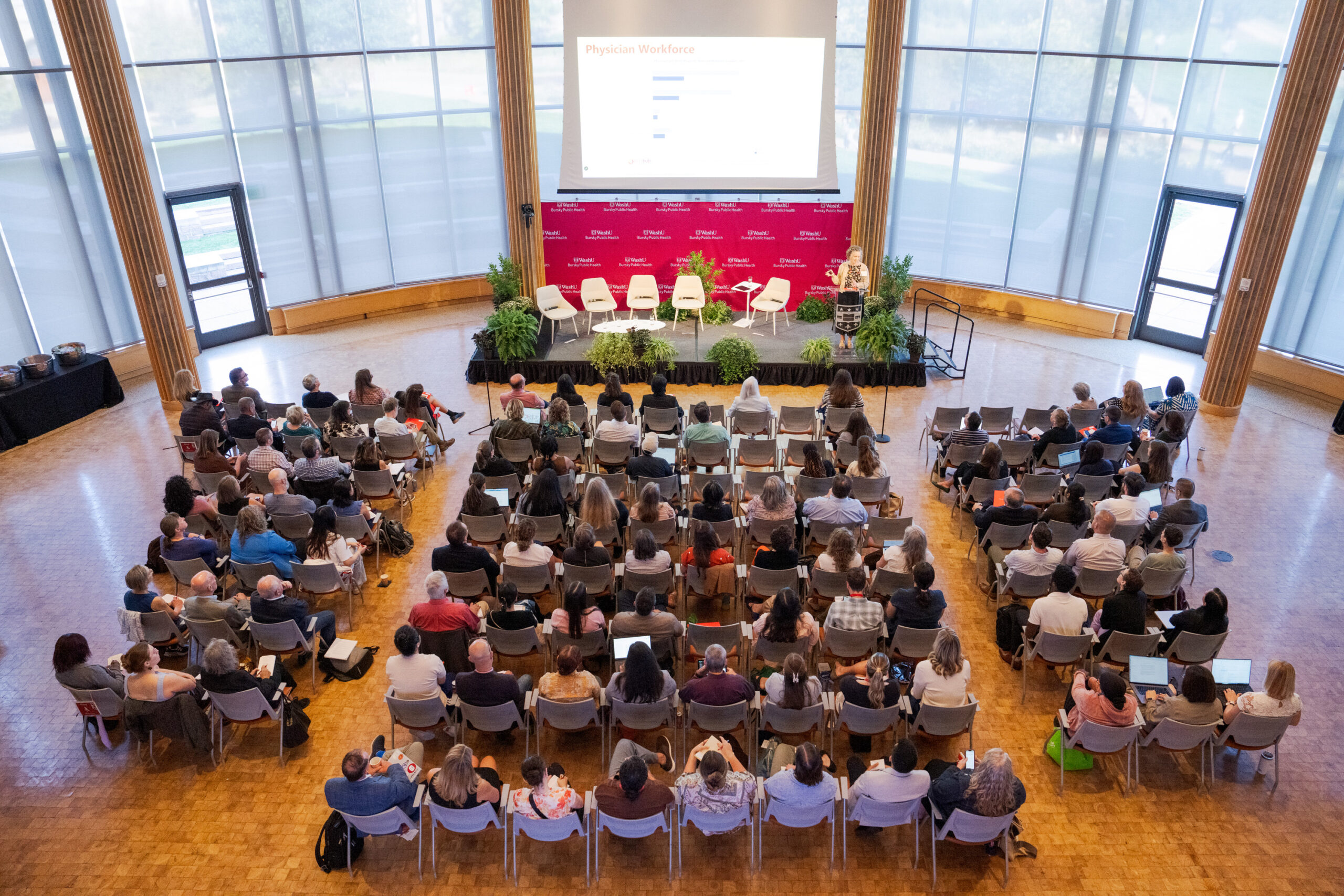
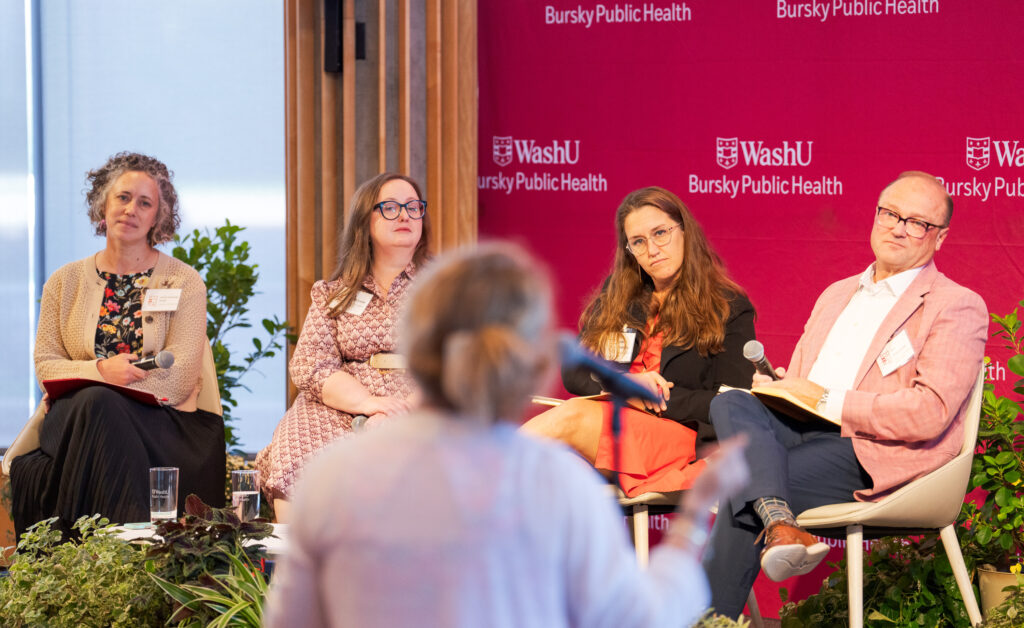
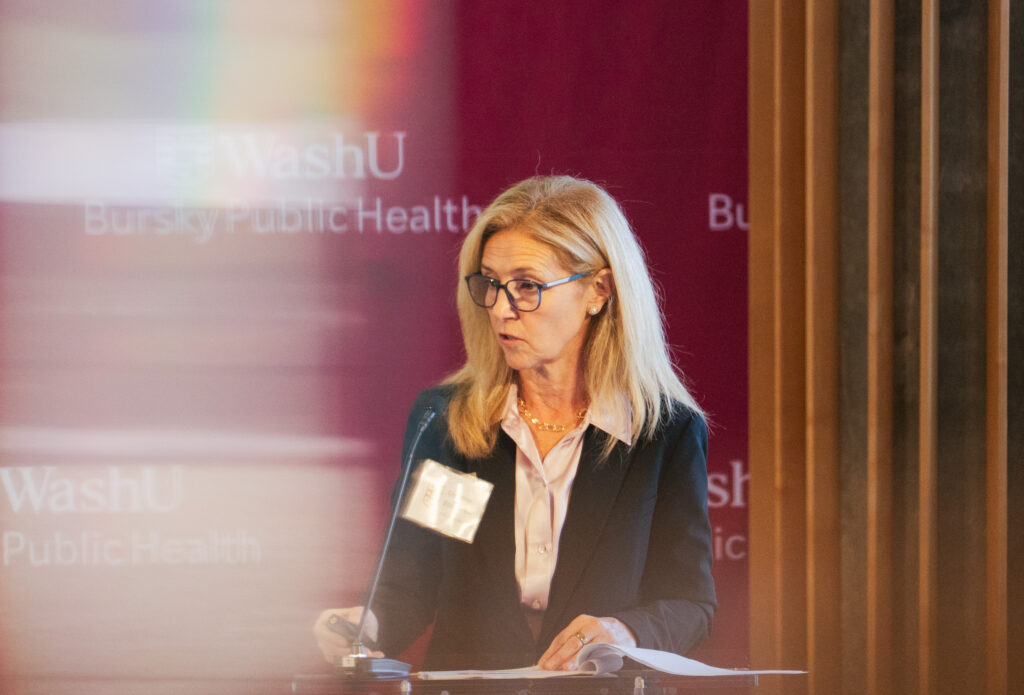
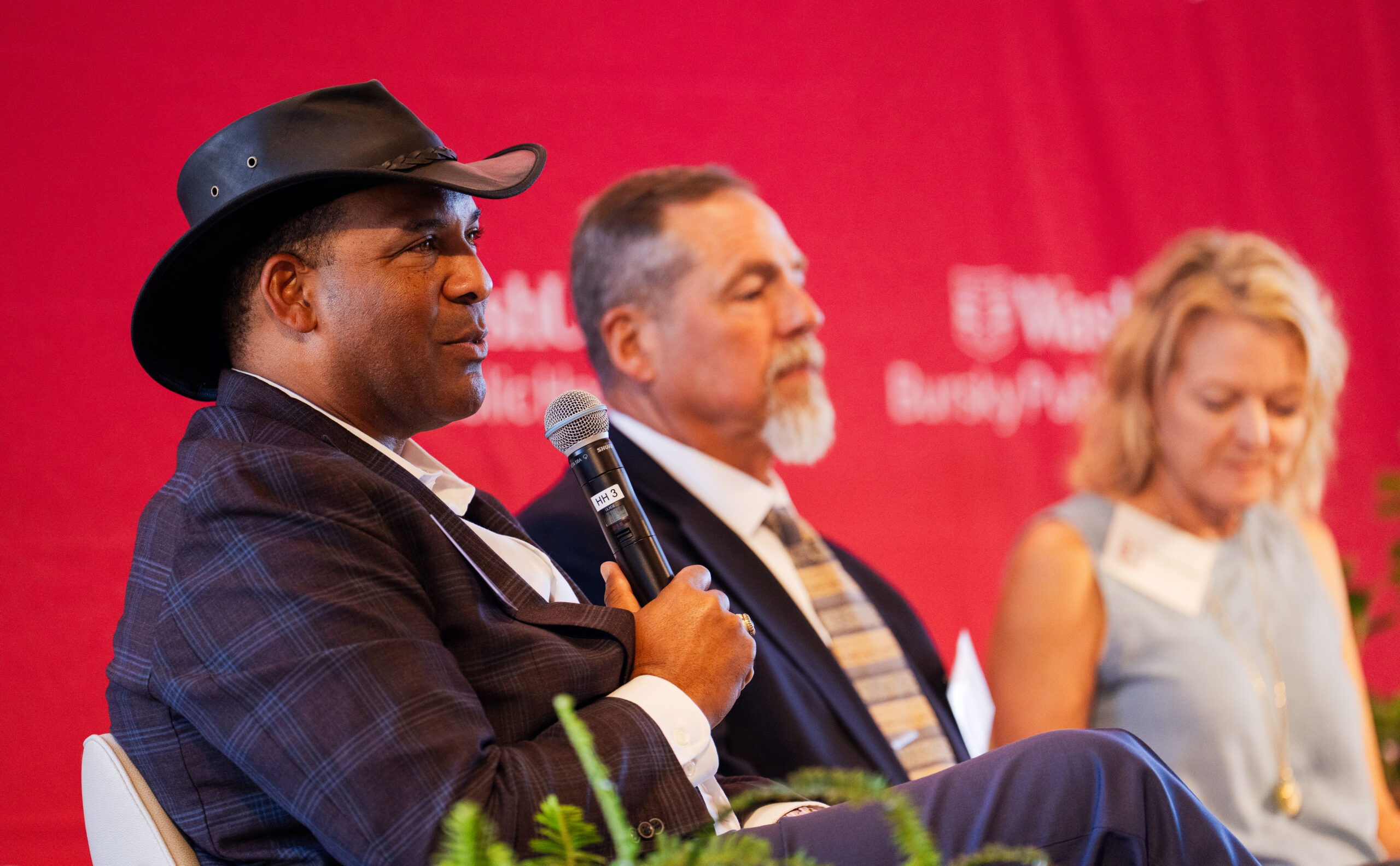
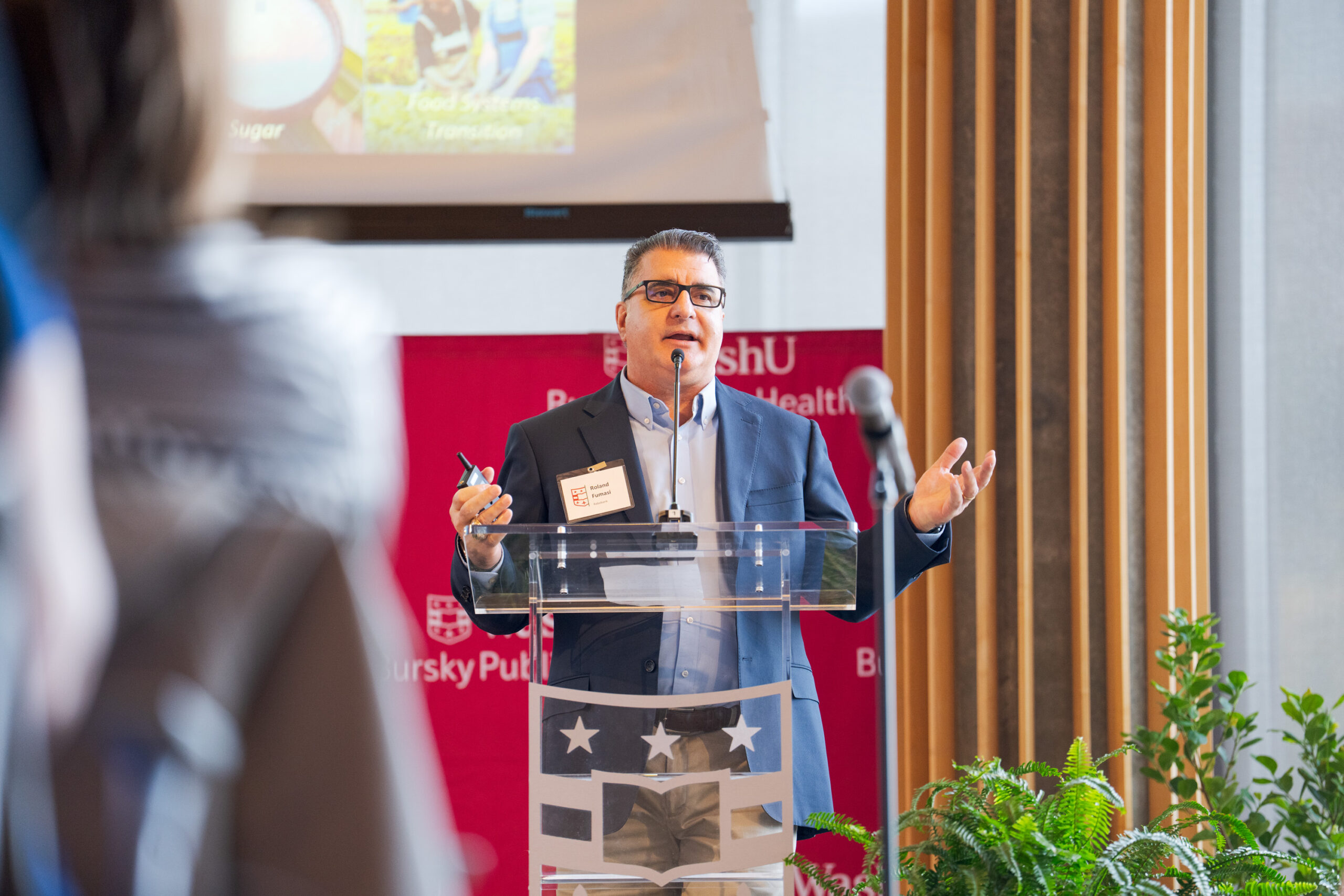
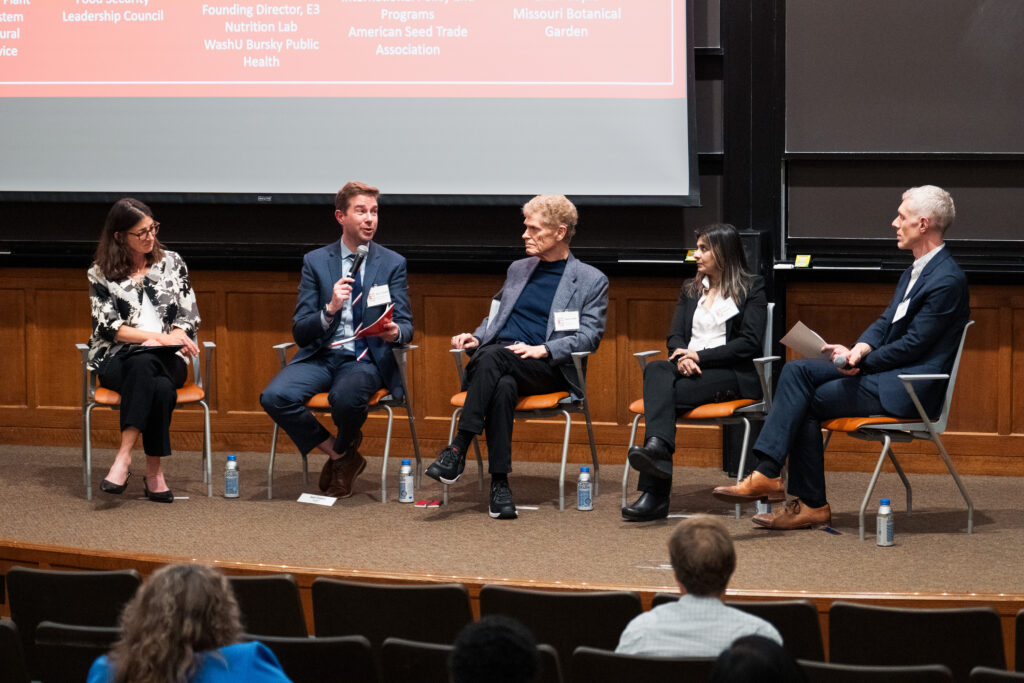
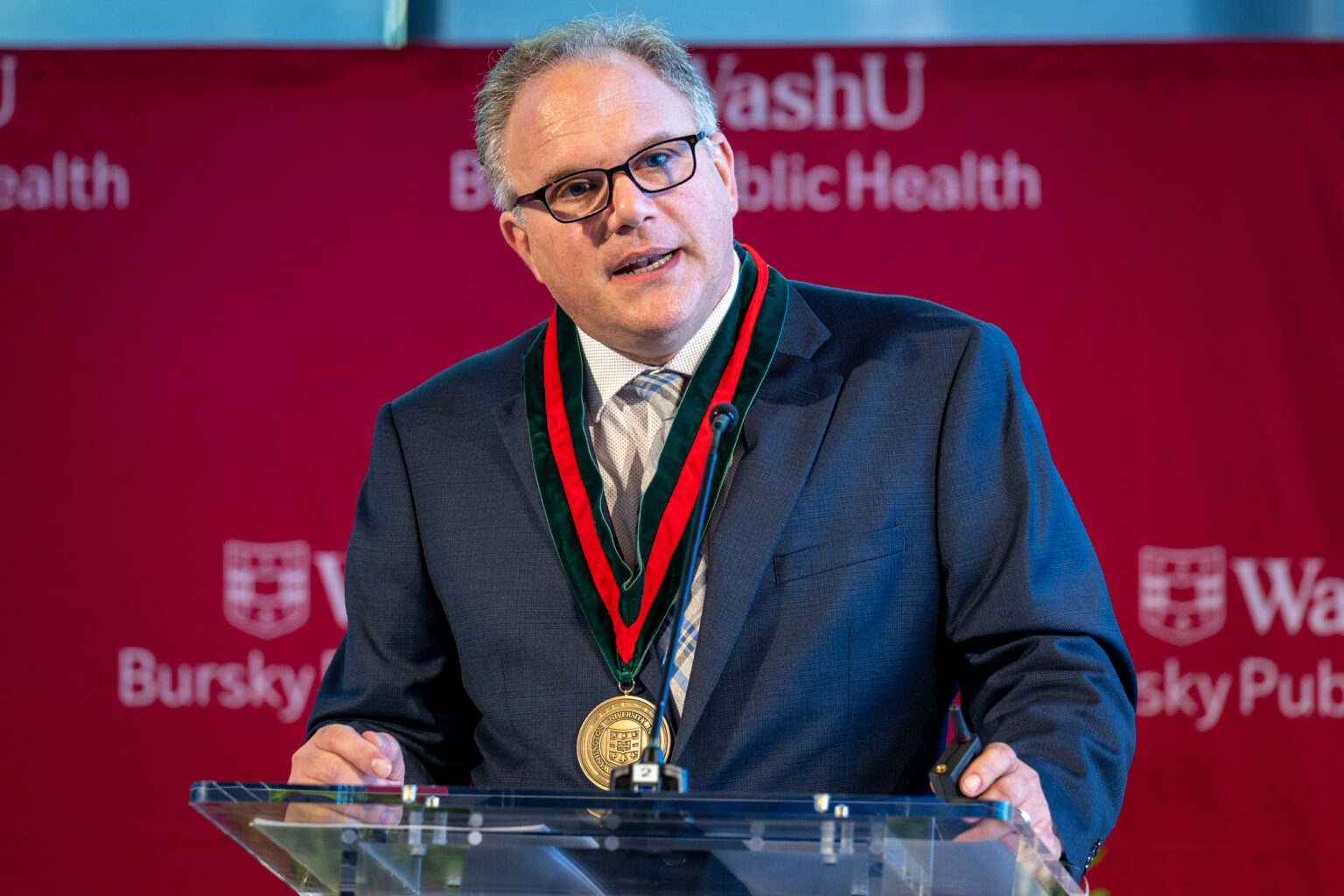
(left to right) Keynote speaker Carrie Henning-Smith and panelists Heidi Lucas, Lindsey Filiatreau and Don Carpenter take a question from the audience during a session on rural health and food security. “We need to insist, at a policy level, that we think outside the box. We’ve got to solve the financial equation, because as much as our organizations drive on and return daily to their mission, their vision, and their values, it does come down to, ‘Can I pay the bills?’” said Carpenter, the CEO of rural Cedar County Memorial Hospital. “We can't take a big-system approach and get that to work at a rural facility. We have to decide that we want to fix it and start from the bottom up, instead of taking the top-down approach that is not working.” (Photo credit: Zachary Linhares/WashU Bursky Public Health)Keynote speaker Christina Economos, the dean of the Friedman School of Nutrition Science and Policy at Tufts University, led a breakout session on nutrition and diet-related chronic disease. A systems scientist, Economos emphasized that a complex network of microsystems — food, education, healthcare and political systems among them — shape how people eat. “In Cleveland, Ohio, we asked people about the community environmental factors that were impacting childhood obesity,” Economos said, showing a slide of the network that emerged from her data. “It’s not, ‘I don't know what to do,’ or ‘I need more education.’ It's toxic stress and violence. It's equity, historical and current discrimination and trust issues. It's political will. These are often the challenges and the barriers within communities that need to be surfaced and addressed for change to actually happen.” (Photo credit: Zachary Linhares/WashU Bursky Public Health)“I realize that farmers are the heartbeat of rural America. We are getting hit with some real challenges, and if we lose farmers, these rural towns are going to be lost,” said P.J. Haynie III, a fifth-generation farmer and the CEO of Haynie Family Foods, speaking during a session on stewarding the land from the perspective of farmers and producers. “Technology has brought us a long ways in the advancements that we have in agriculture, and it's really got us to be more efficient. But I’m selling corn and soybeans for the same price today that my grandfather sold it for 40 years ago. Granddaddy's combine costs $80,000, and a new one for me is $800,000. So, how do I scale to continue to do what I love to do? That’s the real challenge we have in rural America.” (Photo credit: Zachary Linhares/WashU Bursky Public Health)Keynote speaker Roland Fumasi, the head of the North American RaboResearch Food & Agribusiness Group at Rabobank, headlined a session on markets, demand and the health consequences of food systems. “You see consumers paying attention to some of the research findings. They're paying attention to the headlines, and you’re seeing industry lean into that,” Fumasi said. “But marketing still works, right? It still exists. And the way we present food and what we offer up to consumers still has a place. I think because of information flow and the interest from the consumer to better understand the food supply chain and the specific nutrients in their food — and the ability for consumers to get that information in a couple of seconds — that’s really helping bring the food availability and the health consequences together.” (Photo credit: Zachary Linhares/WashU Bursky Public Health)Bursky Public Health Dean Sandro Galea gave the opening remarks. “We have to ask what we can do differently,” he said. “Rather than asking only, ‘What are the problems facing rural communities?’ we can ask, ‘What's required to ensure that rural communities thrive?’ Rather than asking only, ‘How do we address food insecurity?’ we can ask, ‘What would a food system look like that simultaneously supports health, economic opportunity, and resilient communities?’ Rather than treating agriculture solely as a source of food, we can ask how agricultural policy and innovation might contribute to better health. And rather than universities arriving with predetermined answers, we can ask how researchers can work alongside producers, rural communities, businesses, practitioners, and policymakers to identify questions and develop solutions together.” (Photo credit: Zachary Linhares/WashU Bursky Public Health)A breakout session examined the critical role of plant collections and how investment in plant genetic resources and agrobiodiversity can support agricultural resilience, food security and human health. “We're very lucky that we have the space now to talk about breeding for nutrition because we're no longer worried about breeding for yield and volume,” said Sam Crowell, second from left, the vice president of the American Seed Trade Organization. “We have improved our crops to a point where the most immediate pressure point is no longer will we have enough calories, period. That's a tremendous victory. The question is now, in a world where we're growing very big crops on very large amount of acres, how do you deliver more targeted varieties into a supply chain that relies on economies of scale in order for farmers to have livelihoods, right?” (Photo credit: Zachary Linhares/WashU Public Health)
Tamara Schneider, MPH, PhD, is the assistant director of communications and senior science writer at Bursky Public Health. She holds a bachelor’s degree in molecular biophysics & biochemistry and in sociology from Yale University, a master’s in public health from the University of California, Berkeley, and a PhD in biomedical science from the University of California, San Diego. She joined WashU as a science writer in 2016.
Related News
October 16, 2026
Five WashU research teams receive 2026 FARM Cultivate grants
Projects explore the connections among food, agriculture, environmental sustainability and human health