October 16, 2026
Five WashU research teams receive 2026 FARM Cultivate grants
Projects explore the connections among food, agriculture, environmental sustainability and human health



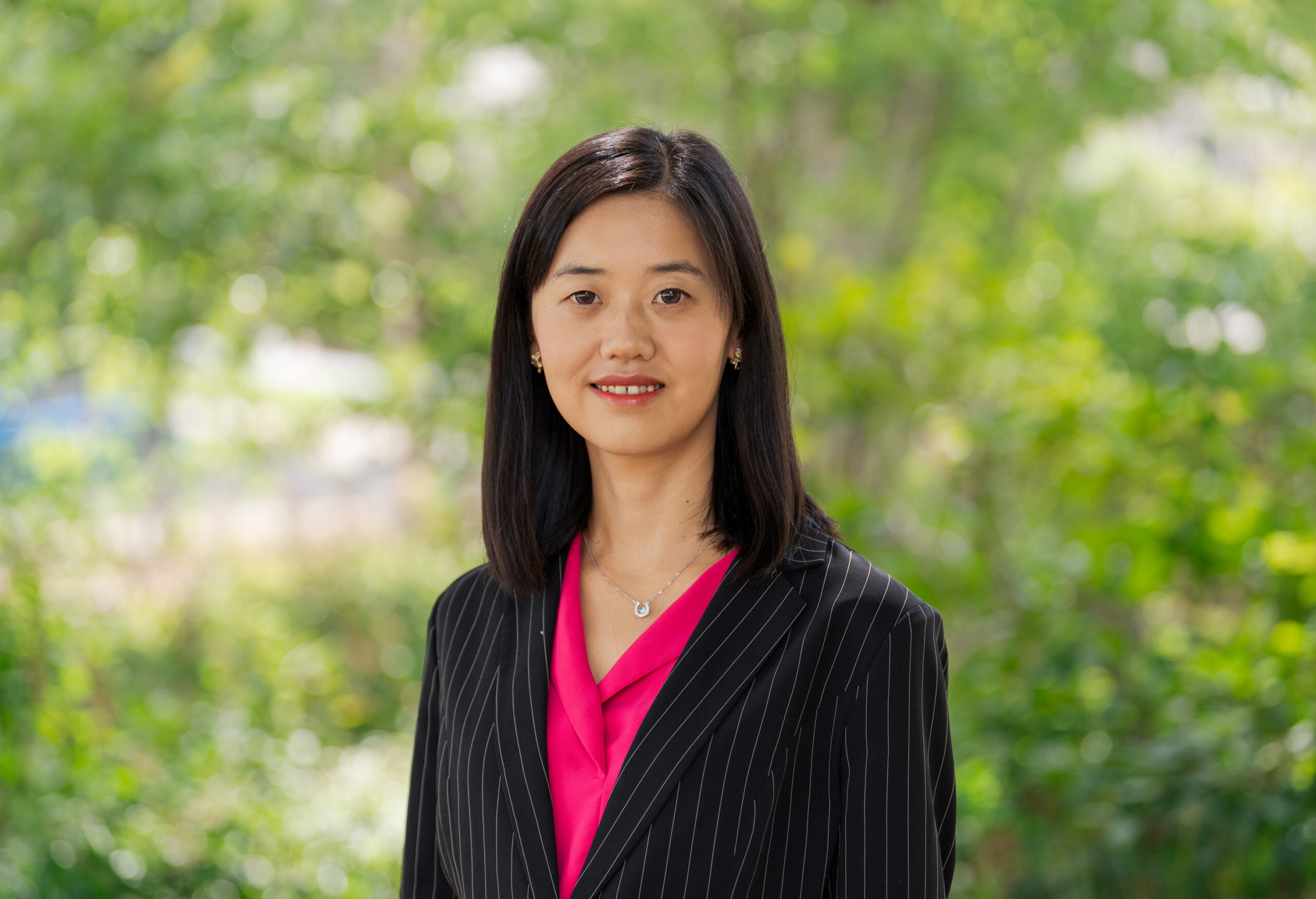
Zhang works to promote healthy aging through better care and innovation
“How can advances in health technology, care delivery and payment models improve coordinated, high-quality care as populations age and traditional caregiving structures change?” This is the question that animates the research of Zhang Zhang, PhD, MSc, an assistant professor at the Andrew M. and Jane M. Bursky School of Public Health at Washington University in St. Louis.
“The world is getting older, while healthcare systems face growing pressure to deliver high-quality care with limited resources. Meanwhile, families are changing. It is no longer as common for multiple generations to live together under one roof. How we provide and coordinate care has become a challenge for many households and something we need to consider before a crisis occurs,” she said.
Zhang’s research sits at the intersection of health economics and health services research for healthy aging. She evaluates healthcare innovations — such as telemedicine, remote patient monitoring and AI-enabled health tools — as well as new care delivery and payment models that can help bring these innovations into everyday practice. Her work focuses on what she calls the “last mile," the gap between developing a promising innovation and making it work in everyday care. Who will use it? How to deliver and pay for it? Can it improve care without leaving vulnerable populations behind?
Zhang joined Bursky Public Health in July. Her academic path to WashU combines training in public health, economics and sociology. Here, Zhang discusses that journey, the experiences that shaped her interest in healthy aging and her commitment to make health innovation more accessible and sustainable.
“My work focuses on health economics and health services research related to technology innovation and care delivery model reform, particularly for healthy aging. The world is getting older, and rapid population aging, a growing burden of chronic conditions, and the increasing prevalence of age-related diseases are creating major challenges for health systems locally, nationally and globally. Medical expenditures also continue to rise, making the sustainability of public budgets an increasingly important priority.
“At the same time, we are seeing rapid innovation of technology in health service delivery, from telemedicine and digital health to AI-enabled tools, new diagnostic technologies, and novel ways of paying for them. What motivates my research agenda is to understand how those two trends come together. I seek to understand for whom do these technologies work? Who may be left behind? And what conditions are necessary for them to improve access, quality, and affordability?
“Health economics plays an important role in optimizing resource allocation and in achieving a sustainable balance between cost and high-quality care. My research examines not only whether an innovation works, but also how to implement it accessibly, effectively, and sustainably in health systems. Those questions have shaped my research agenda.”
“My interest in healthy aging grew from seeing how challenging it can be for older adults and their families to navigate the healthcare system. During my practicums in geriatric clinics and fieldwork at nursing homes, I saw firsthand how older adults with complex medical conditions and their caregivers struggled to coordinate care across multiple providers, manage medications and keep up with appointments and procedures. These experiences made me realize that good healthcare is not just about access to the latest treatments or technologies, but also about how care is coordinated and delivered.
“These experiences motivated me to look more closely at how we can improve healthcare delivery and focus more on the quality and value of care. During my PhD training in health economics at the University of North Carolina at Chapel Hill and my postdoctoral fellowship at the Johns Hopkins Bloomberg School of Public Health, I became increasingly interested in how economic incentives, innovative care models, and emerging technologies can help address these challenges. I wanted my research to go beyond identifying problems and offer practical solutions to make real-world impact.”
“Implementation science is one of the Bursky School’s major strengths and leading areas, and I hope to collaborate with experts in that field as I continue developing my research agenda.
“Across the university, WashU already has a strong foundation in aging research. I am interested in working with clinicians in areas such as neurology and with my colleagues at the Knight Alzheimer Disease Research Center and Harvey A. Friedman Center for Aging. On the technology side, I look forward to collaborating with the McKelvey School of Engineering and the AI for Health Institute. I have also become affiliated with the Center for Advancing Health Services, Policy & Economics Research and the AI for Health Institute.”
“I am also interested in building connections with Olin Business School. The industry and business perspectives are important when studying payments, adoption, and the sustainability of health innovation.”
“My PhD advisers once told me, ‘Do not try to be perfect, but always be on the journey toward perfection.’ I took that to mean that if I expected the first draft of a dissertation or paper to be perfect, I would never begin. Completion comes first. Once something exists, you can keep revising it and move it closer to what you want it to be.
“I apply this advice to many aspects of my life now. The important thing is to start - to put the ball in motion. A career is a journey, a marathon, and progress depends on beginning, continuing, and improving along the way.
“My mentors have also taught me the importance of curiosity, passion, resilience, and persistence - qualities they have all embraced and valued. Over time, I have come to appreciate the importance of being open-minded and genuine in my interactions with others and in my own research. This mindset has helped me form strong relationships and foster interdisciplinary collaborations, which I believe are among the most rewarding parts of an academic career.”
“I love swimming, and I am excited that WashU has such a nice pool at the recreation center. I am also a nature and botanical garden lover, so I am looking forward to exploring the Missouri Botanical Garden in the fall when leaves change color.
“I also enjoy traveling and taking photographs along the way. I am not a professional photographer, but photography helps me capture beautiful moments, appreciate the little things in life, and preserve memories of the places and people.”
Judith Mwobobia, MPH, is the inaugural Writing Fellow for the Bursky School of Public Health Office of Communications. Mwobobia is a PhD student in public health sciences and previously was a journalist in Kenya. She writes profiles and helps cover the news of the school, with a particular focus on student- and education-related stories.
October 16, 2026
Projects explore the connections among food, agriculture, environmental sustainability and human health
October 16, 2026
Forum explored how rural health, food systems, agriculture and nutrition interact to impact public health and well-being
WashU's The Source
October 16, 2026
Spielman brings decades of experience in global food policy and economics to his current research on food systems, innovation and rural health