November 20, 2026
Looking at public health through the lens of human rights
A convening explored how a human rights framework can address health inequities, improve public health and strengthen justice


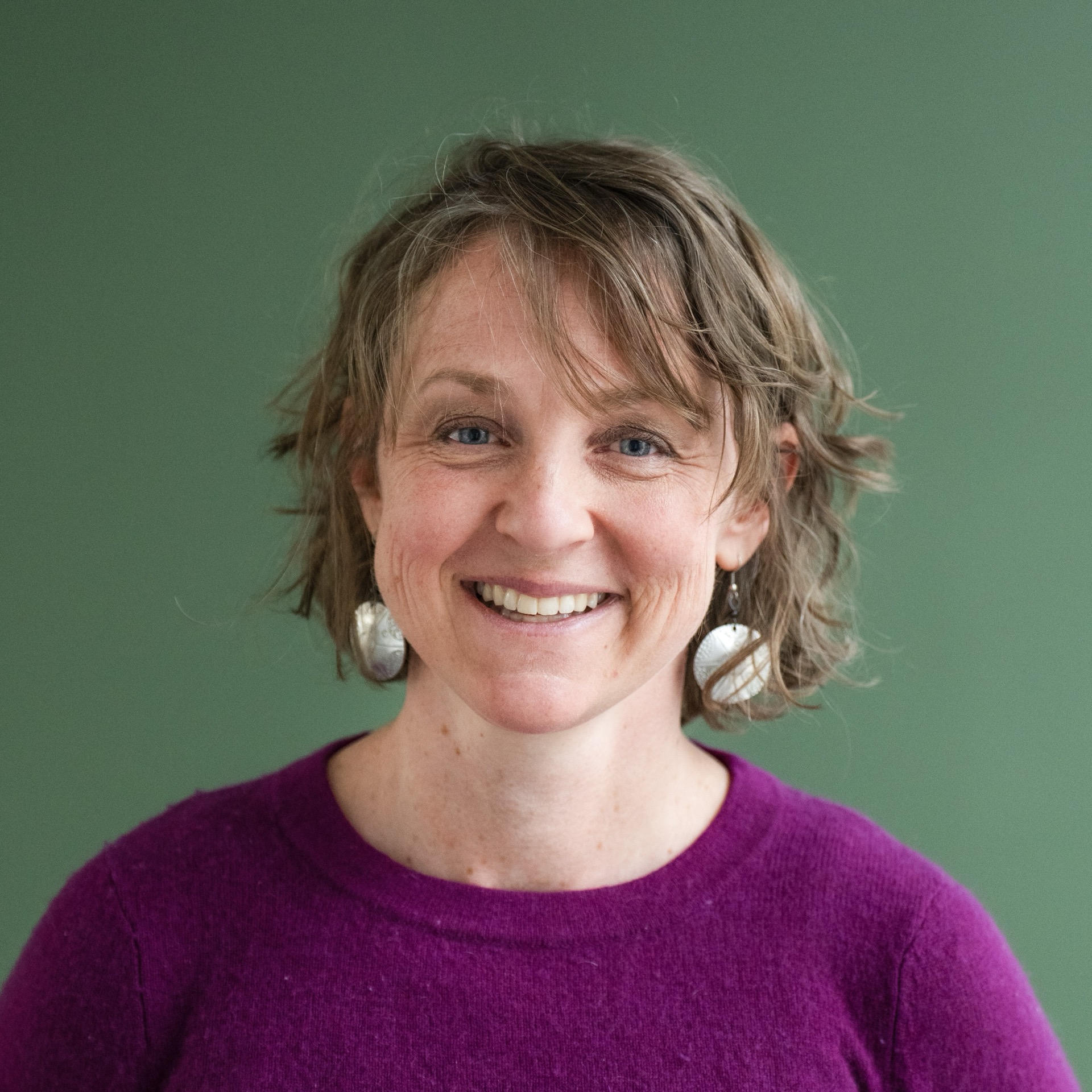
The common thread in McKay’s career has been finding ways to keep effective health programs going long after they launch
Ginger McKay was doing a practicum for her master’s degree in medical anthropology when she first heard a bit of dark humor that would change the course of her career.
McKay was in Uganda, working on a program to promote HIV education for schoolchildren. Her Ugandan colleagues liked to joke: “When the funding dries up, the programs go away.” The sardonic joke — and the dark reality it reflected — bothered her enough that she resolved to focus her PhD research on learning what makes programs sustainable so she could design public health interventions that would last.
Today, McKay, MA, PhD, is an assistant professor at the Andrew M. and Jane M. Bursky School of Public Health at Washington University in St. Louis. Her research interests have broadened from sustainability to encompass the entire field of dissemination and implementation science, which studies how to translate evidence into practice. Most of this work focuses on infectious disease, but she occasionally dips into other health contexts.
“I got my start in HIV, then worked on COVID and HPV and other sexually transmitted infections,” said McKay, who co-leads the dissemination and implementation science core at the Midwest Developmental Center for AIDS Research. “More recently, I’ve gotten into tuberculosis, other types of mycobacteria, and antibiotic stewardship because antibiotics are used so often to treat infectious diseases.” Across her projects, McKay keeps coming back to one question: How can she make sure new discoveries reach the people who really need them?
Here, McKay talks about getting started in her career and what she wishes she had learned early on.
“I had this amazing professor my freshman year who was an ethnobotanist from Jamaica. He was so cool, and I loved learning about other cultures and how people lived. I went into medical anthropology because I was interested in how people treat health conditions. I was also interested in Indigenous and traditional knowledge about health. After my master’s in medical anthropology, I could see myself going in either direction. Public health made more sense at the time. I could see a clearer career path with a PhD in public health.”
“I wanted to do my master’s degree practicum abroad. A doctor who practiced in the U.S. had a small nonprofit in Uganda, and he connected me with the people there. We worked on HIV education for children in Ugandan schools. I ended up spending three summers in Uganda. That got me hooked. When I started my PhD, I was matched with an advisor who conducted research in HIV, and the rest is history.”
“Here in St. Louis, I am working with other researchers on the Clear Path Collaborative, which is piloting and evaluating a collaborative of HIV service providers. I also work with an infectious disease physician on a large antibiotic stewardship project in pediatric hospitals. Additionally, I co-lead the dissemination and implementation core at the Midwest Developmental Center for AIDS Research, where I advise and mentor HIV investigators. Then there’s the MycoTranscend Initiative, which includes work on tuberculosis. I also have a few small projects that let me explore planetary health.
“Yes. It’s my first time teaching a class. I co-teach undergraduates Research Methods with Dr. Bree Bode, and we both like getting students out to try the methods themselves. We have a lecture and a lab. For one exercise, we had students carry jugs of water around campus and reflect on what it might be like to have to go and gather water every day. I love hearing students talk about going out, collecting data, and feeling like they’re doing real research. That’s what it should feel like. It’s hard to manage a whole research portfolio and teach, but I’ve really enjoyed it.”
“I had no picture. I think people sometimes assume I’ve been very intentional about my career, but early on I was just taking opportunities as they came. I had a year between my master’s and PhD studies, and in that year, I had my favorite job of all time: being a librarian. It was so quiet in the library. I spent most of my time there reading, mostly fiction, and occasionally helping people. I also taught an introductory anthropology class at a community college. I’m more intentional about my career now. But now, I’m older, and I have a child, so I have to be. I think my younger self would be proud of the person I am and how I spend my time. I’m good with that.”
“Before beginning my postdoc, I knew WashU was the place I wanted to be for dissemination and implementation science. I reached out to Dr. Enola Proctor, whom I knew by reputation, and asked if she had any openings. She had an NIH Institutional Research Training Grant. She told me that coincidentally, the person they’d offered a spot to couldn’t take it, so if I could be there in three months, I could have the job. And that was it.
“I figured I’d do the postdoc and it would be a stepping-stone to a faculty position elsewhere. Then I submitted an NIH grant as an exercise and I got it, to everyone’s surprise. That ended my postdoc early and I became a research faculty member. I hadn’t expected to move into a tenure-track role, either. Then an opportunity came up and I got it. I’ve been in that role for the last three years.”
“Think about your sustainability plan early. Plan for it up front. What would it take for people across the country or around the world to use what you’re developing? I understand why that sounds intimidating, but even a little early thought helps.”
“Ask to lead. You might come in with your own research agenda and also join projects led by more senior people. I wish I’d asked those people sooner and more often to give me a leadership role. If you’re putting in a grant together, people may assume the senior person will be the principal investigator. You can ask to be the PI. And if you’re a co-investigator, be clear about what you’ll lead. Which papers will you lead? Will you lead the research design? I wish I’d started assuming leadership and asking to be seen as a leader a little sooner.”
“I have a horse and I ride competitively. I like being outdoors, but I’m more of a summer person. I also love reading, though these days I’m more of an audiobook person. And I have a very high-energy five-year-old. He gave me a picture of himself and said, ‘Mom, you can have this picture so that you can look at it and feel proud.’ He’s like that all the time. He’s a lot to keep up with.”
Judith Mwobobia, MPH, is the inaugural Writing Fellow for the Bursky School of Public Health Office of Communications. Mwobobia is a PhD student in public health sciences and previously was a journalist in Kenya. She writes profiles and helps cover the news of the school, with a particular focus on student- and education-related stories.
November 20, 2026
A convening explored how a human rights framework can address health inequities, improve public health and strengthen justice
November 20, 2026
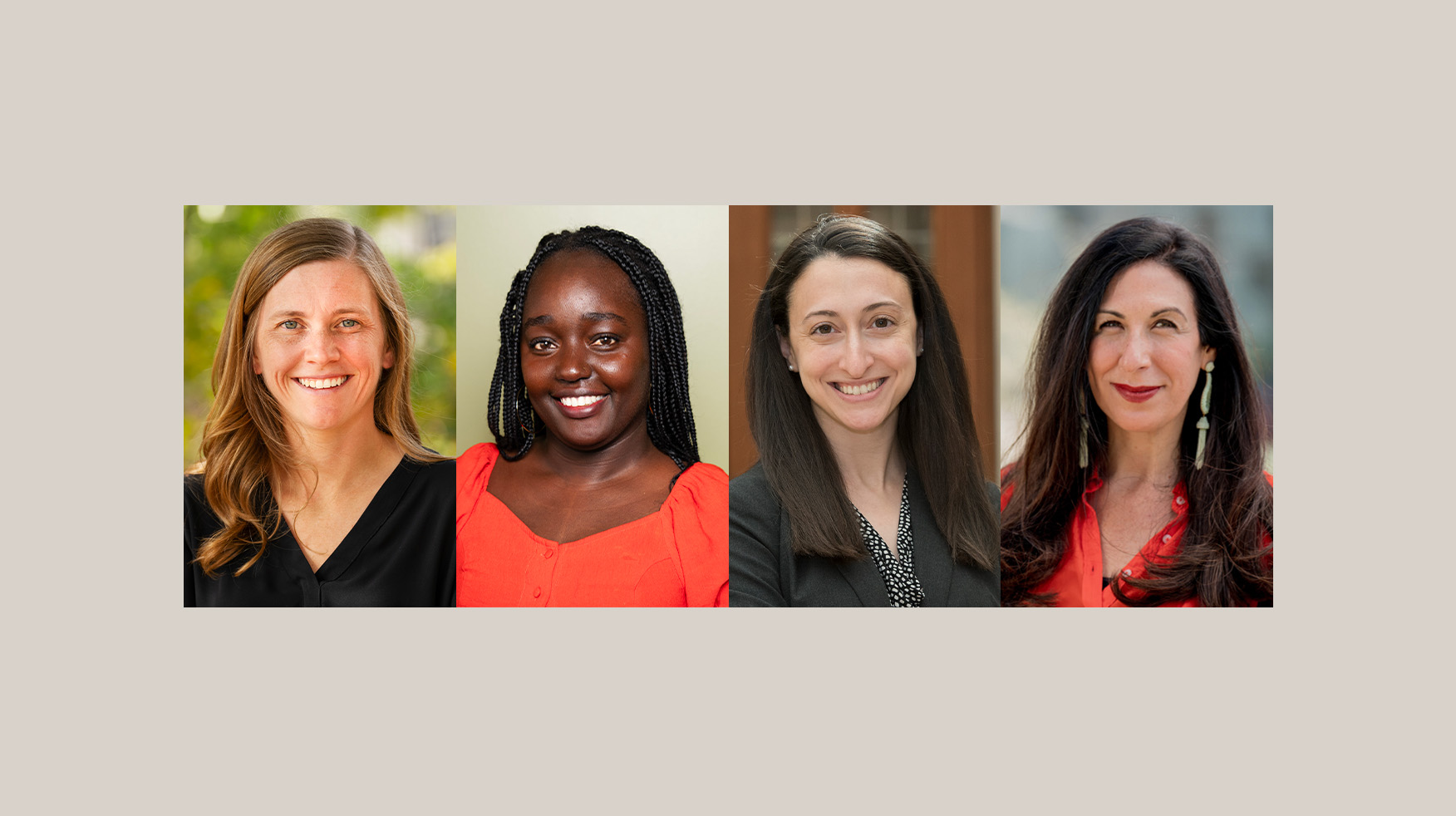
Malone, Mwobobia, Sachs and Stark honored by WashU’s provost
November 13, 2026
Flauaus combines curiosity and a problem-solving mindset to build the school's digital presence and connect its work with the wider world.