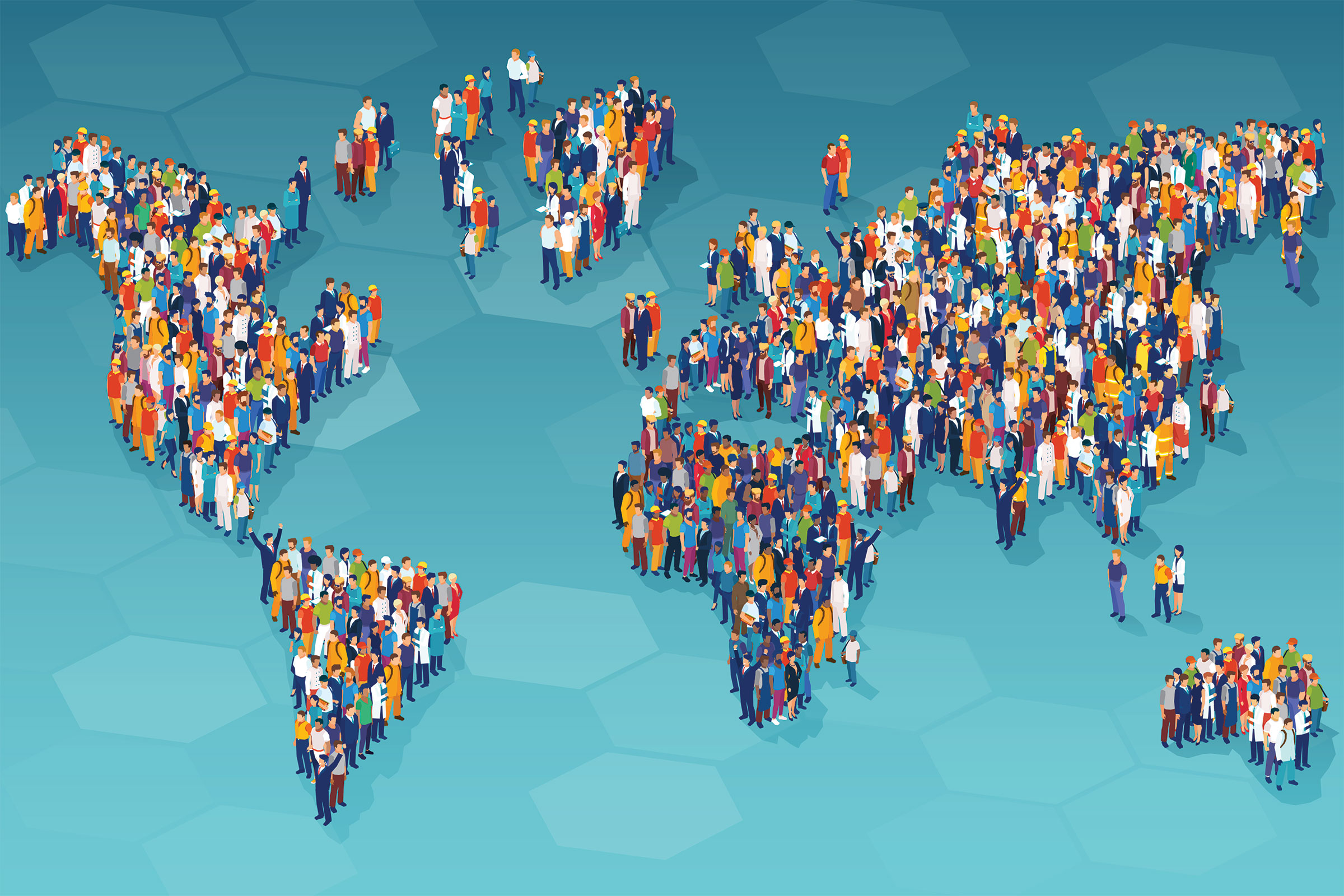
The decisions that individuals, public health practitioners, and policymakers make regarding public health are based on a foundation of knowledge about health. But gathering that critical knowledge is a human endeavor, subject to biases and blind spots, just like about everything else people do. Persistent health inequities and a growing lack of trust in the field testify to the limits of traditional public health approaches to gathering and applying knowledge.
On March 16 and 17, WashU School of Public Health will convene leading thinkers to launch a multiyear initiative to reimagine how public health knowledge is generated, communicated, and translated into action. The initiative, called “Better Ways of Knowing: To Improve Population Health,” will be highlighted with a panel discussion from 4 to 5:30 p.m. Tuesday, March 17, in WashU’s Clark-Fox Forum in Hillman Hall, with a reception to follow. The theme of the discussion will be, “Asking Better Questions to Improve the Health of Populations.”
The event is free and open to the public, but registration is required. Attendees may join in person or online.
“Public health has been very successful in some ways — for example, by raising global life expectancy over the past century,” said Salma Abdalla, MBBS, MPH, DrPH, an assistant professor at WashU Public Health, one of the panel moderators and a leader of the initiative. “But gaps remain — between socioeconomic groups, between countries, between what we know and who benefits from that knowledge. And we are living in a moment of eroded trust in public health. So the question becomes: Where we have fallen short, what do we do differently? How do we improve the knowledge systems we rely on, ask better questions, and translate that into better policies and better practice?”
The panel will be moderated by Abdalla and Sandro Galea, MD, DrPH, the Margaret C. Ryan Dean of the School of Public Health, the Eugene S. and Constance Kahn Distinguished Professor in Public Health and vice provost for interdisciplinary initiatives.
The panelists are: Emily Alice Barman, MA, PhD, dean of the graduate school, vice provost of graduate education, and a professor of sociology at Loyola University Chicago; Mark B. Brown, PhD, a professor of political science at California State University, Sacramento; Stuart Buck, JD, PhD, the executive director of the Good Science Project; Merlin Chowkwanyun, PhD, MPH, the Donald Gemson Associate Professor of Sociomedical Sciences at Columbia University; and Whitney Robinson, PhD, MSPH, an associate professor of obstetrics and gynecology at Duke University School of Medicine.
“This event is for anyone invested in population health: the researcher who wants to push beyond familiar questions and reach further with their work; the student looking to see where innovation is needed; the practitioner trying to bridge the gap between what we know and what we actually do,” Abdalla said. “Our hope is that this conversation sparks something, that people leave thinking differently about what this field could be.”
Better Ways of Knowing is a multiyear initiative led by WashU Public Health’s Healthier Futures Lab — which is directed by Abdalla and co-directed by Galea — in collaboration with the Alliance for Health Policy and Systems Research. The initiative, funded by the Robert Wood Johnson Foundation, brings together scholars, policymakers, community leaders, and practitioners to examine the systems that shape health science.
The Alliance for Health Policy and Systems Research is an international partnership, hosted by the World Health Organization, that works to improve the health of those in low- and middle-income countries by supporting the generation and use of evidence that strengthen health systems.
Tamara Schneider, MPH, PhD, is the assistant director of communications and senior science writer at Bursky Public Health. She holds a bachelor’s degree in molecular biophysics & biochemistry and in sociology from Yale University, a master’s in public health from the University of California, Berkeley, and a PhD in biomedical science from the University of California, San Diego. She joined WashU as a science writer in 2016.