October 9, 2026
Bridging public health and primary care for a healthier population
WashU convening to explore building primary care-based research networks to improve healthcare, public health



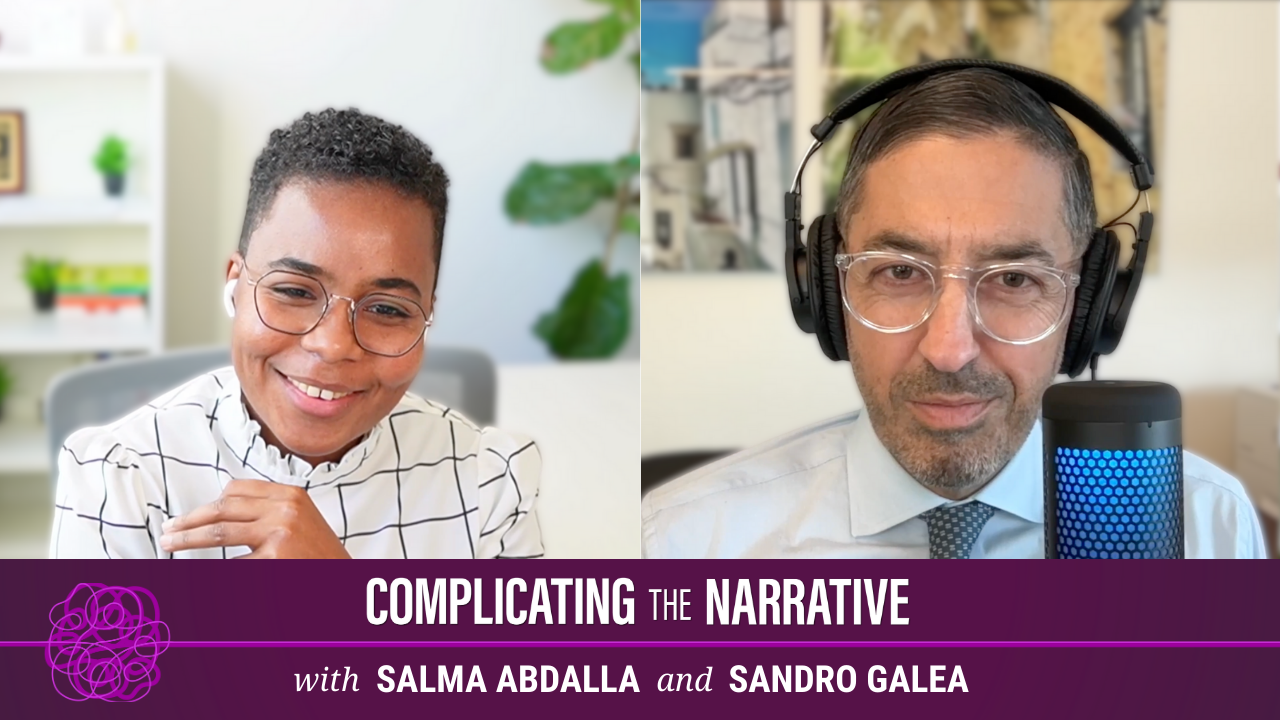
Her ‘Complicating the Narrative’ podcast brings public health ideas to the public
Salma Abdalla, MBBS, MPH, DrPH, an assistant professor at Washington University School of Public Health in St. Louis, has been named a 2026 Public Scholarship Faculty Fellow by WashU’s Office of Public Scholarship for her work communicating rigorous public health scholarship to public audiences through her podcast, “Complicating the Narrative.”
The fellowship recognizes and provides financial, career-development, and training support to early- and mid-career faculty whose work addresses societal issues, informs policy, or meets a public need, while demonstrating a commitment to engaging the public through nonacademic materials.
Abdalla — a physician by training, and director of the Healthier Futures Lab and a co-director of the Global Health Futures research network, both at WashU School of Public Health — conducts research primarily on how policies shape population health and how trauma affects mental health at the population level. As host of “Complicating the Narrative,” she engages guests across disciplines, challenging their assumptions by interrogating how they reach conclusions that impact public health. The podcast aims to empower listeners by deconstructing oversimplified narratives about the forces shaping population health and providing evidence-based analysis of complex population health challenges in an informed and balanced way.
Read more here.
October 9, 2026
WashU convening to explore building primary care-based research networks to improve healthcare, public health
WashU's The Source
October 9, 2026
Bursky Public Health researchers examine how to respond to changes driven by digital technology and generative AI.

October 9, 2026
Public attitudes may inform policies to address substance use, homelessness, mental illness