WashU researchers bring findings — and questions — to St. Louis gardeners
Hayley Damboise
February 27, 2026
Copied!
From toxic metals in the soil to hidden hunger, researchers shared knowledge with local growers and asked for theirs in return
Toxic metals lurk in garden soil across St. Louis and surrounding areas — a reality local gardeners should take into account when growing food.
That was the message Elmira Ramazanova and Dan Giammar brought to the Seed St. Louis Community Agricultural Conference on February 21. There, they presented findings from a recently published paper focused on metal concentrations in urban gardens, and the implications for people exposed to such metals.
Rigorous soil testing, exposure assessment and contamination mitigation are necessary to reduce gardeners' risk, Ramazanova told a crowded room of gardeners and others attending the conference at the Delmar DivINe in St. Louis.
The conference drew urban agriculture leaders from across the region, including WashU faculty members. Giammar, PhD — the Walter E. Browne Professor of Environmental Engineering, co-director of the Solutions Through Planetary Health Research (SPHERE) network at WashU Public Health, and director of WashU’s Center for the Environment — co-authored the soil-contamination study with Ramazanova, a PhD student at McKelvey School of Engineering.
Rachel Penczykowski, PhD, a WashU associate professor of biology and of environmental studies, and Lora Iannotti, MA, PhD, the Lauren and Lee Fixel Distinguished Professor at the School of Public Health, also joined the faculty contingent at the event. Jen Mandeville, senior network manager of SPHERE, introduced the speakers and helped organize WashU's participation in the conference.
Iannotti used the occasion to talk about the problem of hidden hunger — chronic micronutrient deficiency related to poor-quality diets — and said community gardens could be among the solutions to such hunger.
"There are some really creative solutions out there that can be integrated into some of the work that you're doing in community agriculture," Iannotti told the gathering. "Local and native foods can play an important role in this problem of hidden hunger. They can protect the environment, as well as human health."
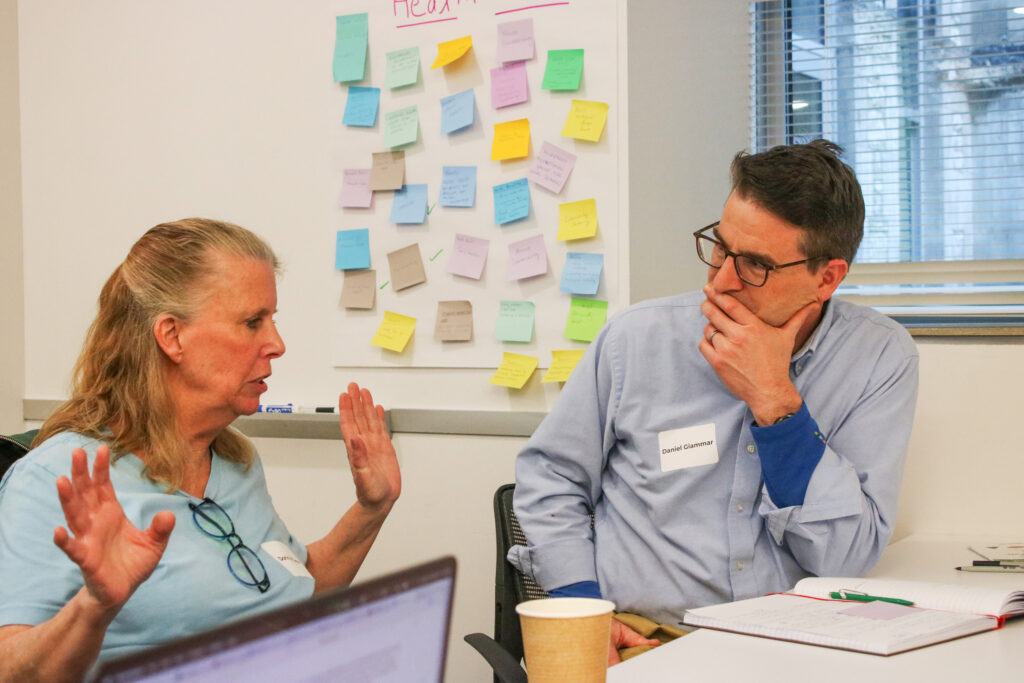
WashU McKelvey School of Engineering’s Dan Giammar (right) listens to feedback from one of several attendees of the Seed St. Louis Community Agriculture Conference on Saturday, February 21, at the Delmar DivINe in St. Louis. (Photo credit: Hayley Damboise/WashU Public Health)
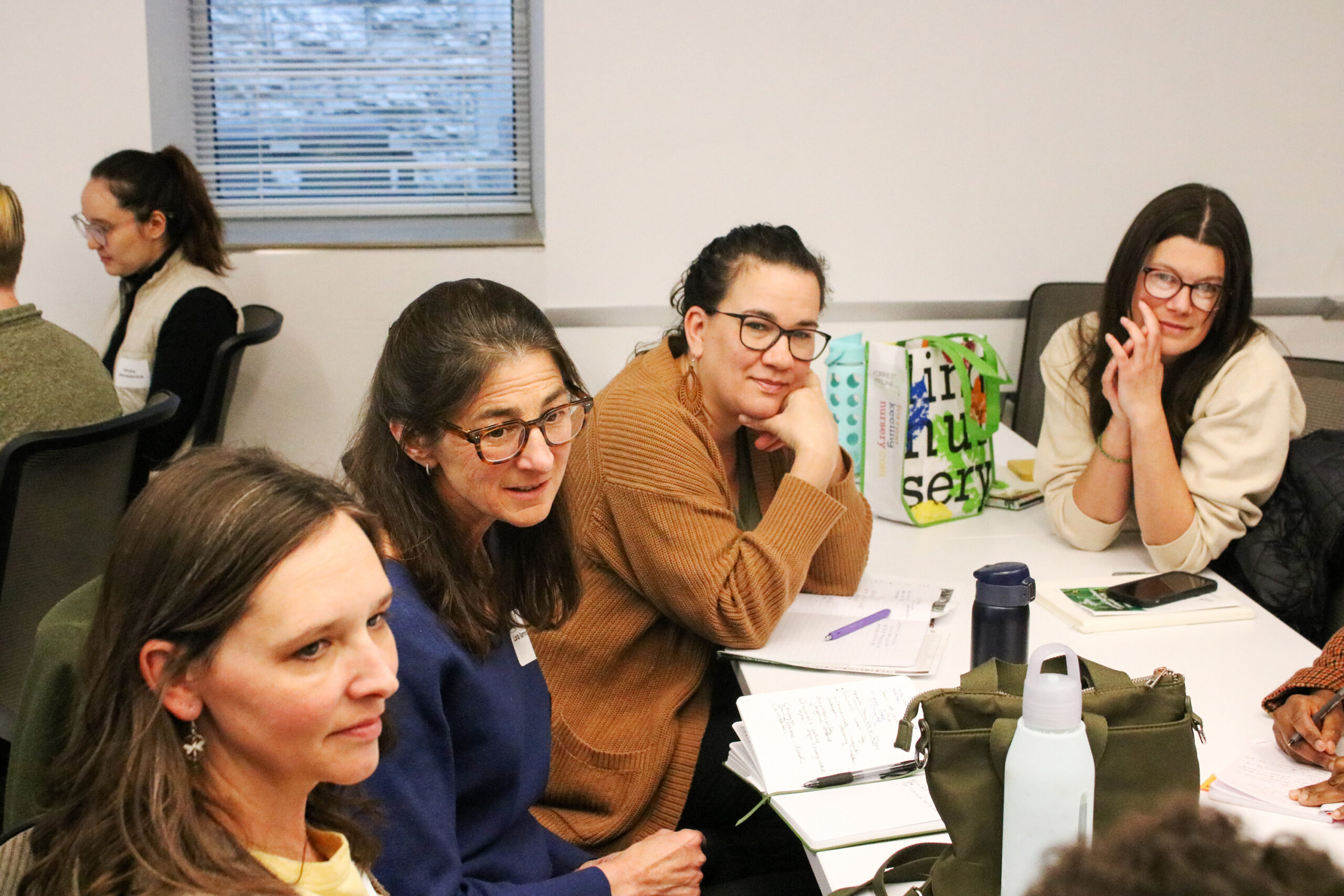
The session was designed as a two-way exchange. Attendees were asked to identify environmental and health risks and benefits they associate with gardening, and they asked the presenters questions as well. Attendees also were asked to offer insight on some hurdles gardeners face in the community that WashU research may be able to help solve. The gathering also was introduced to two WashU School of Public Health research networks: SPHERE, and the Food and Agriculture Research Mission (FARM), both of which include a focus on the environment and public health.
After the talk on metals in the soil, audience members raised concerns from their own gardening experiences. One suggested studying gardens that keep chickens, noting that the birds' habit of scratching and kicking up dirt might increase exposure to heavy metal contaminants. Another brought up sunflowers, which absorb elevated levels of lead from soil — a potential problem if gardeners compost the plants back into their beds.
Mark Doyle, PhD, senior network manager of FARM, said listening to this kind of community knowledge is exactly the point.
“When done right, community-engaged research leads to greater impact,” Doyle said. “Such research starts and ends with the community — from the formation of research questions, to the communication of results. Sessions like this provide an opportunity to listen and understand community needs as we plan future research.”
Related News
The Source
September 25, 2026
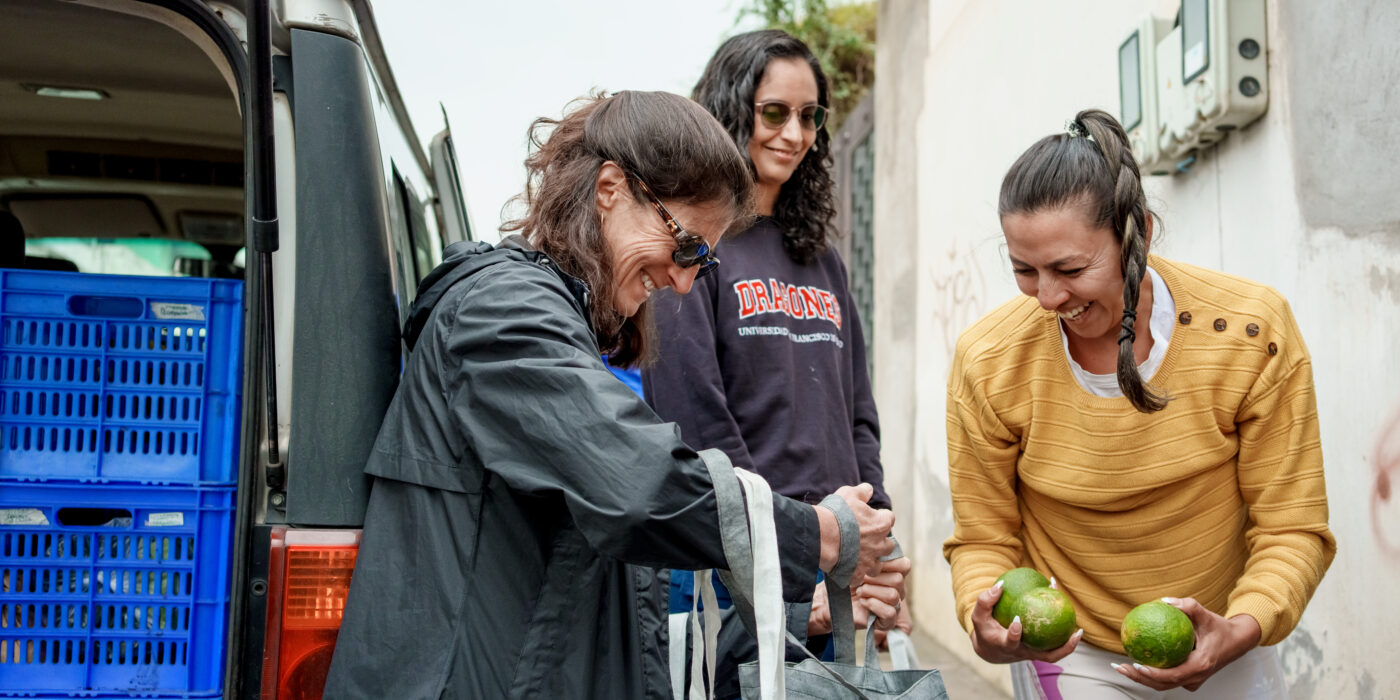
Pregnancy nutrition trial in Ecuador improves fetal brain growth
Bursky Public Health's Lora Iannotti and colleagues tested whether a diverse diet inspired by ancestral eating patterns could support maternal nutrition and fetal development.
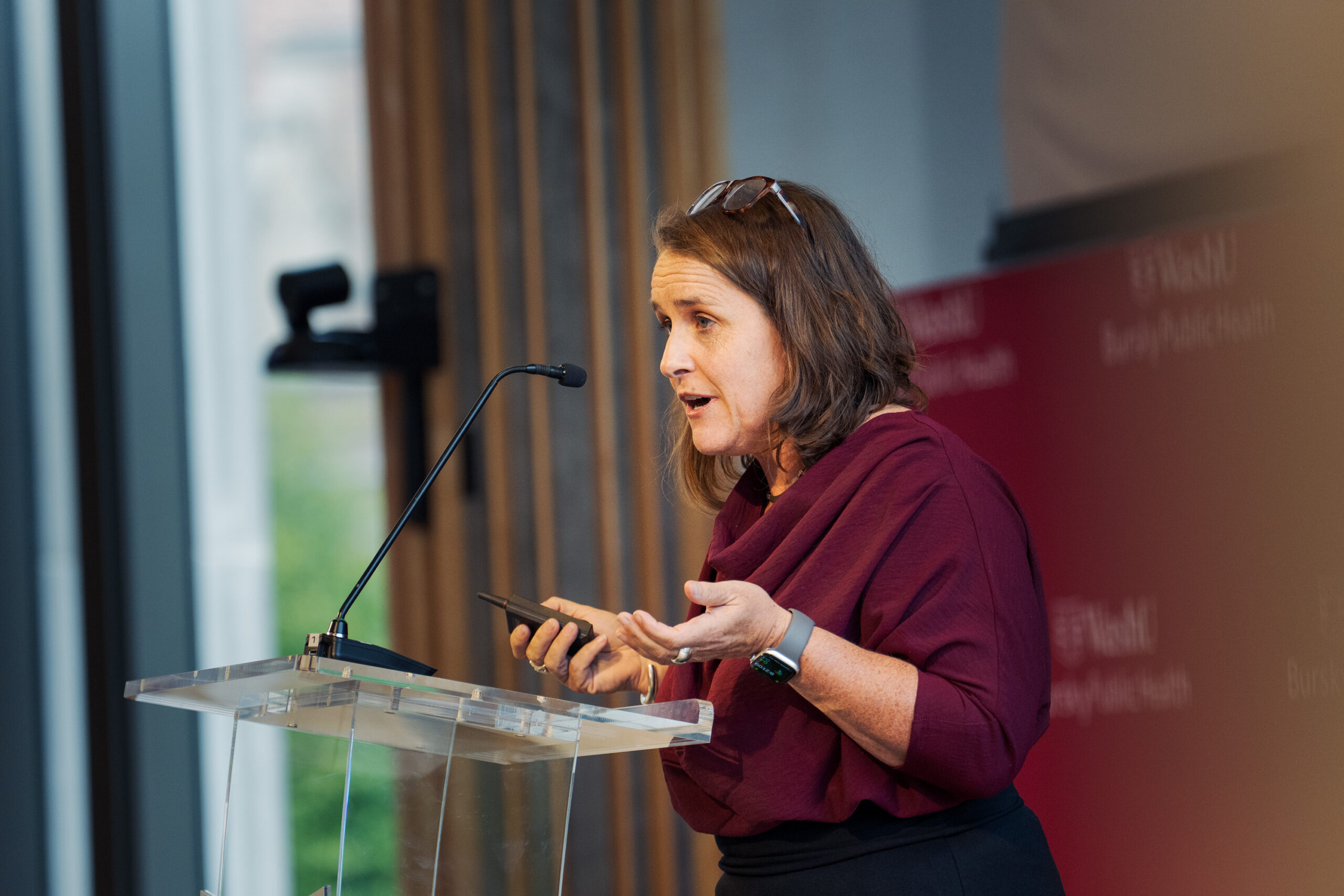
From listening to farmers in Benin to training community researchers in Papua New Guinea to connecting planetary health scholars at WashU, Mandeville works to create a healthy planet for populations