October 16, 2026
Five WashU research teams receive 2026 FARM Cultivate grants
Projects explore the connections among food, agriculture, environmental sustainability and human health



Residents who distrust government information more likely to experience symptoms
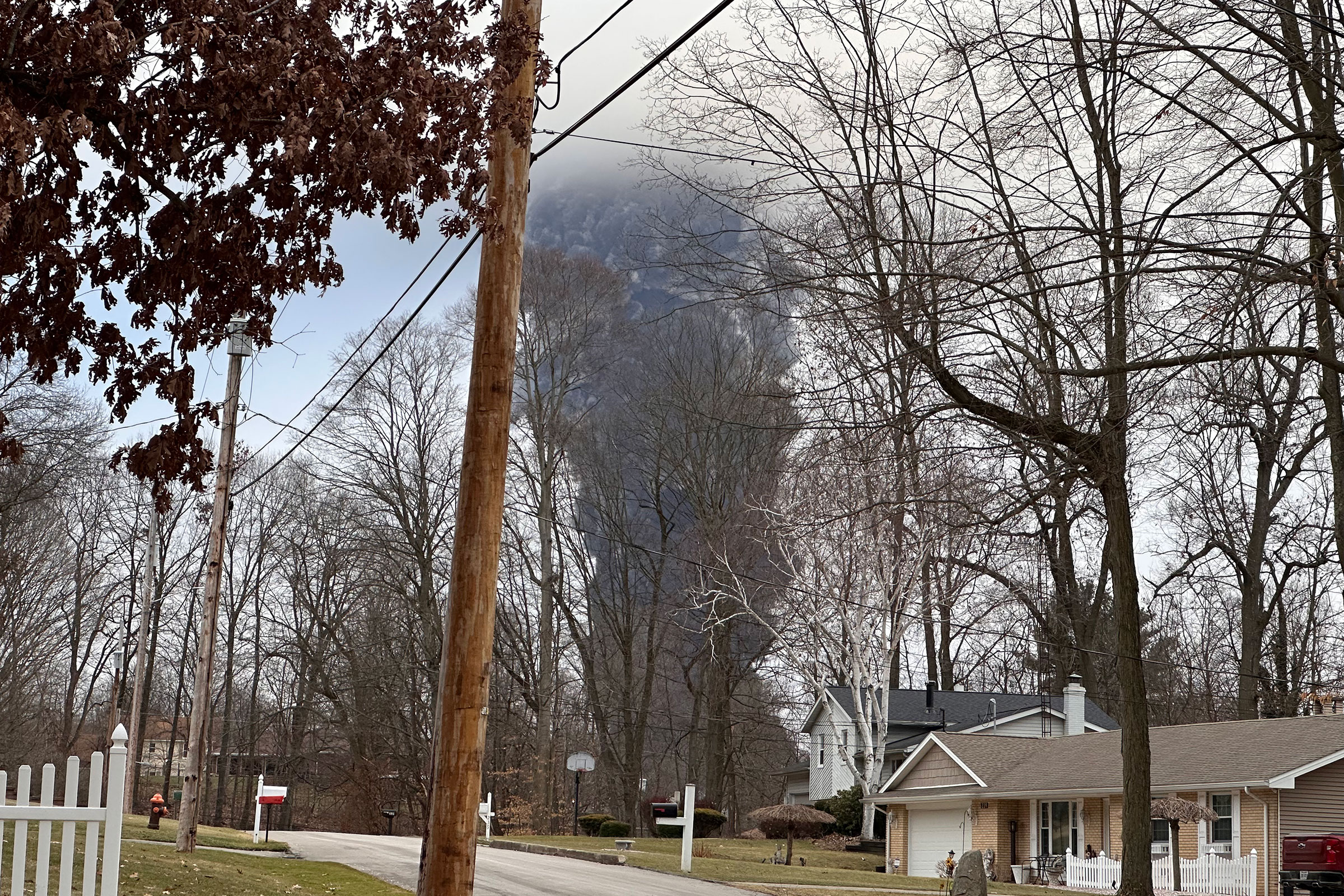
The 2023 East Palestine, Ohio, train derailment and chemical spill led to elevated rates of post-traumatic stress disorder (PTSD) and major depression in affected communities, according to a new study by a team of psychologists and public health experts, including researchers at the School of Public Health at Washington University in St. Louis. The study offers one of the first large-scale diagnostic snapshots of mental health outcomes following the crisis, and suggests ways for public health officials to improve their response to communities in the aftermath of a disaster.
"What we found particularly striking was how distrust in official information became a key predictor of mental health problems,” said co-author Salma Abdalla, MBBS, DrPH, an assistant professor at WashU Public Health. “This highlights that effective disaster response isn't just about environmental cleanup — it's about maintaining transparent, credible communication with affected communities to prevent additional psychological harm. Moreover, this is one more indicator for the need to tackle the rise in mistrust in institutions in general and in public health in particular." Other WashU Public Health co-authors are Mohammed Abba-Aji, MD, MPH, a lecturer and director of special projects, and Sandro Galea, MD, DrPH, the Margaret C. Ryan Dean of the School of Public Health, and the Eugene S. and Constance Kahn Distinguished Professor in Public Health.
The derailment of a Norfolk Southern train on Feb. 3, 2023, released over 1 million pounds of hazardous chemicals — including vinyl chloride, which is known to cause cancer — into the surrounding communities. The event triggered widespread concerns about toxic exposures and long-term health harms.
A team led by Cameron Pugach, a doctoral student at the Medical University of South Carolina, surveyed 1,000 adults living within 65 miles of the derailment site, covering parts of Ohio, Pennsylvania and West Virginia. The results of the study were published Aug. 11 in the Journal of Traumatic Stress.
Key findings include:
Psychologists are increasingly viewing natural and technological disasters like this one to be potentially traumatic events that can trigger or worsen psychiatric problems.
“With its rapid onset, widespread nature, and uncertainty about the extent of exposures, an event like this can result in a lot of persistent psychological stress,” Pugach said. “Our study today suggests that this concern has lingered post disaster and may be elevating the rate of psychological disorders that can result from stress and trauma.”
Although only 1,000 residents completed the survey, survey results were weighted to reflect the wider population living within a 65-mile radius of the disaster.
“We can say with confidence that a majority of people living near this disaster site remain concerned about what they may have been exposed to and feel that these potential exposures resulted in real physical health symptoms,” said study co-author Aaron Reuben of the University of Virginia.
Pugach CP, Reuben A, Moreland AD, Rothbaum AO, Boyle J, Schmidt MG, Dayton J, Kinder R, Galea S, Abdalla S, Abba-Aji M, Kilpatrick DG. Prevalence of posttraumatic stress disorder and major depression in Ohio, Pennsylvania, and West Virginia 9 months after the East Palestine train derailment. Journal of Traumatic Stress, Aug. 11, 2025. DOI: 10.1002/jts.7000
This study was funded by the National Institute of Mental Health, grant number T32MHO18869; and the National Institute of Environmental Health Sciences, grant number F32ES34238. The content is solely the responsibility of the authors and does not necessarily represent the official views of the National Institutes of Health.
Tamara Schneider, MPH, PhD, is the assistant director of communications and senior science writer at Bursky Public Health. She holds a bachelor’s degree in molecular biophysics & biochemistry and in sociology from Yale University, a master’s in public health from the University of California, Berkeley, and a PhD in biomedical science from the University of California, San Diego. She joined WashU as a science writer in 2016.
October 16, 2026
Projects explore the connections among food, agriculture, environmental sustainability and human health
October 16, 2026
Forum explored how rural health, food systems, agriculture and nutrition interact to impact public health and well-being

WashU's The Source
October 16, 2026
Spielman brings decades of experience in global food policy and economics to his current research on food systems, innovation and rural health