October 9, 2026
Bridging public health and primary care for a healthier population
WashU convening to explore building primary care-based research networks to improve healthcare, public health



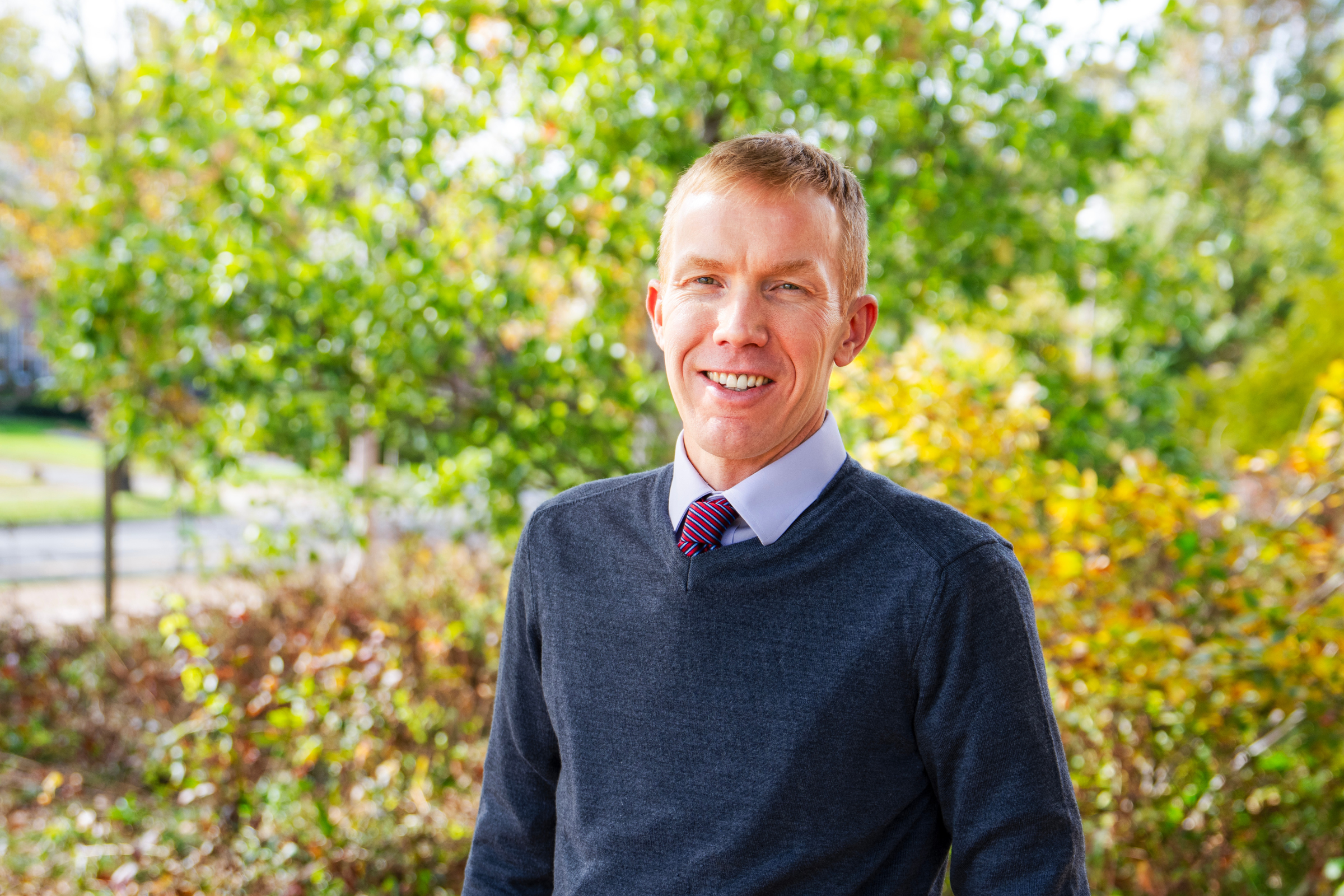
Brown measures economic costs of public health issues and uses findings to help shape policy and improve outcomes
Derek Brown, a professor and health economist at WashU School of Public Health, has dedicated his career to studying the costs of social issues such as child abuse, domestic violence and mental health care gaps. He analyzes the financial impact on institutions and households, as well as the financial burden on people — illuminating how these problems resonate across individuals and society alike.
This expansive view is what drew him to the field of health economics. Brown, who earned a PhD in economics, wanted to apply his specialty to something that could serve the greatest number of people.
"I want to do things that are practical, and what's something that's practical and affects a lot of people's lives? Well, the health economy," said Brown, adding that $1 out of every $5 spent in the U.S. goes toward health care. “We're all consuming and paying for health care in one way or another, all the time. It continually affects our lives. That ongoing relevance was really appealing to me."
He began his career at RTI in North Carolina as a research health economist. There, clients such as the Centers for Disease Control and Prevention (CDC) hired him to develop research methods for measuring the burden of, for example, intimate partner violence. The CDC could demonstrate that intimate partner violence is associated with a range of physical and mental health consequences. What it couldn't do was measure the increase in health services those consequences produce. That's where Brown came in, building the statistical frameworks to track and analyze what previously had gone uncounted.
"I really learned how to work in transdisciplinary teams," Brown said. "I learned how to ask relevant public health questions and how to translate and communicate those results back to subject-matter experts who are not economists — incredibly smart people and scientists but people who aren’t trained in the language of economics."
At the School of Public Health, Brown teaches the same research methods and frameworks to the next generation of practitioners — including students who arrive with dual concentrations in fields such as business or law. He also collaborates regularly with faculty, bringing an economic lens to research projects. It's a perspective that funders increasingly require before committing resources, which makes his expertise not just intellectually valuable but practical and necessary to research teams.
Here, Brown talks about joining the School of Public Health and what draws him to teaching:
“I love team science. The School of Public Health is ideal for doing rigorous, relevant work, and serving the health of populations, because we are, by nature, a diverse group in terms of our training and methods. Yet we all care about the health of the population.
“The research emphasis of the school was motivating and exciting, too. I wanted to lean in and challenge myself to develop new relationships with others who were attracted to that setting. I wanted to see if we can do more innovative and deeper studies in different areas. So, I think the school is kind of an incubator. It's been amazing.”
“It’s neat to see student growth. I am surprised each semester. A student might come in with, on paper, a slightly thinner background in statistics or economics, and they just really dive in and demonstrate a ton of growth. That's very rewarding as an instructor.
“It’s also nice to pause and reflect on, ‘What are some of the fundamentals behind the methods I'm using?' When you do your research each day, sometimes you end up in a niche area. You don't have time to step back and reconsider some of those foundations. You must do that as an instructor. I usually find that it makes my research a little better. It helps me do stronger work.”
“On teaching days I want to help develop scholars in methods and concepts that I feel will be useful in their careers. The process of helping nurture, develop, and see student growth — that is really exciting and rewarding.
“On the research days, it is a creative outlet. I want to keep working consistently to see how we can make a difference for the population. This is a neat thing about research. You never quite know which places you're going to get the breakthrough, whether it's in methods, or a new grant or, most importantly, the impact. I can guess, but oftentimes I'm surprised. Sometimes those breakthroughs happen in unexpected places. That keeps it fresh and exciting, too. I’ve enjoyed getting to know our new and junior faculty. Having a range of people at different levels from different institutions is also super motivating. We're bringing together more perspectives, more energy, and I want to keep pace with that.”
“In the work I've done around the economic costs of child abuse and neglect — this was a space that was not well-researched. I did some of that work without necessarily knowing who or what it would reach or knowing some of the populations behind the data sets. It has really opened my eyes to impact and meaning in public health.”
October 9, 2026
WashU convening to explore building primary care-based research networks to improve healthcare, public health
WashU's The Source
October 9, 2026
Bursky Public Health researchers examine how to respond to changes driven by digital technology and generative AI.

October 9, 2026
Public attitudes may inform policies to address substance use, homelessness, mental illness