October 9, 2026
Bridging public health and primary care for a healthier population
WashU convening to explore building primary care-based research networks to improve healthcare, public health



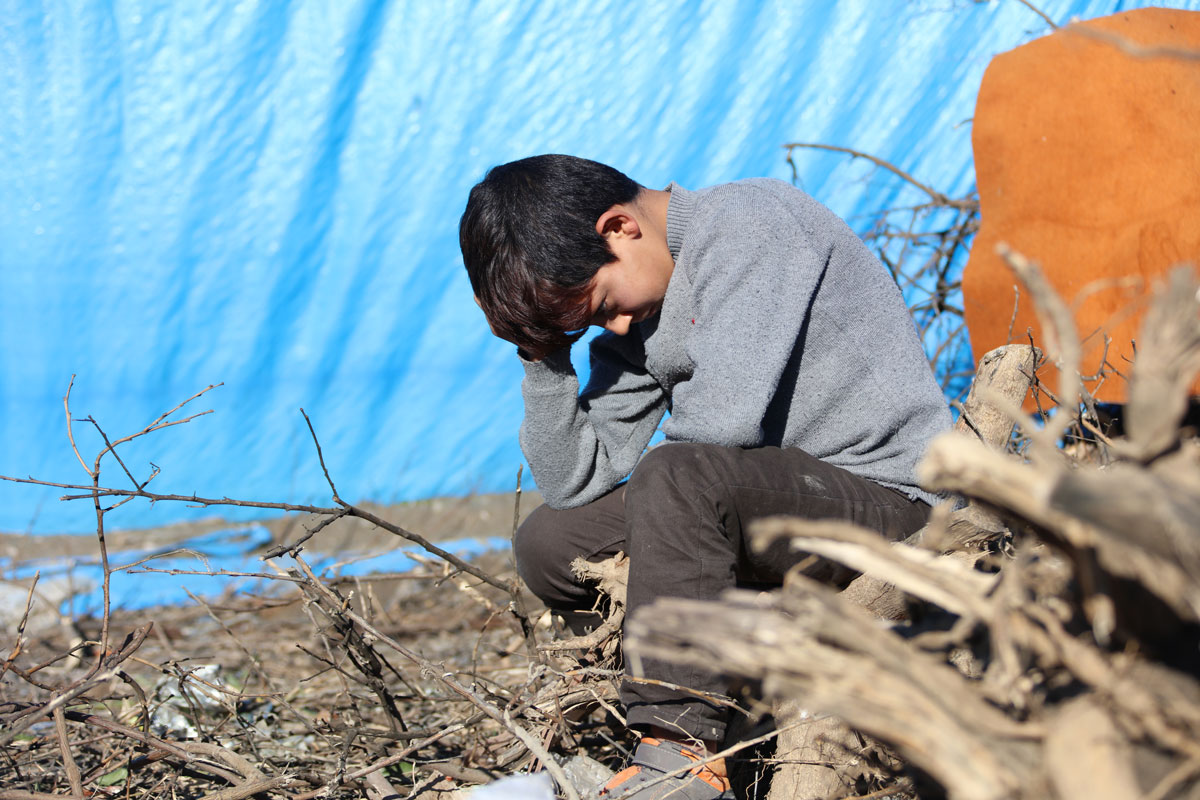
Nuanced approach needed when helping children linked to armed groups rebuild lives
Youth is no protection against the brutalities of war. When armed conflict rages, children — defined by the United Nations (UN) as anyone under age 18 — may find themselves forced to join armed forces and participate in military action; abducted and enslaved by armed groups; or subjected to sexual assault or other atrocities. When these children are released, they need significant help to recover and rebuild their lives as civilians.
Reintegration programs aim to reunite such children with their families, address their trauma, help them establish livelihoods and promote their reintegration into society, which may include redressing harms committed by the children while associated with armed groups. Such programs have proven to be an invaluable part of building and sustaining peace in post-conflict situations. But despite significant advancements in how children are demobilized and reintegrated, gaps remain in tailoring programming to the unique needs of children of different developmental stages and genders.
Lindsay Stark, MPH, DrPH, a professor at Washington University School of Public Health in St. Louis, is a co-author on a new report that discusses ways to strengthen reintegration programming by tailoring programs based on the needs, vulnerabilities, and experiences of children of different ages, sexes, and gender identities. The report, titled Child-Inclusive and Gender-Responsive Reintegration Programmes, was developed in partnership with the Office of the Special Representative of the Secretary-General for Children and Armed Conflict and the Liechtenstein Institute on Self-Determination at Princeton University.
Age, sex and gender are overarching factors that shape children’s experiences during armed conflicts. Boys are more often conscripted into military service while girls are more likely to suffer sexual violence, although all genders can be subjected to all forms of abuse. Wartime tends to reinforce traditional gender roles, and children who belong to sexual and gender minority groups are often vulnerable to being targeted for violating those norms. In addition, roles assigned to children associated with armed groups may vary with age and developmental stage. In all cases, how children understand and interpret what is happening to them — and the long-term impact of these experiences — is influenced by the child’s age and developmental stage.
“For a long time, children conscripted into armed forces and groups were considered to be a ‘lost generation’,” Stark said. “We now know that, with support, these children can grow up to be productive and engaged members of society. By providing age- and gender-responsive considerations for reintegration programming, we can better promote the full and meaningful inclusion, participation, and protection of these children.”
Ladue M, Stark L, Perez L, Buckinx B. “Child-Inclusive and Gender-Responsive Reintegration Programmes.” Liechtenstein Institute on Self-Determination, Princeton University, and United Nations Office of the Special Representative of the Secretary-General for Children and Armed Conflict. June 2025.
Tamara Schneider, MPH, PhD, is the assistant director of communications and senior science writer at Bursky Public Health. She holds a bachelor’s degree in molecular biophysics & biochemistry and in sociology from Yale University, a master’s in public health from the University of California, Berkeley, and a PhD in biomedical science from the University of California, San Diego. She joined WashU as a science writer in 2016.
October 9, 2026
WashU convening to explore building primary care-based research networks to improve healthcare, public health
WashU's The Source
October 9, 2026
Bursky Public Health researchers examine how to respond to changes driven by digital technology and generative AI.

October 9, 2026
Public attitudes may inform policies to address substance use, homelessness, mental illness