Can we bridge the health communications implementation gap?
Tamara Schneider
February 14, 2026
Copied!
WashU Public Health symposium explores how to promote public health by improving communication between experts, public
With public distrust of institutions at historically high levels and alternative sources of information abounding, it is becoming increasingly difficult for evidence-based public health messages to break through.
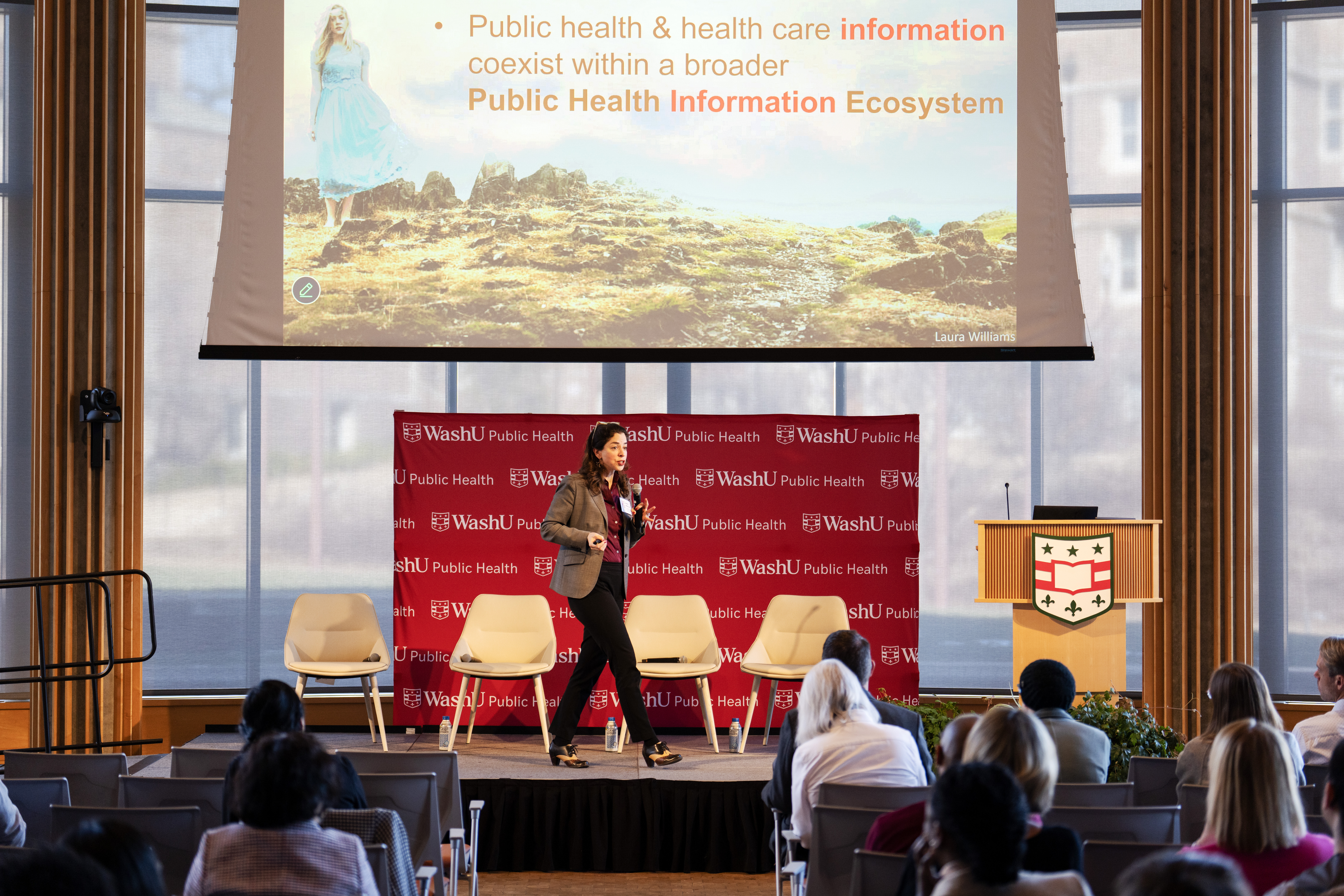
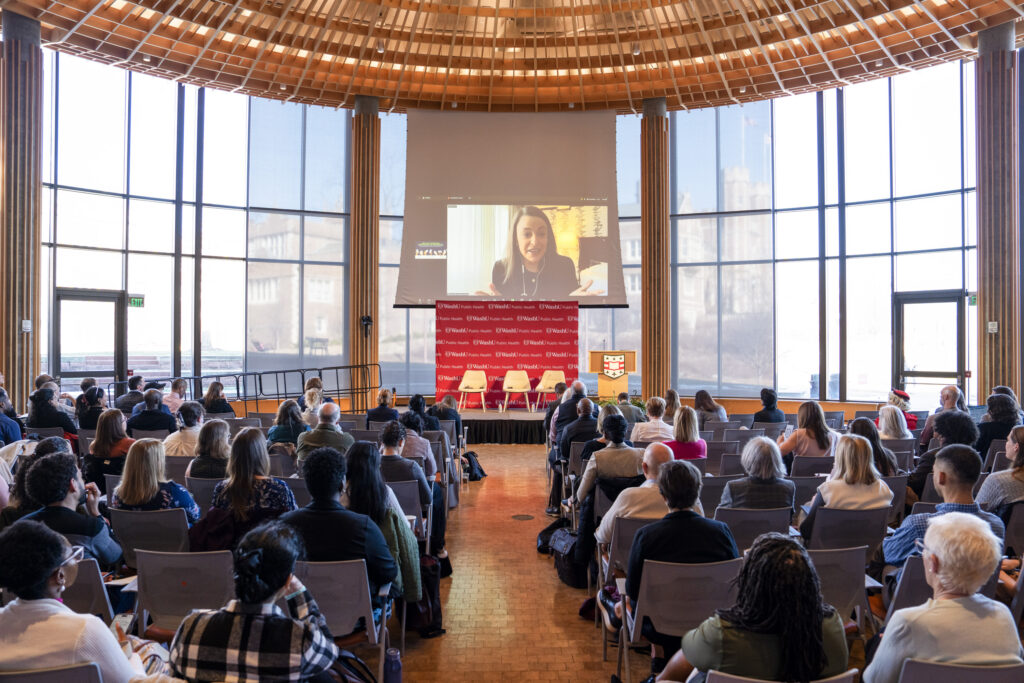
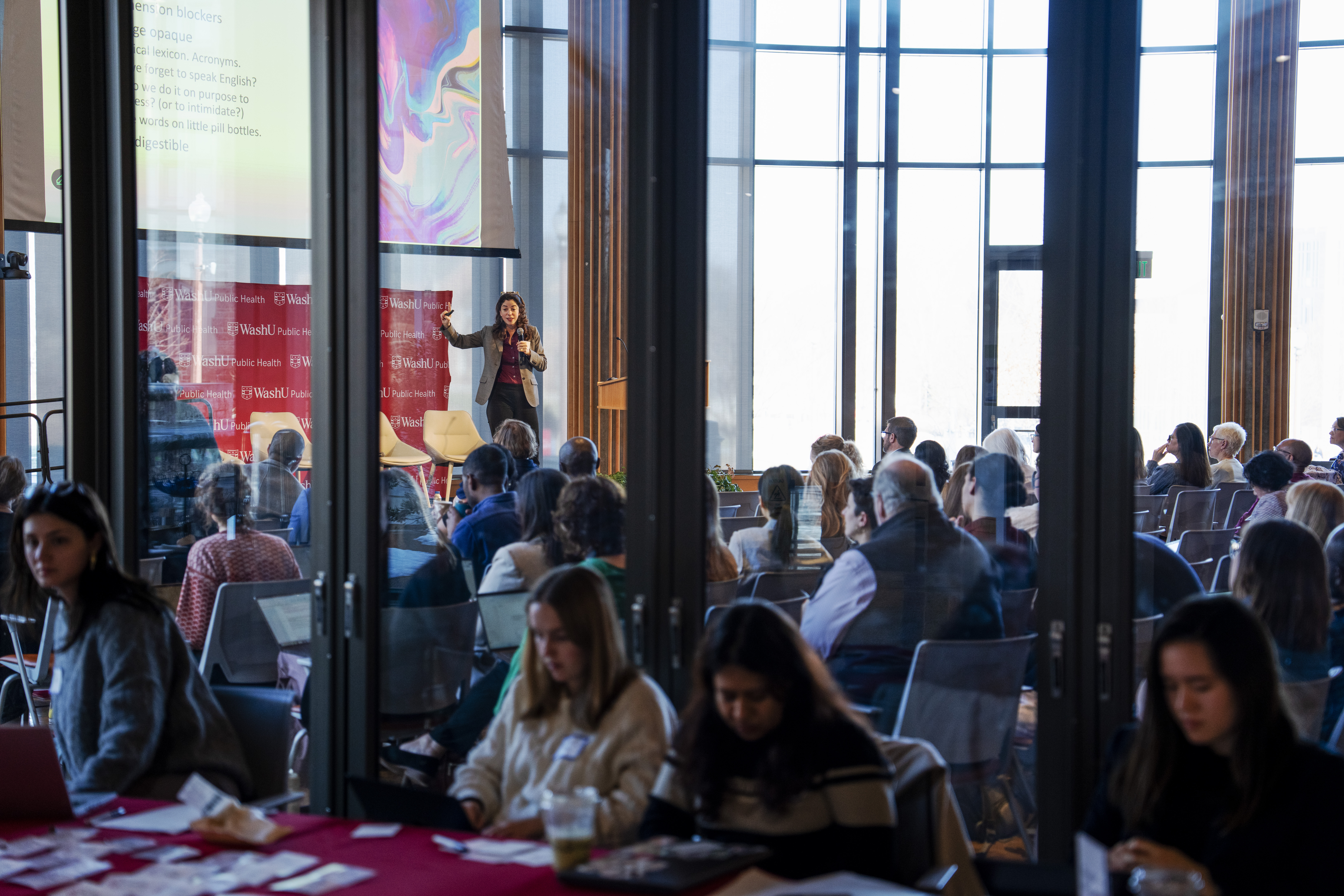
Implementation science, the field that studies how to put evidence into practice, could help solve public health’s chronic communication problems by putting science to work to figure out how to bridge the gap between public health experts and the people with whom they are trying to communicate. This was the theme of the inaugural symposium of WashU School of Public Health’s Dissemination & Implementation Science Innovation Research Network (DISIRN) on Tuesday, February 10. The event, a convening titled “Implementation Science & the Public Health Information Ecosystem,” was held in WashU’s Clark-Fox Forum in Hillman Hall. More than 100 people attended in person and just under 500 more tuned in online, representing 20 U.S. states, Australia and countries in the Americas, Europe, Asia and Africa.
The first keynote address was delivered by Jessica Steier, DrPH, the founder and CEO of Unbiased Science, a communications hub dedicated to bringing health and science data to life in the real world. She emphasized the importance of respecting the ability of everyday people to understand nuanced scientific information and make decisions for themselves.
“To say, ‘Vaccines are safe and effective’ in 2026 is a waste of your breath,” Steier said. “People need more than that. The bar has been raised. People don’t just want the what, they want the why. How do we know that they are safe and effective? What is the evidence? The traditional public health comms that were more paternalistic, more top-down, that's not going to work anymore. People really want to be let in on the process, treated with respect, feel like they're a part of the conversation.”
Heidi Miller, MD, chief medical officer of the Missouri Department of Health and Senior Services, gave the second keynote address. Improving communication requires building trust with the public, she said, and trust comes from forming authentic connections and giving people a meaningful chance to decide what matters to them in terms of their health.
“We have a long and ugly history of blaming patients, blaming the public, when they don’t do what we think they should,” Miller said. “It's a reflection of this antiquated, paternalistic model of experts telling people what they should do, and then wondering why it's not happening. I think in order to connect with people to improve health, we have to acknowledge the attitudes and expectations that we historically have had. It's really important for public health and health-care professionals to get off the pedestal and to be able to engage people where they're at.”
The keynote speeches and panel discussions also touched on the public’s hunger for trustworthy information and how public health experts can become trusted messengers; the importance of listening to people for the purpose of understanding what they value, rather than trying to find an opening to persuade them to a certain point of view; and the idea that while public health can be political, it need not be partisan.
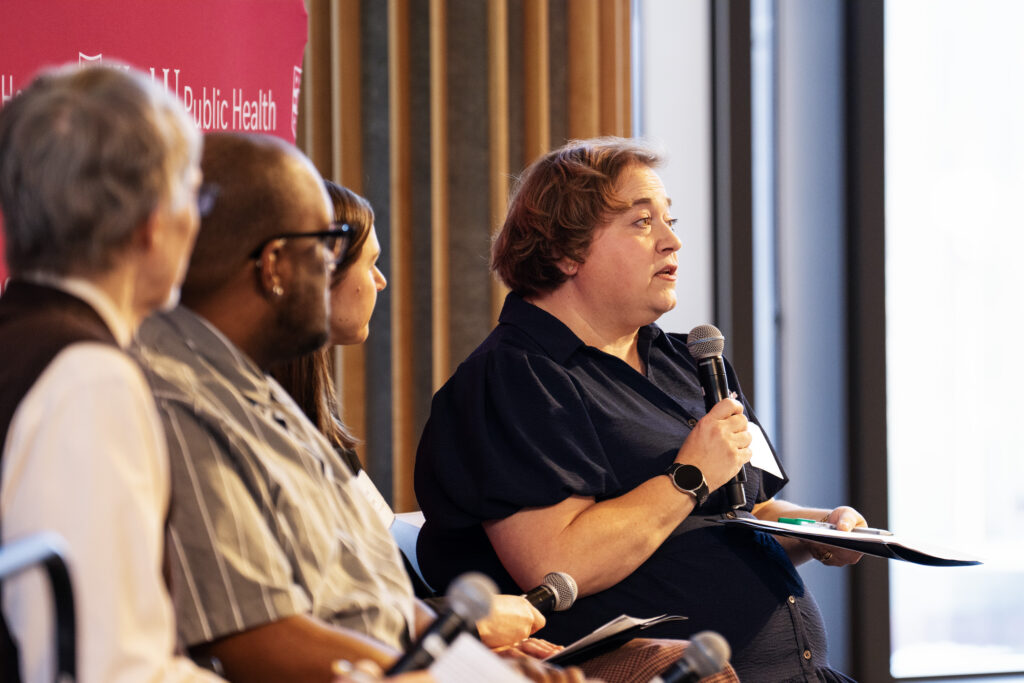
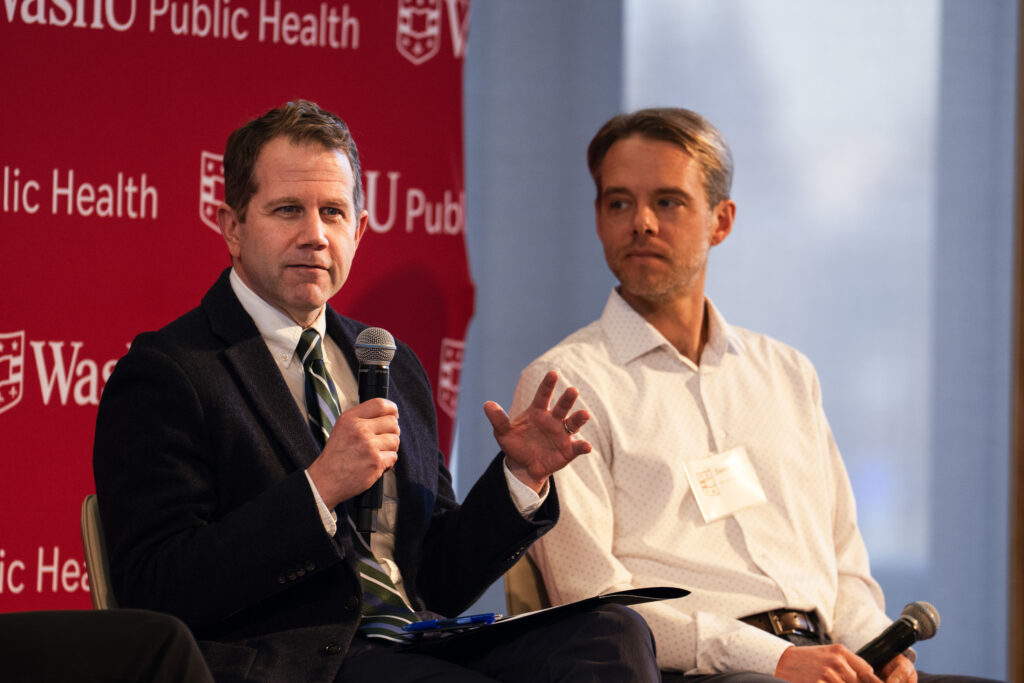
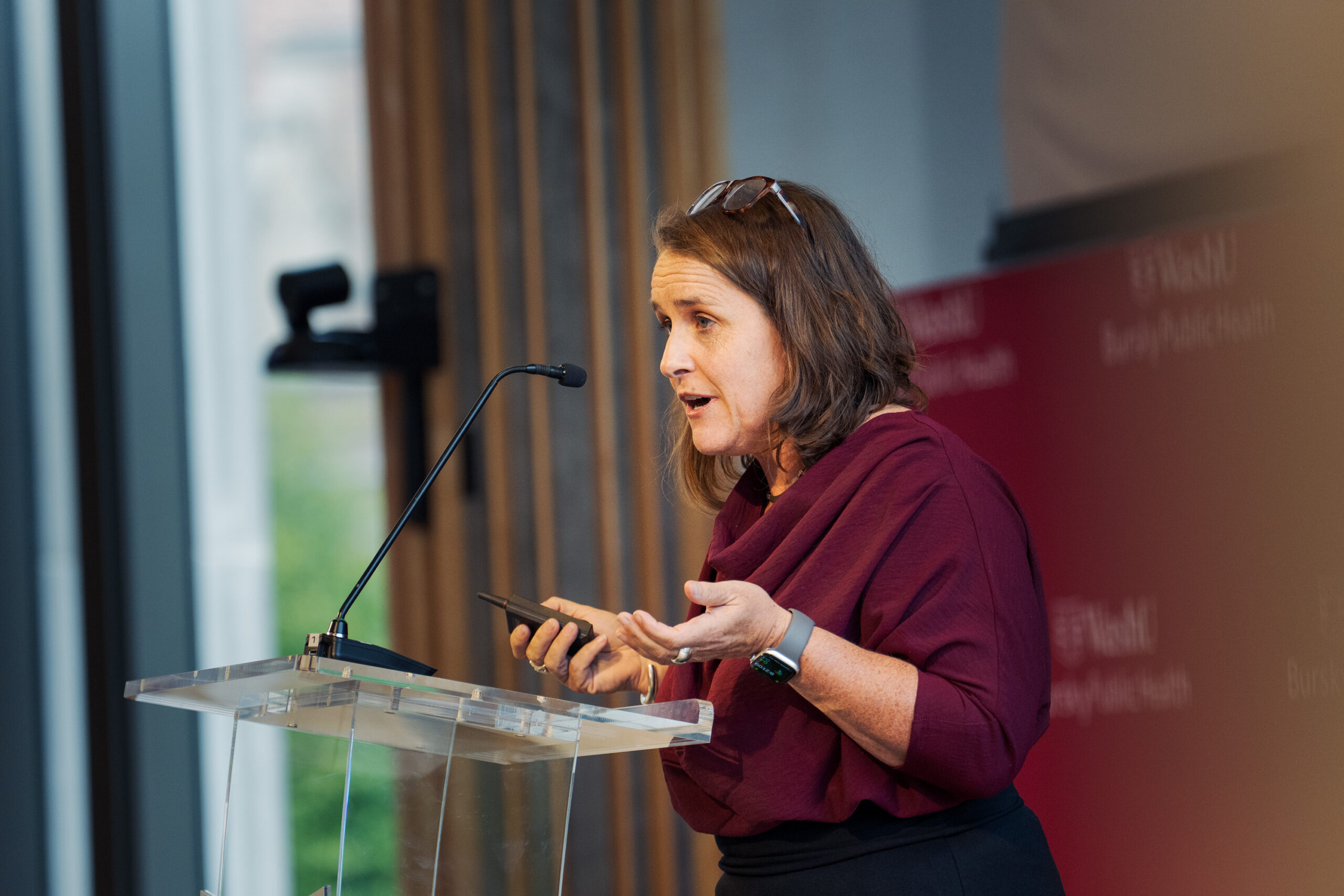
Spring Schmidt, MPH, PhD, speaks during a panel discussion at WashU Public Health's symposium "Implementation Science & the Public Health Information Ecosystem" on February 10. (Photo: Zachary Linhares/WashU Public Health)Keynote speaker Jessica Steier, DrPH, delivers her address remotely during WashU Public Health's symposium February 10, "Implementation Science & the Public Health Information Ecosystem." (Photo: Zachary Linhares/WashU Public Health)Mark Huffman, MD, speaks during a panel discussion about health communication and the vaccine debates. The panel was part of the symposium, "Implementation Science & the Public Health Information Ecosystem," hosted by WashU Public Health on February 10. (Photo: Zachary Linhares/WashU Public Health).Heidi Miller, MD, delivers a keynote address at WashU Public Health's convening, "Implementation Science & the Public Health Information Ecosystem" on February 10. (Photo: Zachary Linhares/WashU Public Health)Ashley Sturm, MA, the network manager for WashU Public Health's Dissemination & Implementation Science Innovation Research Network (DISIRN), watches a panel discussion during DISIRN's inaugural convening, "Implementation Science & the Public Health Information Ecosystem" on February 10.
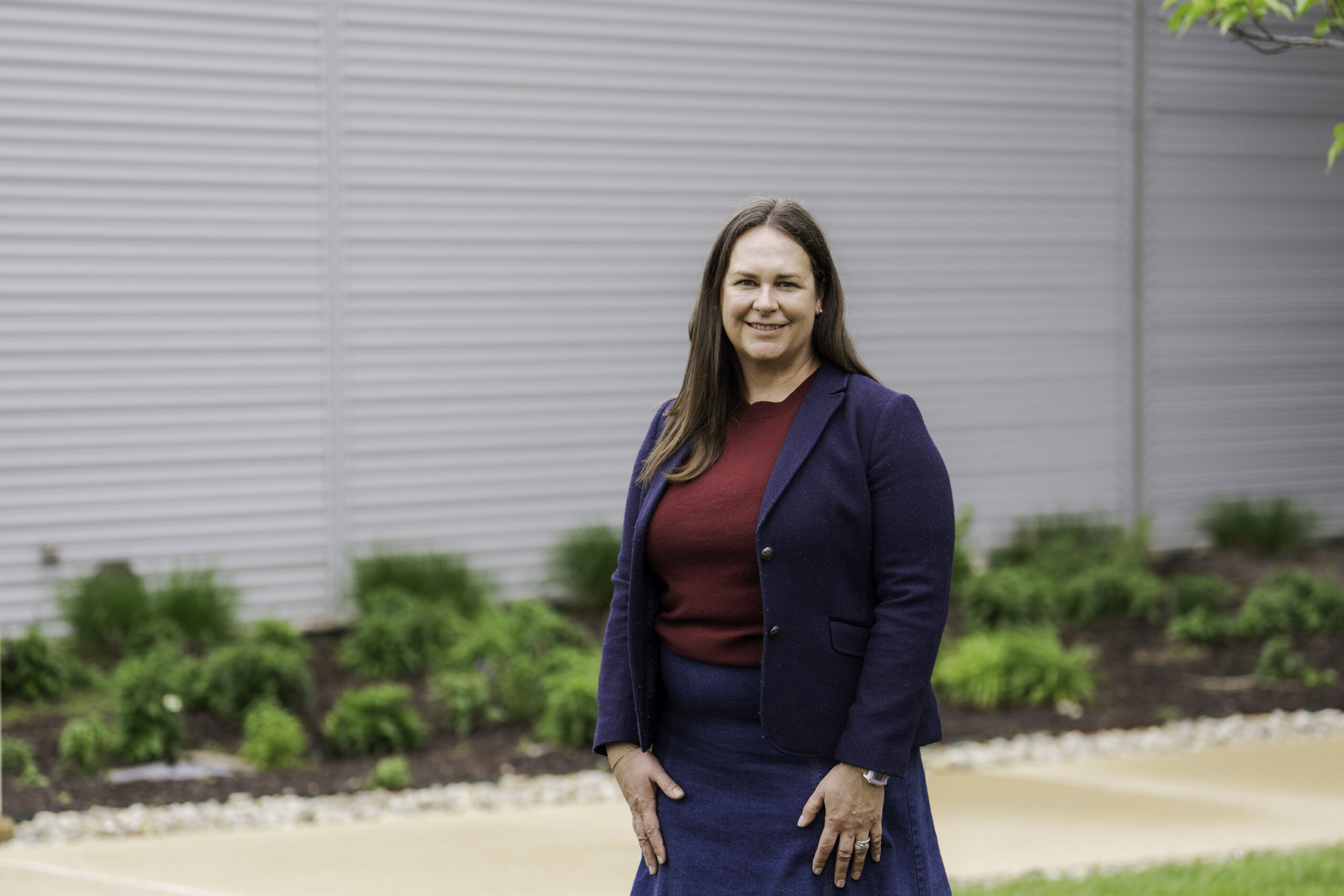
Tamara Schneider, MPH, PhD, is the assistant director of communications and senior science writer at Bursky Public Health. She holds a bachelor’s degree in molecular biophysics & biochemistry and in sociology from Yale University, a master’s in public health from the University of California, Berkeley, and a PhD in biomedical science from the University of California, San Diego. She joined WashU as a science writer in 2016.
Related News
The Source
September 25, 2026
Pregnancy nutrition trial in Ecuador improves fetal brain growth
Bursky Public Health's Lora Iannotti and colleagues tested whether a diverse diet inspired by ancestral eating patterns could support maternal nutrition and fetal development.
From listening to farmers in Benin to training community researchers in Papua New Guinea to connecting planetary health scholars at WashU, Mandeville works to create a healthy planet for populations