October 9, 2026
Bridging public health and primary care for a healthier population
WashU convening to explore building primary care-based research networks to improve healthcare, public health



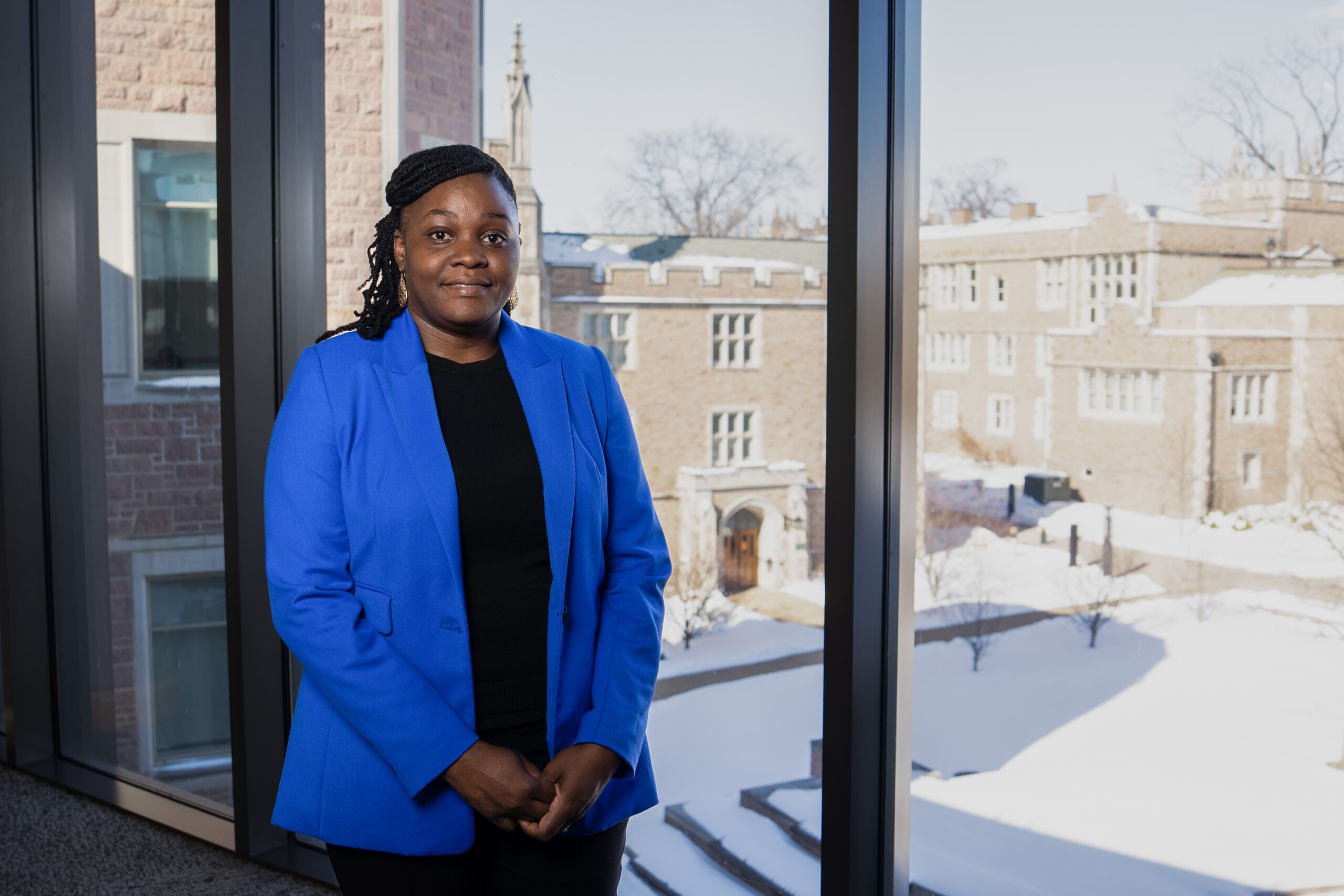
PhD student aims to inform, strengthen cervical cancer prevention policy, practice in Uganda
Anita Kabarambi, a second-year doctoral student at Washington University School of Public Health in St. Louis, has received a Margaret McNamara Education Grant for the 2026–2027 academic year. Margaret McNamara Education Grants (MMEG) is a nonprofit organization that awards grants to exceptional women from developing countries. Awardees must be at least 25 years old and enrolled at universities in the United States, Canada, France, or South Africa, or certain universities in Latin America and the Caribbean. Each awardee receives $15,000 to support dissertation research.
Kabarambi’s research interests lie at the intersection of HIV care, cervical cancer prevention, and implementation science. Women living with HIV are at elevated risk of developing cervical cancer, which is caused by the human papilloma virus (HPV). For her dissertation research, Kabarambi will examine organizational readiness for integrating HPV vaccination into routine HIV care for adolescent girls and young women living with HIV in Uganda.
“In Uganda, a girl living with HIV is six times more likely to develop cervical cancer — yet the very clinics that keep her alive have never been systematically used to protect her from it,” Kabarambi said. “My research is not about proving the vaccine works. It is about dismantling the implementation failure that has left the most vulnerable girls behind, and providing Uganda's Ministry of Health with the locally generated evidence it needs to finally close that gap.”
Kabarambi, who is also a medical doctor, is from Uganda. She hopes her work will provide practical evidence to inform policy and practice in Uganda and across similar settings in sub-Saharan Africa.
Judith Mwobobia, MPH, is the inaugural Writing Fellow for the Bursky School of Public Health Office of Communications. Mwobobia is a PhD student in public health sciences and previously was a journalist in Kenya. She writes profiles and helps cover the news of the school, with a particular focus on student- and education-related stories.
October 9, 2026
WashU convening to explore building primary care-based research networks to improve healthcare, public health
WashU's The Source
October 9, 2026
Bursky Public Health researchers examine how to respond to changes driven by digital technology and generative AI.

October 9, 2026
Public attitudes may inform policies to address substance use, homelessness, mental illness