October 9, 2026
Bridging public health and primary care for a healthier population
WashU convening to explore building primary care-based research networks to improve healthcare, public health



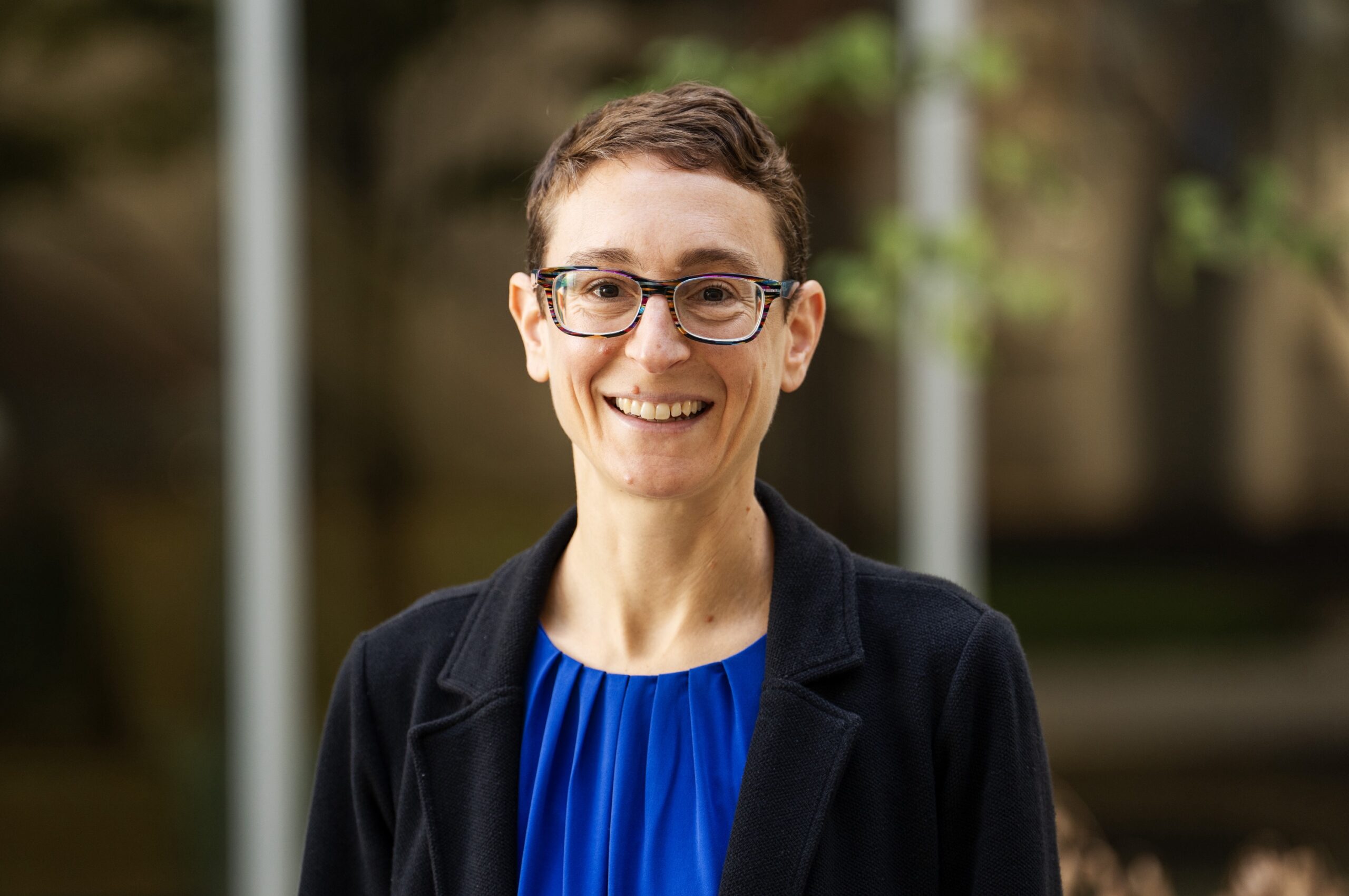
Tabak applies implementation science to her research on promotion of healthy eating and physical activity
The letter that changed Rachel Tabak's career path didn't come from a university or a funding agency. It came from her grandmother. It was 2008, and Tabak — a doctoral student at the University of North Carolina at Chapel Hill and a St. Louis native — opened an envelope to find a newspaper clipping about Washington University's new public health program. There were five words scrawled on a note that accompanied the article: "Now you can come home."
She already had a connection to WashU. Through her interest in implementation science and a national network of Prevention Research Centers, Tabak had crossed paths with Ross Brownson, PhD, a public health sciences researcher at the university. As she was wrapping up her doctoral training, she wrote him to ask about postdoctoral positions in implementation science, packed her things and returned home.
Nearly two decades later, Tabak, PhD, RD, is an associate professor at WashU School of Public Health, where she and Brownson — the Steven H. and Susan U. Lipstein Distinguished Professor — collaborate regularly on research rooted in implementation science.
"I knew Ross, and I knew this was the place where implementation science in chronic disease prevention was happening," Tabak said. "To be part of the field as it became a field — you build these methods, and you see people use them. That's really what I wanted to come here and learn."
Tabak applies implementation science to her research on healthy eating and the promotion of physical activity outside clinical settings. Her work examines whether evidence-based intervention works — for example, nutrition and activity interventions delivered to families through home visiting — as well as how to embed this programming within existing home visiting systems, how providers deliver it, which families receive it and how those families experience it given their socioeconomic circumstances.
She also brings that approach to her collaborations with Debra Haire-Joshu, PhD, RN, MS, MA, the Joyce and Chauncy Buchheit Professor in Public Health. They both work with Parents as Teachers, a national organization headquartered in St. Louis that partners with families to boost parent knowledge of early childhood development, improve parenting skills, increase children’s school readiness and success, and improve parent, child, and family health and well-being, among other aims.
Beyond her research, Tabak teaches epidemiology at the School of Public Health and hopes to add a nutrition course in the future. She traces her love of epidemiology to an undergraduate epidemiology course at Tufts University, where she says a new way of thinking took hold for her — one she now works to pass on to the next generation of public health professionals.
"It really teaches you how to think critically, and I love that," Tabak said. "That helps you become a public health thinker, so that first year is such an important experience for students."
Here, Tabak talks more about implementation science and what the School of Public Health means for the field.
Q: How did that first epidemiology course create a new way of thinking for you?
“I didn't understand until then that there could be science that wasn't in a lab and that you could ask questions and get answers by doing research with people — real people. This is more directly related to people's lives. And then, on my very first day of my PhD program, the department chair at the time said something like, ‘I want to welcome all of you new scientists,’ and I was like, ‘Oh, that's so affirming for me to think of myself as being a scientist.’”
Q: How would you describe the difference between intervention and implementation?
“There's the intervention, such as a program to promote healthy eating for mothers, and the strategy to put the intervention into place. And in implementation science, we study what strategies are needed based on the context, which strategies work, and how strategies work. We specify the strategies in detail, so you're not just throwing things out and then not knowing what you did or what you tested. Then, we can compare strategies to see what works best.”
Q: You’ve seen public health at WashU since its early days. How does it feel now to be at a school dedicated to the field?
“It’s important to be a school of public health in the Midwest. As someone who's from here, there's something important about a school doing public health in the middle of the country — even though our studies take place all over.
“It's amazing to be somewhere where public health is what we're doing as a whole school. I can already see how the events the school has, like Thinking Public Health and the convenings, which feature different kinds of speakers, are challenging us to think in different ways. And this is what it all comes down to for me: how we think about things. I mean, that's also what implementation science is. It's really exciting. It's such a difficult time for public health and for science. It's so energizing to be in a place that is still pushing forward. We're thinking about the moment as a chance to do better or do things differently. I'm really grateful for that.”
Q: What is your vision for the school 20 years from now?
“I think we want to be a school that is known for doing impactful work and to do research that matters, that improves public health. We want to train students who are going to go out in the world and improve public health. I think about how important it is to have a public health voice in places. We want people coming out of this program who are going to be those voices.”
October 9, 2026
WashU convening to explore building primary care-based research networks to improve healthcare, public health
WashU's The Source
October 9, 2026
Bursky Public Health researchers examine how to respond to changes driven by digital technology and generative AI.

October 9, 2026
Public attitudes may inform policies to address substance use, homelessness, mental illness