October 9, 2026
Bridging public health and primary care for a healthier population
WashU convening to explore building primary care-based research networks to improve healthcare, public health



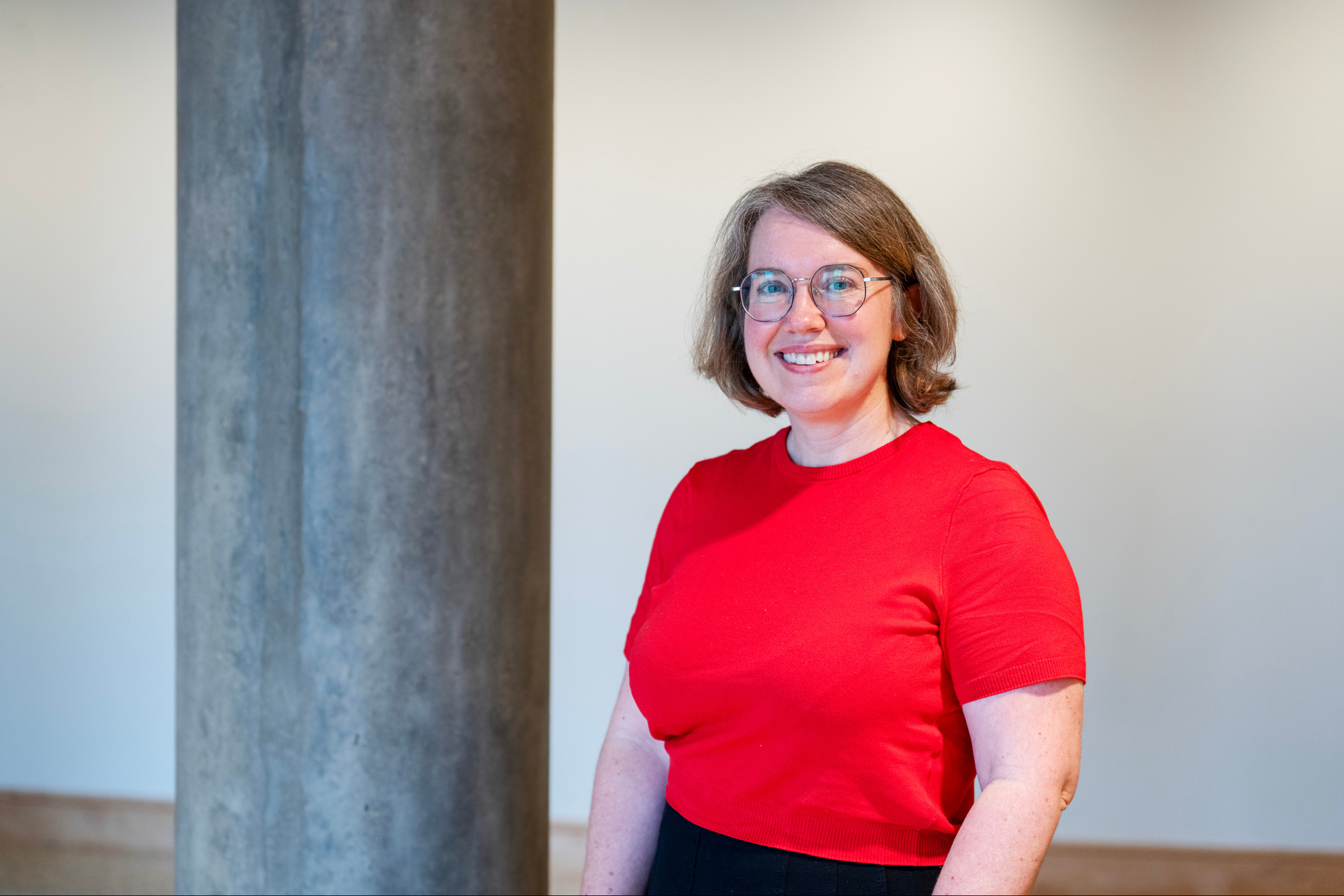
With significant cuts in federal funding, researchers are having to find other ways to support their work. Vorkoper draws on her years at NIH to help WashU Public Health's researchers adapt
For more than a decade, Susan Vorkoper helped design public health grant programs at the National Institutes of Health (NIH). Now, as director of research development in WashU Public Health’s Office of Research Affairs, she helps researchers navigate the system from the other side of the desk. Her knowledge is especially beneficial now; significant cuts in NIH funding and changes in policy have sown confusion across the research community, leaving even veteran scientists scrambling for support and perplexed by the changes.
"I've been on the other side — developing what a grant program looks like, thinking about the evaluation criteria," Vorkoper said. "I want to help people keep their fingers on the pulse and understand what these changes mean."
Her interests have long centered on global health, implementation science and nutrition. At WashU's Brown School — where she earned her MSW and MPH — she studied under researchers who are now faculty members at the School of Public Health, including Associate Professor Sarah Moreland-Russell, and Lora Iannotti, the Lauren and Lee Fixel Distinguished Professor.
While working toward her PhD at the University of East Anglia in Norwich, England, Vorkoper started a position as a presidential management fellow for the NIH, coordinating the review process for health research partnerships and working on a U.S. Agency for International Development (USAID) initiative, Feed the Future. She then spent over a decade at the Fogarty International Center, which supports and facilitates global health research, as a public health adviser. There, she led large stakeholder engagement and funding strategy work that focused on using implementation science to address adolescent HIV in sub-Saharan Africa. She also led a multinational initiative to advance childhood obesity prevention.
Today, she plays an integral role in the Office of Research Affairs, supporting research faculty early in their careers as they pursue initial grants, and to veteran faculty who may have lost funding or want to explore new areas.
She works with some of the same researchers who trained her, helping them adapt to a funding environment that has changed substantially.
"A big part of my job right now is understanding all the various updates happening across the NIH and thinking about how we pivot our research in response," Vorkoper said. "There's a new process, new review criteria — a change that's been coming for a long time. I can work with faculty on making sure we're responding to those new criteria and putting front and center why their work is innovative."
Here, Vorkoper talks more about her work at the School of Public Health:
“I work with investigators; I try to use the word 'investigators' instead of 'faculty,' so that it includes staff. I work with them on several different levels. I help them think through how to develop ideas. I work closely with University Advancement to help identify funding opportunities and match investigator’s ideas to the right opportunity.
“My job is understanding what priorities are within the NIH, and across the government in general. Sometimes I review the applications and have conversations with researchers about, ‘Is there a partner that might round out your application? Is there a way for us to strengthen your application for the funder without sacrificing what you want to do?’ And not just within their own discipline but thinking bigger about how the innovation affects public health.”
“Don’t get discouraged. It is a different landscape right now. It is going to involve a bit of a pivot. Be responsive to the changes by considering how to align your work with the funding priorities, and be ready to respond to funding calls that are coming out and sometimes closing quickly. We can look at applications that haven’t been successful in the past to understand why and examine how to pivot for another funding opportunity or funder. Just because the proposal didn’t fit for one NIH grant doesn’t mean it was a bad idea. We are also trying to keep up to date on all these changes and communicate them to investigators so that we’re staying ahead of the curve. I encourage people to come talk to me."
“This was true at the NIH, and it's true here: I'm passionate about where science is going and thinking about how we get there. I like being part of this pipeline and thinking about, 'What is the future of public health research? How can we make sure it’s impactful and where it needs to be?' This position has a real opportunity to make an impact.”
“The focus on the interdisciplinary is pivotal for public health. Public health is a team sport, and getting more people on your team inherently helps with your impact. We have an amazing group of investigators who are doing some incredible work. We have people who have been doing this for decades, and you have people who are in the process of building their careers.
“It’s such a wonderful environment that's bringing people together, and I'm constantly in awe of all the different people who are coming to the Thinking Public Health and Talking Public Health events. People here are really invested in hearing about research and being together and collaborating. ... We also have an opportunity to be innovative and do things differently, to create something that is responsive to our specific school as well as the larger public health community."
October 9, 2026
WashU convening to explore building primary care-based research networks to improve healthcare, public health
WashU's The Source
October 9, 2026
Bursky Public Health researchers examine how to respond to changes driven by digital technology and generative AI.

October 9, 2026
Public attitudes may inform policies to address substance use, homelessness, mental illness