October 16, 2026
Five WashU research teams receive 2026 FARM Cultivate grants
Projects explore the connections among food, agriculture, environmental sustainability and human health


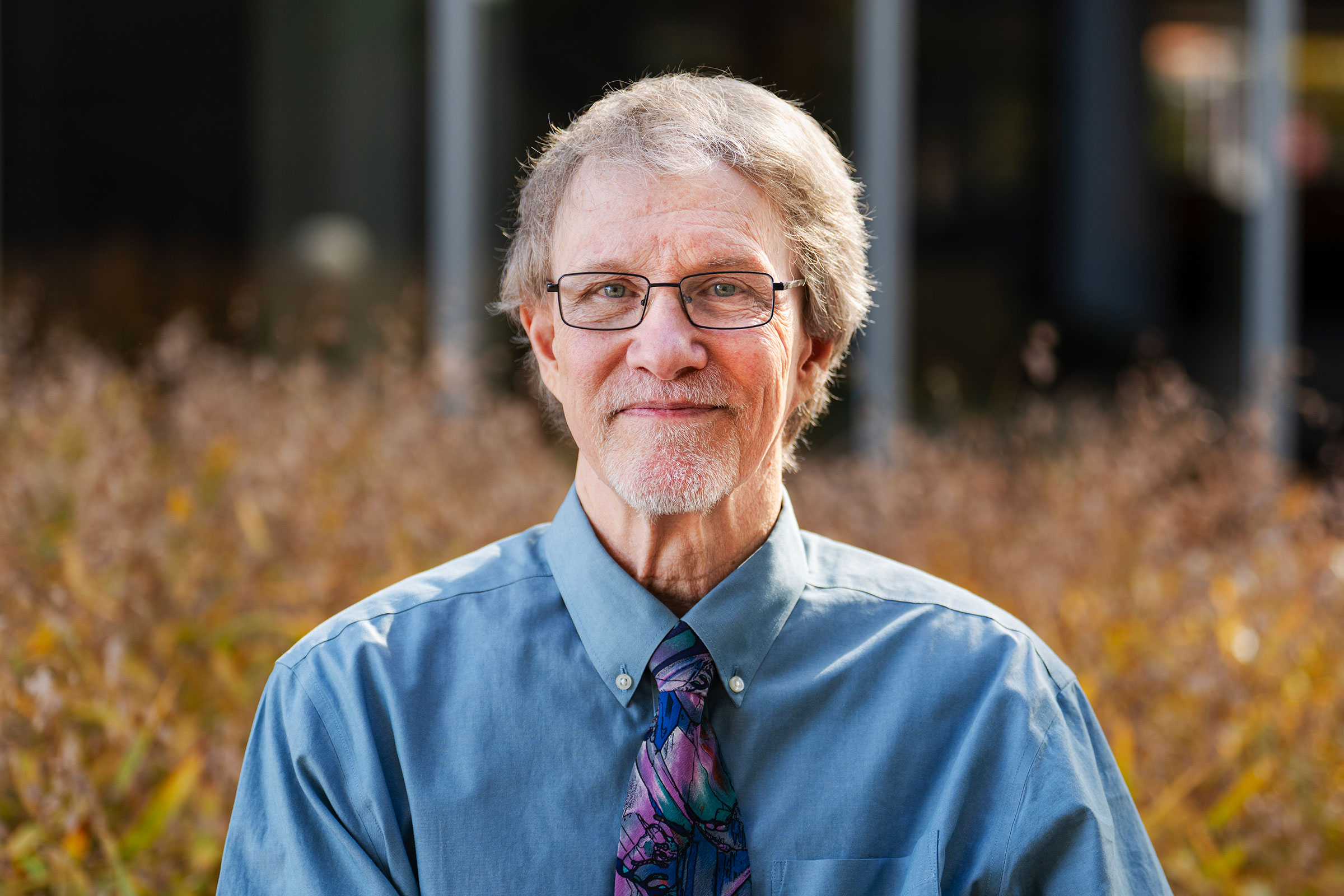
Brownson’s journey from public health practice to academia has shaped a career focused on disease prevention, evidence-based public health, and implementation science.
Throughout a career that began in public health practice in the mid-1980s, Ross Brownson, PhD, has watched the field move through cycles of momentum, challenge, and renewal. His own path also has evolved, from the Missouri Department of Health and Senior Services to academic research, teaching, and mentorship.
Brownson, the Steven H. and Susan U. Lipstein Distinguished Professor at Washington University’s Bursky School of Public Health, took a nontraditional path into academia. He spent eight years in the state health department, where he saw how research, policy and practice can improve population health. That experience still shapes his work. “While my day job is in academia, my heart is still in public health practice and policy,” Brownson said.
Brownson directs the Prevention Research Center at WashU and co-leads the Dissemination & Implementation Science Innovation Research Network (DISIRN) at Bursky Public Health. His work focuses on chronic disease prevention, evidence-based public health, and implementation science, helping move research into real-world practice.
These days, he is increasingly focused on mentoring and building capacity in others — helping students, postdocs, and early-career faculty develop ideas and build their research. “At this stage of my career, one of my markers of success is that I no longer get large research grants for myself; I help others get their grants,” Brownson said. “Effective mentoring is giving others the chance to chart their own course. I am trying to live that out.”
For Brownson, that shift is a continuation of his work advancing public health: investing in the next generation of scholars and practitioners who will carry the field forward.
Here, he discusses career transitions, his hopes for the field, and advice for younger professionals.
“I knew I wanted to work in health, but I came to it through a mix of planning and opportunity. I began my training in environmental health and epidemiology, and after earning my PhD, I landed a position at a state health department. I knew I wanted to work in chronic disease prevention, and early on, I focused on cancer epidemiology.
“But honestly, I had broad interests, and those merged with opportunities that came through the health department, grants that got funded, and people I met. So, I would say half of my journey was planned, and the other half was opportunity.”
“I came to academia after eight years at the Missouri Department of Health and Senior Services. When I started, there were three people in my office; by the time I left, there were about 75. It was a period of major CDC investment in public health, and we grew through strong partnerships with CDC and universities.
“I sort of stumbled into public health practice and academia. I was interested in health and the environment, and the more I learned, the more intrigued I became. Working in a state agency showed me how research could be implemented in practice. In 1994, I moved to Saint Louis University and shifted toward academic public health, but I’ve stayed closely connected to public health practice and policy. That early practice experience taught me what it takes to do effective public health.”
“I am probably most proud of the work we have done to apply tools from implementation science to improve public health practice and make it more effective. Public health is a team sport. Nothing I have done is mine alone; it is what my teams have done.
“A lot of that work has been through partnerships, especially around evidence-based public health: defining it, measuring it and helping the workforce use it. Our training program has now trained more than 4,000 practitioners worldwide.
“I am also proud of the work and impacts of the Prevention Research Center, now in business for more than 30 years. That is not easy when administrations and funding change, but we have tried to keep our eye on the long-term prize, not just the short-term one.”
“Build your network. That includes partners, peers, professors, mentors and others who help you grow. Technical skills like data collection, knowing study designs and evaluation matter, but so do communication, negotiation and finding common ground.
“I tell my classes in our last session: Find something you are good at and really care about, then spend your career trying to become great at it. You may not be great at it yet, but you can continue to grow your skills. Keep working to get better and better.” (Brownson teaches a course for public health practitioners called “Evidence-Based Public Health” and an MPH class at Bursky School of Public Health called “Translating Evidence into Policy.”)
“The other advice is to take your work very seriously, but do not take yourself too seriously. Public health is about teams, collaborators, shared credit, and meeting partners where they are. It should be shaped not only by academia, but by practice, policy, and the partners you work with.”
“When asked that question, I always start with the idea, used by the World Health Organization, that we need to make the healthy choice the easy choice. If we ask people to be more active to reduce heart disease, live longer, and improve quality of life, but they lack safe places and resources to exercise, how can they be active? We must create social conditions that make everyone healthy, as health is highly valued. It’s become harder for some populations to be healthy. We need to promote health behaviors, implement supportive policies, and create environments that encourage healthy choices. Additionally, the roles of organizations, families, and friends are vital in supporting healthy habits. Ultimately, change starts with policies and environments that enable healthier lifestyles.”
“I see small victories as victories that accumulate. For example, childhood obesity has recently declined in low-income youth. It's also vital to evaluate progress. If years of effort don't yield results, we probably need a new approach, work with new sectors, or adaptation in public health. Many overlook the power of policy change, whether big-P government policies or small-p organizational policies. For example, a company might incentivize healthy behaviors without government intervention. Ultimately, we should focus on policy strategies, combining both levels for maximum health and societal impact.”
“My wife and I enjoy traveling, and I’m grateful that my work in public health led me to her, as I met her while working at the state health department. We appreciate art, concerts, and plays, supporting the local arts scene, including the art museum and music. I also enjoy watching tense crime dramas. I read a lot, though most of my time goes to scientific reading. The last book I reread was 'The Last Lecture' (by Randy Pausch), a nonfiction book about a terminally ill college professor. It’s sad but offers meaningful messages.”
Judith Mwobobia, MPH, is the inaugural Writing Fellow for the Bursky School of Public Health Office of Communications. Mwobobia is a PhD student in public health sciences and previously was a journalist in Kenya. She writes profiles and helps cover the news of the school, with a particular focus on student- and education-related stories.
October 16, 2026
Projects explore the connections among food, agriculture, environmental sustainability and human health
October 16, 2026
Forum explored how rural health, food systems, agriculture and nutrition interact to impact public health and well-being
WashU's The Source
October 16, 2026
Spielman brings decades of experience in global food policy and economics to his current research on food systems, innovation and rural health