October 2, 2026
Building food systems that promote rural health
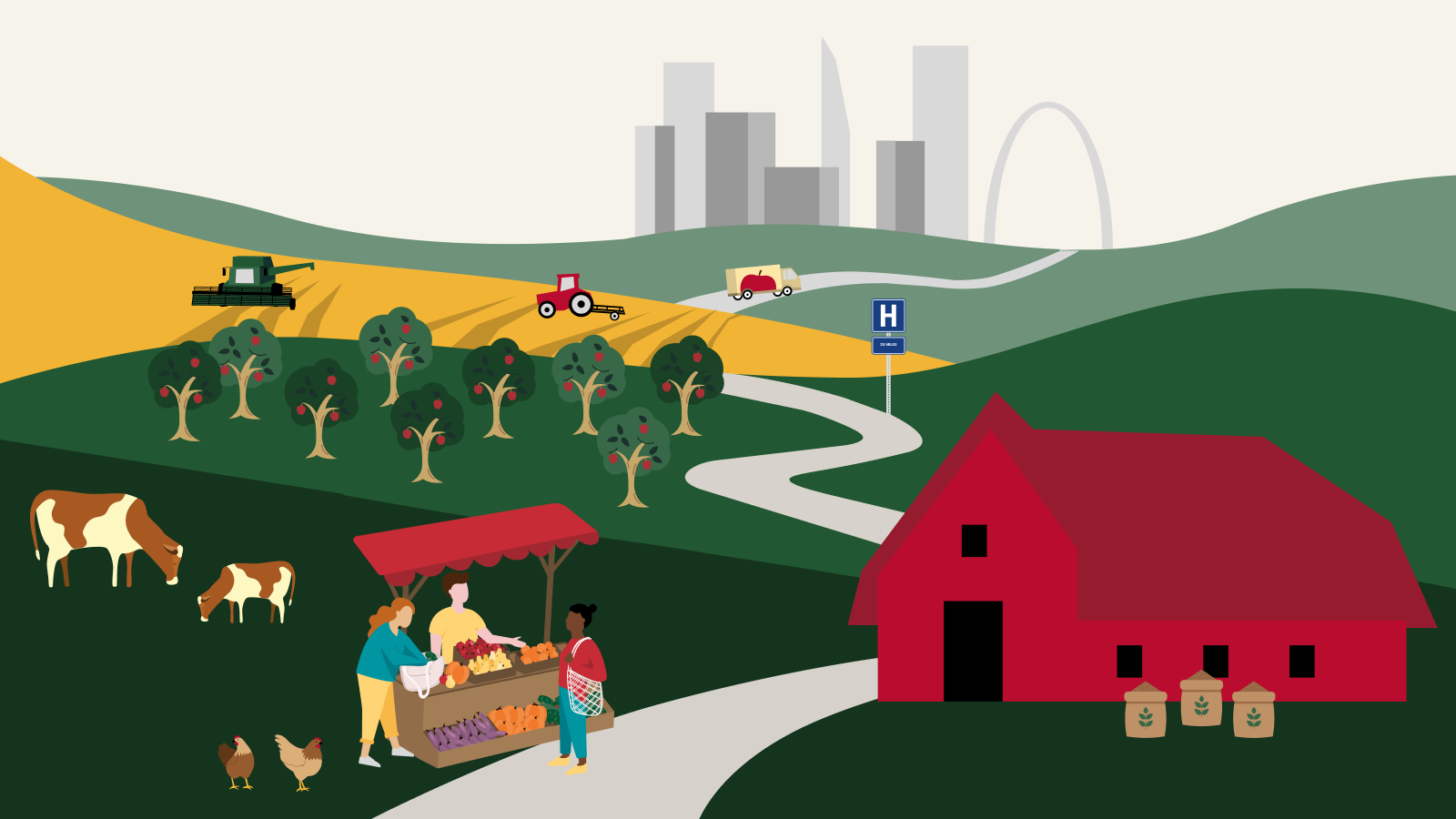
Two-day convening brings together experts to rethink how food is produced, distributed and consumed to better support rural communities


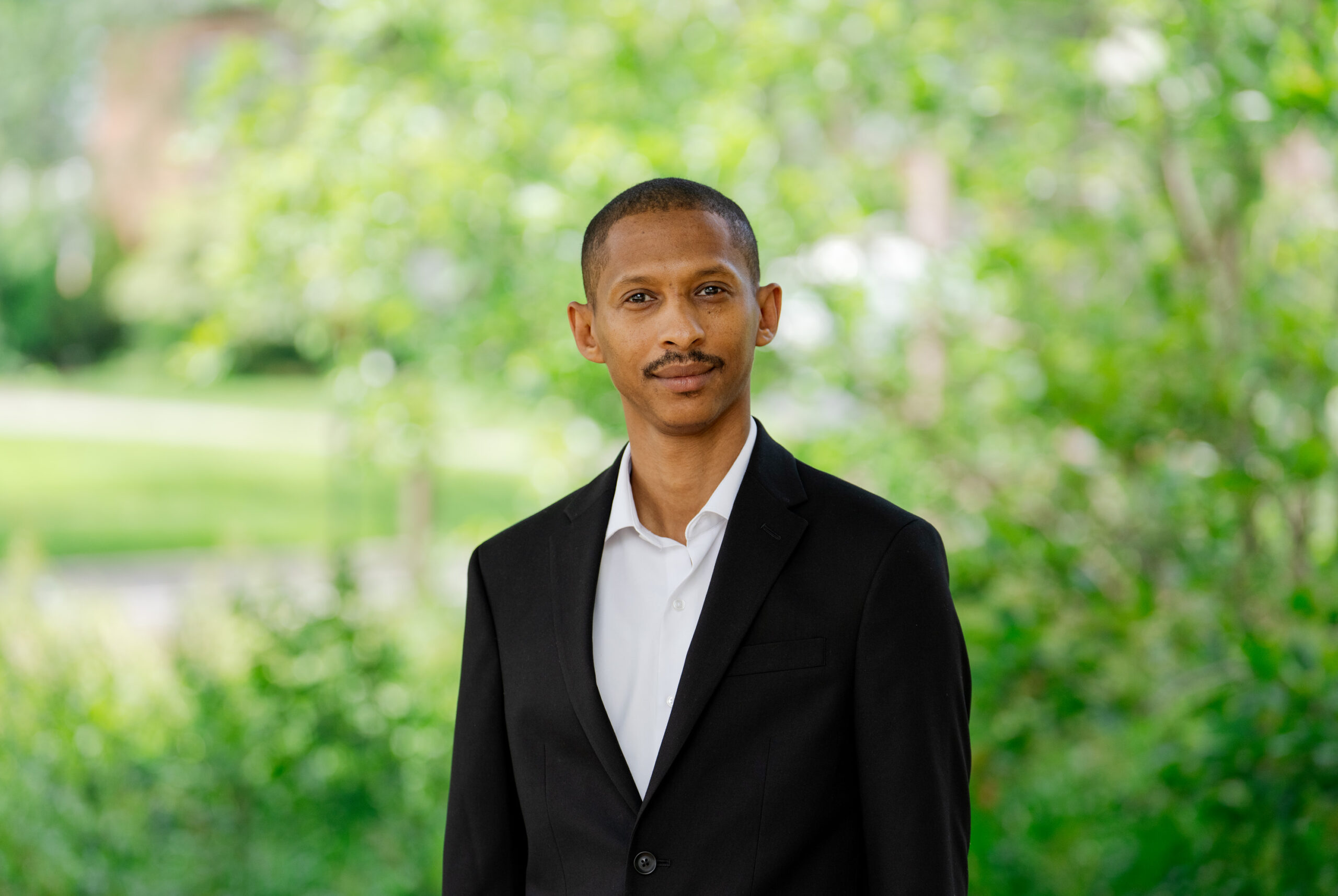
Abba-Aji’s journey from the military to public health research has shaped a career focused on improving mental health and building healthier systems for populations.
For Mohammed Abba-Aji, MD, MPH, DrPH, the path to public health was anything but straightforward. As a child growing up in Nigeria, Abba-Aji had only one ambition: to become a military officer.
At age 11, he applied to an Air Force military school, envisioning it as the first step toward a career in uniform. But during the medical screening, a physician concluded that he had pneumonia and disqualified him from admission. A second evaluation later found no evidence of the illness, but by then the opportunity had passed.
"It was all I had wanted to become," Abba-Aji recalled. "I didn't really have a plan B."
His parents did. His mother encouraged him to pursue medicine, and he threw himself into his studies. Years later, he entered medical school and eventually became a physician. Yet the dream of military service lingered. So after completing his medical training, he applied to the Nigerian Air Force and found himself living out both childhood ambitions — as a military officer and a doctor.
That dual role is what brought him to public health.
“As a physician in the Air Force, I cared not only for military personnel but also for civilians,” he said. “Military hospitals in Nigeria often serve as major healthcare providers for surrounding communities. This exposed me to a wide range of patients and health challenges.”
Today, Abba-Aji is a postdoctoral research associate at WashU Bursky School of Public Health. He is also a lecturer in Arts & Sciences’ Public Health & Society program for undergraduates; a collaborator in Bursky Public Health’s Healthier Futures Lab; and leads a project titled, “Mental Health and Resilience following Violence Incidents in Nigeria.”
Here, he talks about his career and the lessons he has carried over from past experiences.
“What ultimately transformed my career came during a deployment to northeastern Nigeria amid the Boko Haram insurgency. Following attacks on humanitarian organizations and the withdrawal of several aid groups, I led a military medical team into a community filled with internally displaced people. What began as a mission to provide clinical care quickly became something much larger. My team encountered severe malnutrition, measles outbreaks, maternal health emergencies, poor sanitation, and widespread trauma. We converted a school into an emergency field hospital and worked to address problems that extended far beyond medicine. Our mission on paper was to provide medical services. But that wasn't enough.
“For the first time, I saw how deeply health was shaped by forces outside the clinic: vaccination systems, water and sanitation, displacement, food security, and mental health. That was what led me to public health and to pursuing a master of public health at the London School of Hygiene & Tropical Medicine.”
“After my MPH, I returned to the military, but I had become very interested in systems thinking and population health. I started looking for people working in that area, especially in complex systems and mental health. That search eventually led me to Sandro Galea. At the time, he was at Boston University. I applied to several programs, but I chose Boston, partly because of the chance to work with Sandro directly, first as a research fellow and then as his mentee in the DrPH program. The fellowship appealed to me especially because I already had my medical training. So I joined Boston University as a research fellow and also worked with Sandro through my DrPH program.
“When Sandro came to WashU, he offered me the opportunity to join him here. In the early days, my work focused on helping to set up convenings, supporting strategic initiatives, and contributing to some of the intellectual work around the new school. So that is how I ended up here, first through my interest in systems thinking, then through my work with Sandro, and eventually through the opportunity to help build something new at WashU.”
“During my MPH program, I took a course that introduced me to complex systems thinking. It was one of those moments where a light bulb turns on. The concepts of interconnectedness, interdependence, nonlinearity, and emergence immediately resonated with me. It helped explain many of the challenges I had seen throughout my career and gave me a framework for understanding how health outcomes are shaped by multiple interacting forces.”
“I often describe myself as a population health scientist. My work focuses on advancing population health through research, dissemination, and teaching. I don't limit myself to a single topic. I've worked on social determinants of health, commercial determinants of health, mental health outcomes, trauma, and conflict-related health issues. What connects all of those areas is an interest in understanding what drives health outcomes at the population level and how we can improve them.”
“Discipline, adaptability, and a strong sense of responsibility. The military teaches you to maintain focus on your objectives while also remaining flexible when circumstances change. I've carried those lessons with me into research, teaching, and public health practice. At the same time, medicine taught me to see individuals. I still see individuals in what I'm doing. I can't separate a study on mental health outcomes from the patient I saw whose husband was killed and whose daughter was abducted.”
“The best possible outcome is to contribute to improving people's well-being. Whether that means helping one person directly or helping improve the health of an entire population, I want my work to make a meaningful difference. I don't think impact only comes through research. It can come through teaching, practice, policy, or service. What matters most is finding the place where your skills can be useful and contributing there.”
Judith Mwobobia, MPH, is the inaugural Writing Fellow for the Bursky School of Public Health Office of Communications. Mwobobia is a PhD student in public health sciences and previously was a journalist in Kenya. She writes profiles and helps cover the news of the school, with a particular focus on student- and education-related stories.
October 2, 2026
Two-day convening brings together experts to rethink how food is produced, distributed and consumed to better support rural communities
October 1, 2026
A one-time social worker, Gilbert transitioned from helping patients navigate serious illness to studying how to prevent it
The Source
September 25, 2026
Bursky Public Health's Lora Iannotti and colleagues tested whether a diverse diet inspired by ancestral eating patterns could support maternal nutrition and fetal development.