October 9, 2026
Bridging public health and primary care for a healthier population
WashU convening to explore building primary care-based research networks to improve healthcare, public health



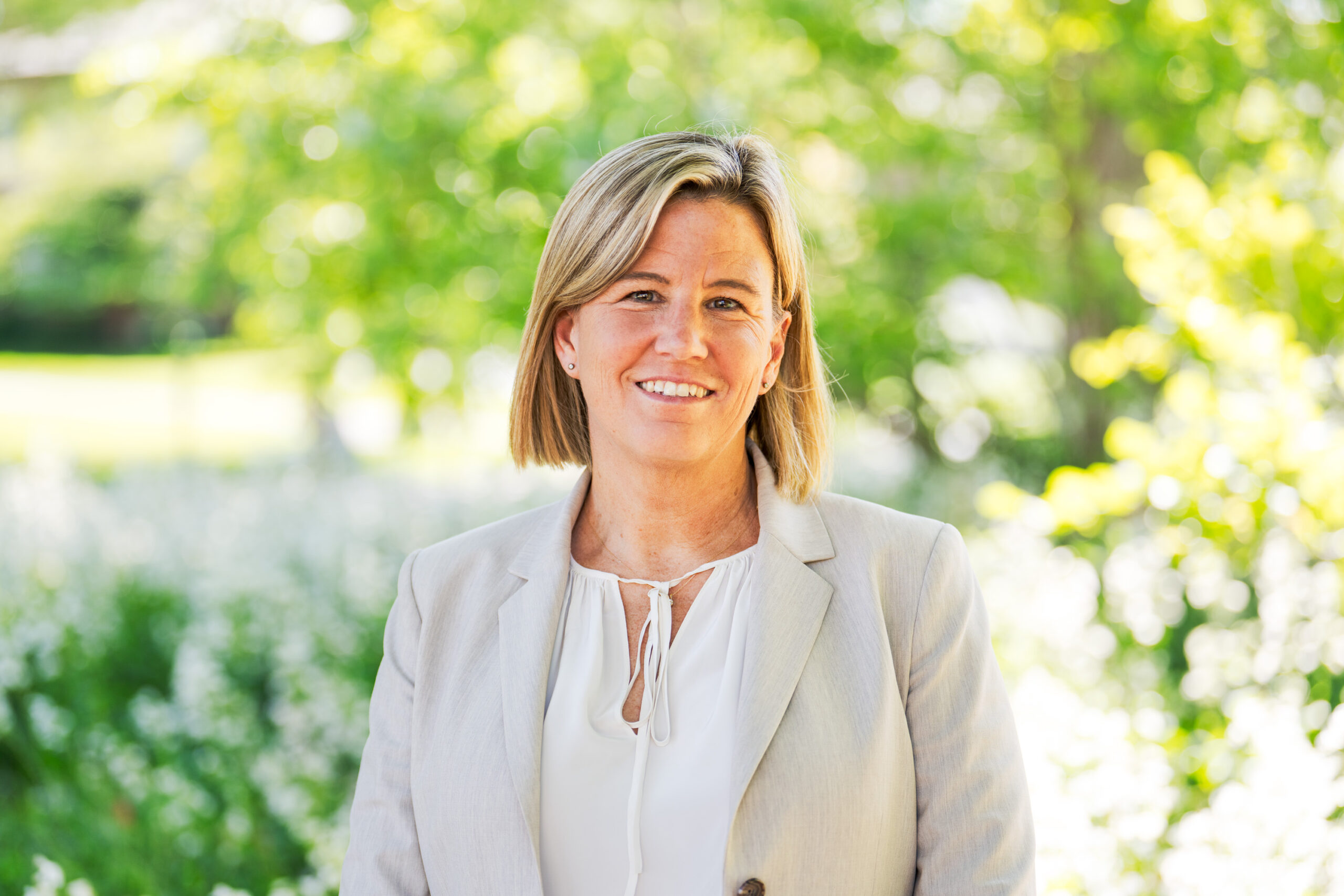
An infectious disease epidemiologist and data management expert, Layden leads the school’s efforts to create effective partnerships with government and community organizations
Last summer, Jennifer Layden had a choice to make. Then a senior executive and the inaugural director of the Office of Public Health Data, Surveillance and Technology at the Centers for Disease Control and Prevention (CDC), she had spent the previous five years successfully establishing the agency’s first-ever data and surveillance office, increasing legislative funding two-hundredfold for data modernization, and leading efforts to modernize the nation’s public data systems. But the start of the second Trump administration a few months prior introduced widespread disruption at the CDC, including deep cuts to funding, programs and staffing, and constraints on hiring, contracts and operations.
On August 27, Susan Monarez, PhD, the Senate-confirmed director of the CDC, was ousted after just three weeks on the job for refusing to sign off on changes to vaccine policy that she argued were scientifically unjustified. That same week, Layden and three other senior CDC officials resigned.
“The early part of 2026 was tough,” said Layden, MD, PhD. “We had been having significant challenges: loss of staff, inability to move forward with contracts, inability to hire, inability to communicate with our local and state health departments, lack of clarity on decision-making authority. As a public health professional deeply committed to improving our public health systems and the way we protect our communities, I felt like I could be more productive, more effective, more impactful, in a new setting.”
After her departure from the CDC, Layden took a job at the Association for State and Territorial Health Officials (ASTHO), where she focused on expanding public-private partnerships to support health departments, and building capacity — particularly in the leadership, data, and artificial intelligence (AI) space — at state and territorial levels. And on June 1, she joined WashU’s Bursky School of Public Health as the associate dean for practice and as a professor.
An infectious diseases physician and epidemiologist who has worked in federal, local and state health department leadership, as well as in the nonprofit sector, she will lead the school’s Office of Practice. In that role, she will oversee efforts to implement new ways to partner with government agencies, community organizations, and the private sector to positively impact communities’ health and well-being. She also looks forward to restarting her research interests, which she had largely set aside during her time working in government and the nonprofit sector.
Here, Layden discusses why practice serves as a pillar of academic public health alongside research and teaching; her excitement about returning to academia; and what keeps her motivated.
“I started in academia, and I assumed I was a lifelong academic. That was my career path. When I was in academia, I was working with the state health department in Illinois on a couple hepatitis C projects, and they asked me to take on a full-time role as the state’s lead epidemiologist and chief medical officer. It was something of a leap of faith, and looking back, it turned out to be a great decision. Academics, though, is where I started, and it's great to be back.
“In practice, you often get in a phase of being reactive to whatever the health or other challenge of the day is — whether it’s an outbreak or a change to the political environment — and that sometimes takes you away from being able to really think through a problem, to say, ‘We have this growing health threat in our community. How do we really dig in and understand it?’ So I'm excited to be able to get back into that more rigorous thinking, applying my training in epidemiology and working with others with different disciplines to address some of these challenges.”
“Recently, yes. When I was at the state and city levels, over in Illinois, I was a state epidemiologist. That means I oversaw all of our surveillance in disease programs and led all outbreak responses. So if there's a measles outbreak, I would be the one leading the measles-outbreak response. If an individual got ill on a plane landing in Chicago, or someone was identified as a suspect Ebola case, I was the one who got that call. During those years, I did a lot of work with various CDC programs and leadership. When I went to the CDC, because of the work I had done at the state and city levels trying to improve our data systems, I was asked to stand up the first data office, and that's where I really became heavily involved in that work. When we think of how seamlessly data flows in the healthcare setting — if you're a patient and you move out of state, you can still get access to your data from the other state, right? — that type of infrastructure is not there for public health, and it causes real gaps in identifying outbreaks and monitoring diseases.”
“Having worked in governmental public health practice for the last 12 years, I saw the importance of a bridge for partnership between academia and practice. And so that was one. And then two, being in a school that's creating, from the ground up, new ways that we think about public health, and reconsidering processes and approaches that have been in place for so long. How do we think about public health for our modern-day and future health challenges? When you look at our public health systems, they were developed at a time when the leading causes of death were very different than what they are now. The systems we have were developed at a time when we didn't have the technology that we do now. In a world where we now have AI, the way we practice public health is going to change. Being part of something that is being built with a forward-looking mindset is exciting.”
“Practice is a natural extension of the research and scientific work we're doing, the knowledge and skills we're teaching our students. When I was at the state and city level, and even at the federal level, the academic partnerships were really critical. It was a mutually beneficial relationship. Academic partners provided services, knowledge, expertise that we didn't have in practice, and became an integral part of the team. Many of our students will go out into practice — they'll work at health departments, they'll work at community organizations, they'll work in other settings — and so having practice be a vital part of the school, I think, is critical.“
“I've been thinking a lot about how trust in public health is diminishing rapidly. I think it's vitally important to address it. Looking at the hantavirus outbreak that recently happened on a cruise ship, it reminded me of a past hantavirus outbreak I was involved with. When I was in Illinois, we had a serious hantavirus outbreak where the exposure was pet rats people kept in their homes. Identifying the cause, we had to work directly with the owners and the families. It was hard for people, with public health officials coming in and telling them they couldn’t keep their pets. Looking back, I can see how this leads to mistrust. Could we have done something differently in a way that would not diminish trust in public health? With the significant rise in mistrust of public health and institutions in general, reflecting on, and learning from, these past experiences is really important.
“I think what I bring to this is extensive experience in public health practice. Much of that is in governmental practice, and practice is very different at the federal level, than it is at the state level, than it is at the city level or local level. I've had the opportunity and privilege of working across all those different levels. And then working at ASTHO — it's a nonprofit organization that represents our state health officials — gave me insight into the whole range of associations and community organizations that also are involved in this very complex public health ecosystem. Having awareness of it, understanding how it works, how it's evolved over time, where there are opportunities for partnership, I think helps to think through what we can do as we build this Office of Practice in such a way that makes us a leader in academic public health practice and a leader in how we continuously evolve and improve our public health systems.”
“There's so much opportunity to continue to improve the health and well-being of individuals and families and communities. To me, having worked in public health practice through COVID, and seeing those gaps and challenges in our public health systems, that motivates me. Failure motivates me. We can do it differently; we can do it better; we have to do it better. Knowing that we have a lot of work to do to build the trust back with our communities, and doing it in a way that evolves our public health system to meet this moment, is what keeps me going.”
Tamara Schneider, MPH, PhD, is the assistant director of communications and senior science writer at Bursky Public Health. She holds a bachelor’s degree in molecular biophysics & biochemistry and in sociology from Yale University, a master’s in public health from the University of California, Berkeley, and a PhD in biomedical science from the University of California, San Diego. She joined WashU as a science writer in 2016.
October 9, 2026
WashU convening to explore building primary care-based research networks to improve healthcare, public health
WashU's The Source
October 9, 2026
Bursky Public Health researchers examine how to respond to changes driven by digital technology and generative AI.
October 9, 2026
Public attitudes may inform policies to address substance use, homelessness, mental illness