October 9, 2026
Bridging public health and primary care for a healthier population
WashU convening to explore building primary care-based research networks to improve healthcare, public health



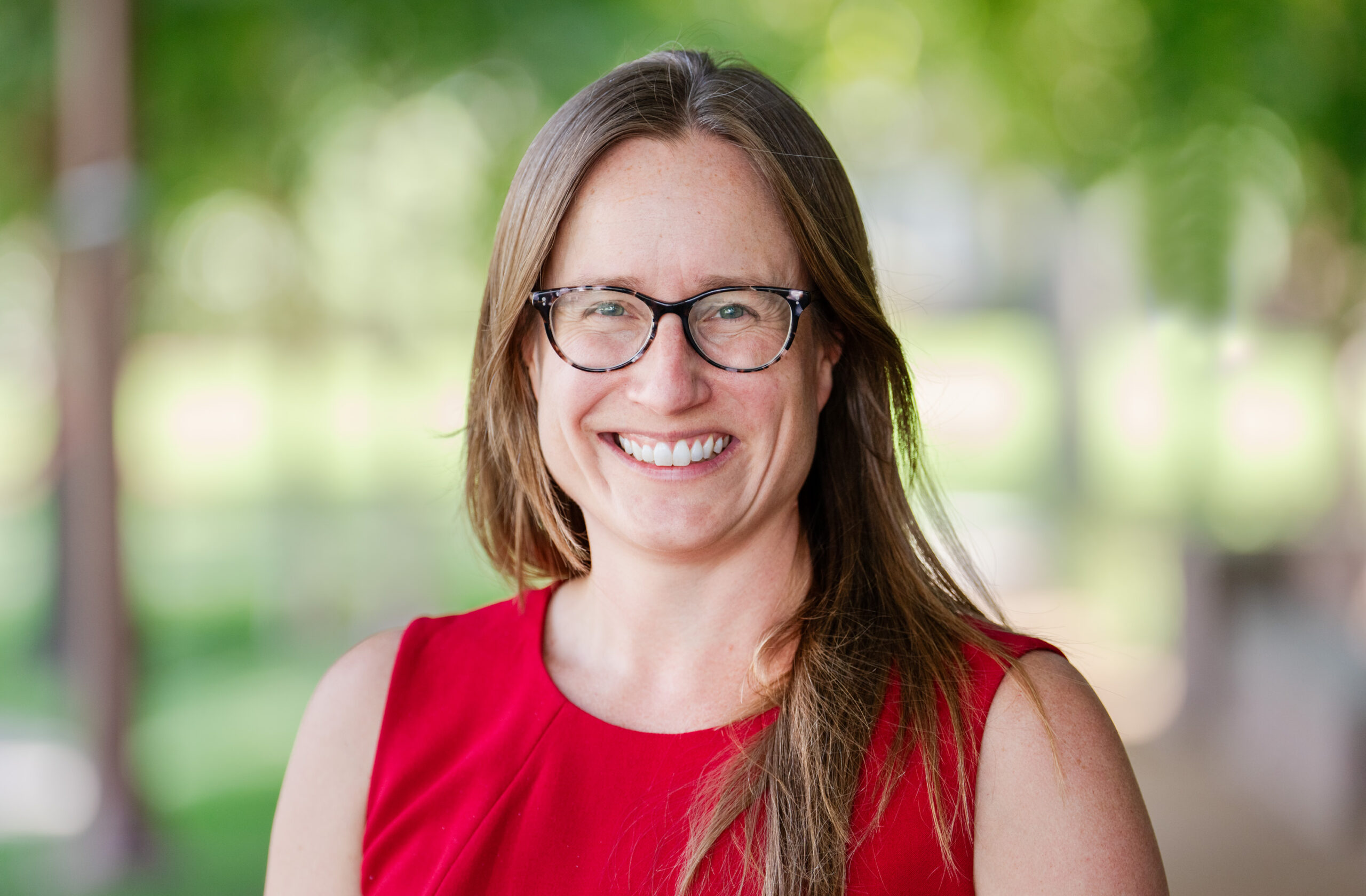
A noted global malnutrition scientist, Oldenburg aims to provide resources, services to help other researchers succeed
The last 18 months have been a tough time to be a U.S.-based global health researcher. Since taking office in January 2025, the Trump administration has instituted an “America first” framework for government funding. That has resulted in fewer dollars supporting global health research and programs, and in the shuttering of the U.S. Agency for International Development (USAID), once the largest single provider of global health assistance.
For childhood malnutrition researcher Catherine Oldenburg, MPH, ScD, those changes hit home in the fall. She was reviewing early data from an ongoing clinical trial in West Africa when she noticed a disturbing anomaly. The trial was designed to assess whether children with severe acute malnutrition would recover better if they received antibiotics in addition to the standard treatment: daily doses of a calorie-dense, nutrient-rich peanut-based paste. All participants were to receive the therapeutic food, a mainstay of malnutrition care. But the data showed the children weren’t gaining much weight.
“The weight gain and recovery rates were way, way lower than we expected,” Oldenburg said. “This didn’t make sense; we know this treatment works.”
It turned out that the cause was linked to the shifts in U.S. global health priorities. Without USAID support, Oldenburg’s Africa-based partners in the trial had been unable to obtain enough of the fortified peanut butter, so they started rationing it, giving each child only half the recommended dose. Oldenburg moved some of her grant money around — skimping on stateside expenses and cutting her own salary — so she could free up enough money to buy the therapeutic food in the U.S. and ship it to West Africa. Once the children began receiving full doses, their weight gain and recovery rates tripled.
That troubling experience is part of the reason why Oldenburg, then a professor at the University of California, San Francisco (UCSF), and a lifelong resident of the coasts, decided to make the move to the Midwest to join Washington University’s Bursky School of Public Health.
“It's been a depressing year and a half in global health, to put it mildly,” Oldenburg said. “I just liked the idea of being in a space where public health is thriving, instead of just surviving. The resources here, the systems that have been set up — we can actually build and expand and do better and more exciting things and directly impact population health instead of just kind of getting through this moment.”
Oldenburg joins the school as a professor and the associate dean for research. She leads the school’s Office of Research Affairs, which provides services and resources to help scientists navigate an increasingly challenging funding landscape and succeed as researchers. Here, she talks about how a science news story led her to public health, why she loves epidemiology, and her 500 houseplants.
“It's one of those happy accidents. I went to Carnegie Mellon as an undergraduate, as a biology major. Carnegie Mellon is very focused on basic science, so when I graduated, I didn't really know what public health was. I was thinking about what I wanted to do with my life — I was thinking about vet school or med school — and then I read an article in Science about the HIV response in Haiti and all the successes they’d had, and I was just fascinated. It just opened up a whole different type of science than I'd been exposed to so far in my career. I realized that an MPH could lead me in a lot of different directions.
“I went to Boston University for my MPH and I just thrived there. Those two years were some of my favorite years of my education. I remember taking my first epidemiology class. I started out as a global health concentrator, and then I had to take an epidemiology class, like everybody else. Most of my fellow global health students really hated it. They thought it was boring. And I was like, ‘Oh my gosh, this is so cool!’ Because it was these methods for how you quantify and actually determine impact of different types of exposures or interventions. So I took a bunch more epidemiology classes and ended up adding on an epi concentration to my degree.
“And it just went on from there. After I got my MPH, I took a job running clinical trials for corneal ulcers in India, and that’s where I learned to write papers and do analysis, come up with a research question, and find the data to answer it. It was all very exciting to me. That’s when I decided to go on and do my PhD in epi. But yeah, it all started with a news story in Science.”
“I was excited about the ability to join a school in a building phase. This is just such a critical moment in public health. There's this kind of tangible excitement about public health here that I just don’t see elsewhere.”
“I think the more stories we have about public health thriving and the less we have about the decimation of public health, the better it is for the field. I think it's really important to show that there is still excitement and investment in public health and that we can grow in this moment despite everything that's happening externally. That is something that can have an impact on other people, especially learners.
“One of the things I've worried about the most is the generation of scientists that we're going to lose. I ran the epidemiology PhD program at UCSF, and I'm really passionate about training people in public health and in epidemiology. I want the next generation to continue to be excited about public health, and if all they're hearing about is destruction, that makes things worse, you know? I think that having a space where people — especially people at the beginning of their careers — can see that there's a path forward in public health, that getting an MPH is worth it and meaningful and that the work we do really matters, I think that can have a really big impact.”
“One of the things I care most about is creating environments that set up people up for success. As you can probably tell, I’m a storyteller, so I am going to tell a story. During the pandemic, I adopted a puppy. She was a little landshark and she kept me very busy with normal puppy things. But when she reached adolescence, I saw some concerning behaviors start to emerge. She was very worried about almost everything. It was impacting her, and my, quality of life. Having guests over, going for walks — all of that was just really hard. I was very lucky to work with a number of people who taught me so much about dog behavior, and I’m happy to say she’s thriving now. They taught me to meet her where she is, and to make sure her needs are met first. I made changes that specifically set her up for success. We don’t walk in neighborhoods anymore; we go to big open fields. I listen to her and if she tells me she doesn’t want to do something, we don’t do it. I practice a welfare-first approach with my dog. It seems so basic, but this was a mindset shift that changed everything for me.
“What I learned from that is that puppies, and people, thrive when they’re in the right environment. In my work life, I became passionate about meeting people where they are, ensuring they have the tools for success, and that their needs are met first as a human. People who are struggling and stressed are unable to do their most innovative, impactful, and creative work. I’ve implemented these principles in my classroom-based work, and I’m excited now to do that in the Office of Research Affairs.
“So, my vision for the Office of Research Affairs is to build a research ecosystem in which our faculty, staff, and learners thrive. The first step of that is to understand where the needs are. I’m excited to work both individually and at a school level to understand how we can meet people’s needs, and how not just to survive this moment in public health, but to thrive in it.”
“I have a very large houseplant collection.”
“About 500. I rented a minivan to drive them all out from California because they have to be temperature-controlled, and a lot of them have specific humidity requirements. It was a project to get them here. It took a lot of planning. I had them packed into bins, and some of them were tightly packed, but they all fit. Some of them were a little unhappy with me when we got here, but they all bounced back.
“They are mostly alocasias, which are also known as Elephant Ear plants because they get these huge leaves. I have probably 400 of those. I also have philodendrons and monsteras, and a bunch of carnivorous plants. That’s what I do in my time off: I take care of plants.”
Tamara Schneider, MPH, PhD, is the assistant director of communications and senior science writer at Bursky Public Health. She holds a bachelor’s degree in molecular biophysics & biochemistry and in sociology from Yale University, a master’s in public health from the University of California, Berkeley, and a PhD in biomedical science from the University of California, San Diego. She joined WashU as a science writer in 2016.
October 9, 2026
WashU convening to explore building primary care-based research networks to improve healthcare, public health
WashU's The Source
October 9, 2026
Bursky Public Health researchers examine how to respond to changes driven by digital technology and generative AI.

October 9, 2026
Public attitudes may inform policies to address substance use, homelessness, mental illness