
Translational Science Benefits Model team wins national award
WashU Public Health-led team trains early-career scientists to assess their work’s impact
January 24, 2026

The first annual convening of WashU Public Health’s Solutions through Planetary Health Research (SPHERE) network explored how infectious disease risk is changing as the environment changes, and why coordinated, multisectoral collaborations are essential to respond effectively.


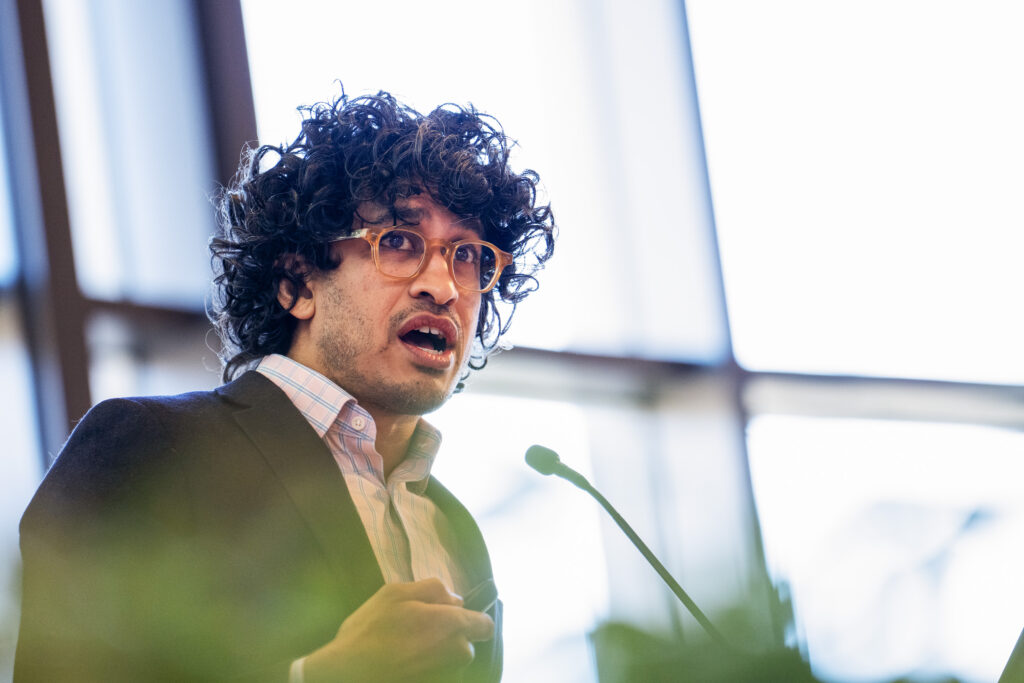
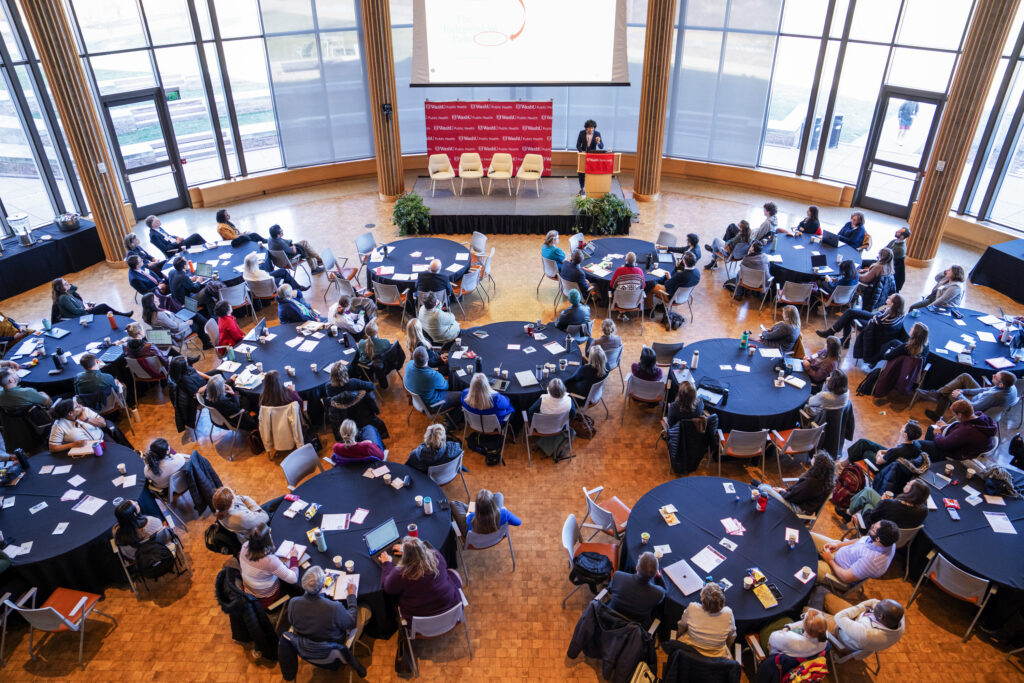
Neil Vora, MD, one of the keynote speakers at a planetary health convening hosted January 21 by WashU Public Health's Solutions through Planetary Health Research (SPHERE) network, spoke about the importance of a coordinated response to the interlinked issues of climate change, biodiversity and pandemic disease. (Photo credit: Zachary Linhares/WashU Public Health)
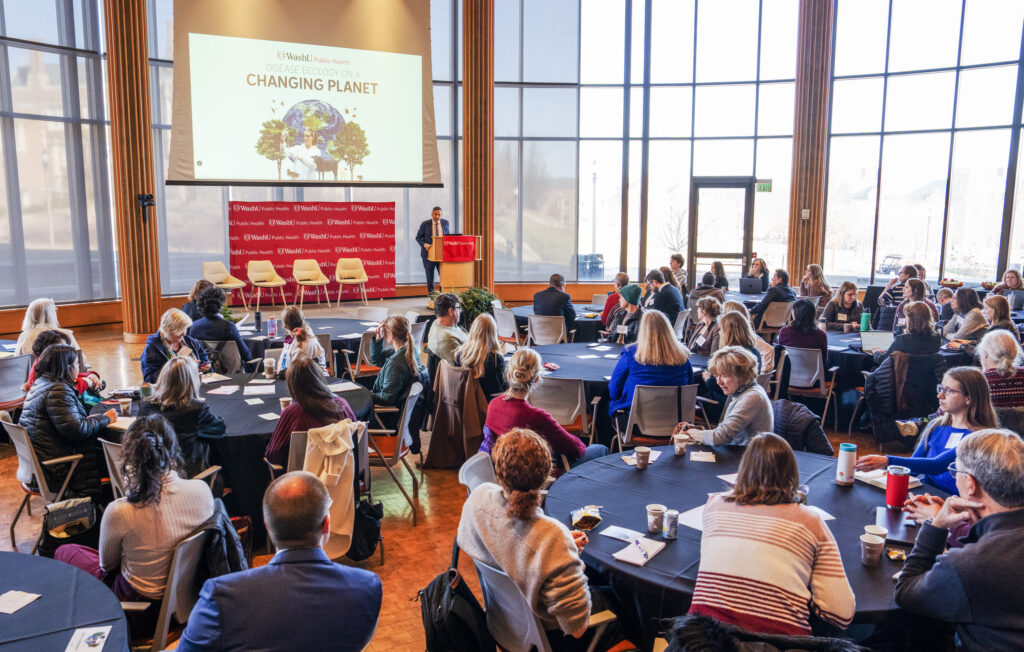
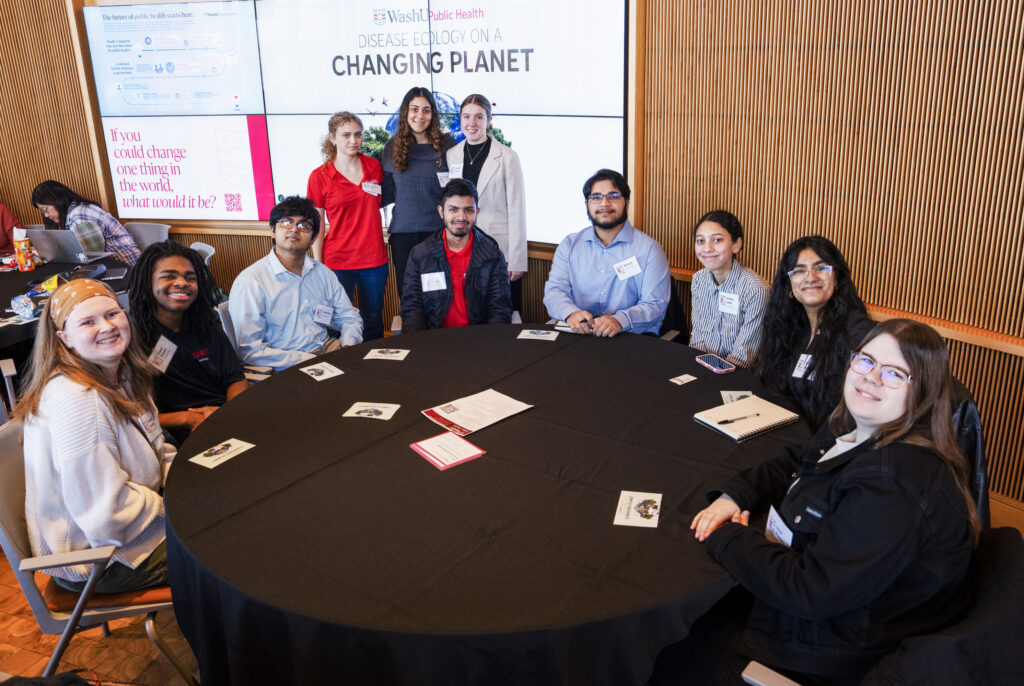
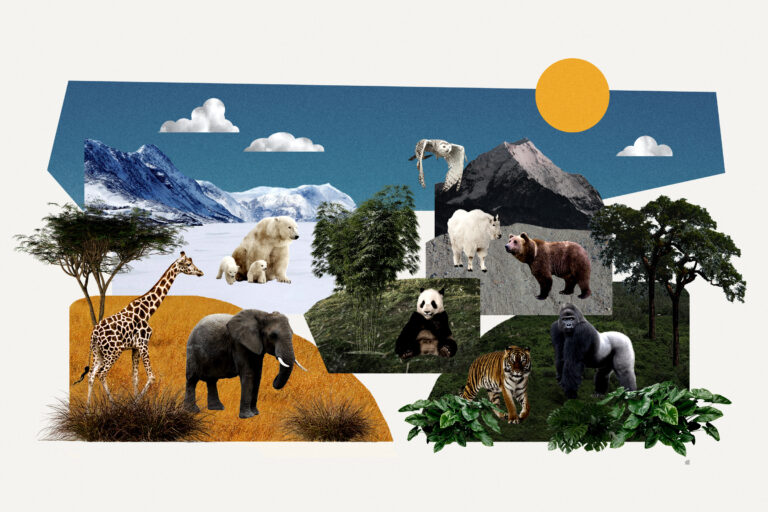
There is growing recognition that climate change, biodiversity loss, and emerging infectious diseases are inextricably linked. This was the theme of the inaugural symposium of WashU School of Public Health’s Solutions through Planetary Health Research (SPHERE) network Wednesday, January 21. The event, a convening titled “Disease Ecology on a Changing Planet,” was held in WashU’s Clark-Fox Forum in Hillman Hall, where it brought together leading voices from infectious diseases research, ecology, medicine, and public health to explore the role environmental change plays in reshaping patterns of infectious disease.
See here for a recording of the event.
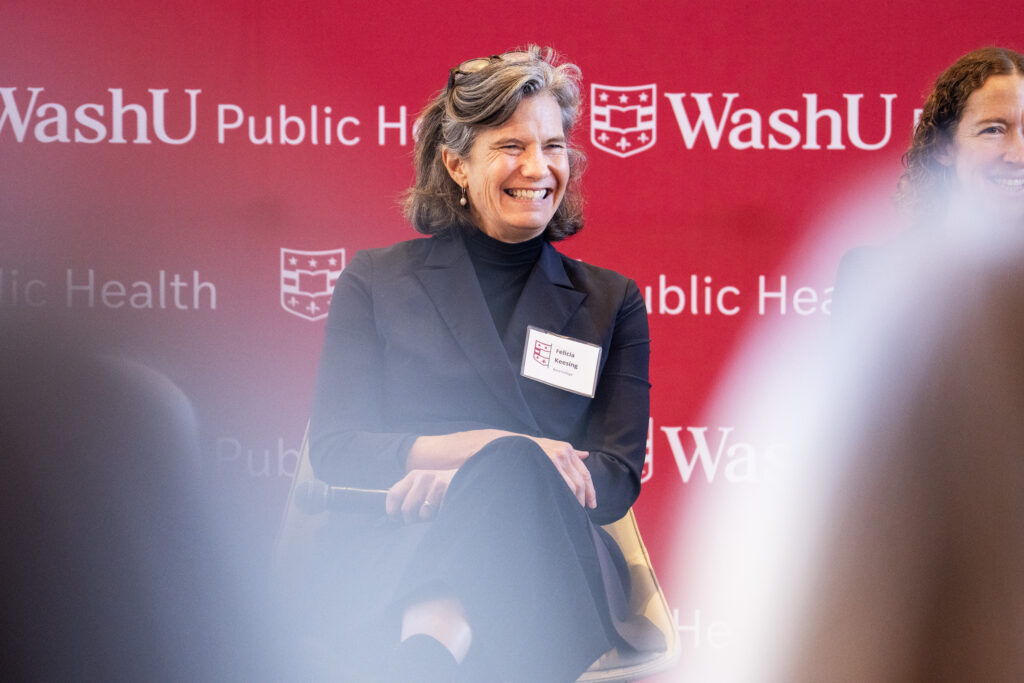
The first of two keynote addresses was delivered by Felicia Keesing, PhD, the David and Rosalie Rose Distinguished Professor of Science, Mathematics, and Computing at Bard College. Keesing accepted the invitation to speak partly because she was intrigued by the school’s new planetary health research initiative, SPHERE.
“Starting a school of public health and a planetary health research network at this time feels a bit like an act of defiance and hope,” Keesing said. “I love the way people are leaning in and trying to create collaborations across disciplines. I see tremendous potential for Missouri to become a leader in studying emerging vector-borne diseases.”
In her address, “Biodiversity and Infectious Diseases: Principles to Guide Prevention,” Keesing discussed how biodiversity affects the chances of an infectious disease jumping from animals to people and causing a human pandemic. She argued that untested assumptions about where new infectious diseases are most likely to emerge has led to a misguided emphasis on tropical biodiversity hot spots. In fact, she said, the data suggest that the most important risk factor for the next pandemic is biodiversity loss, since the species that thrive in areas that have lost biodiversity are more likely to carry microbes that pose a threat to people.
“The most actionable thing we know about zoonotic pathogens, from a disease ecology point of view, is this: Biodioversity is protecting us from emerging infectious diseases,” Keesing said. “Biodiverse hot spots are not dangerous to us. What we need to worry about are places where biodiversity has rapidly been lost. Places that are biodiverse — we should be conserving them, protecting them, and in those areas that have lost biodiversity, we should be doing a lot of surveillance and mitigation and, if possible, restoring biodiversity.”
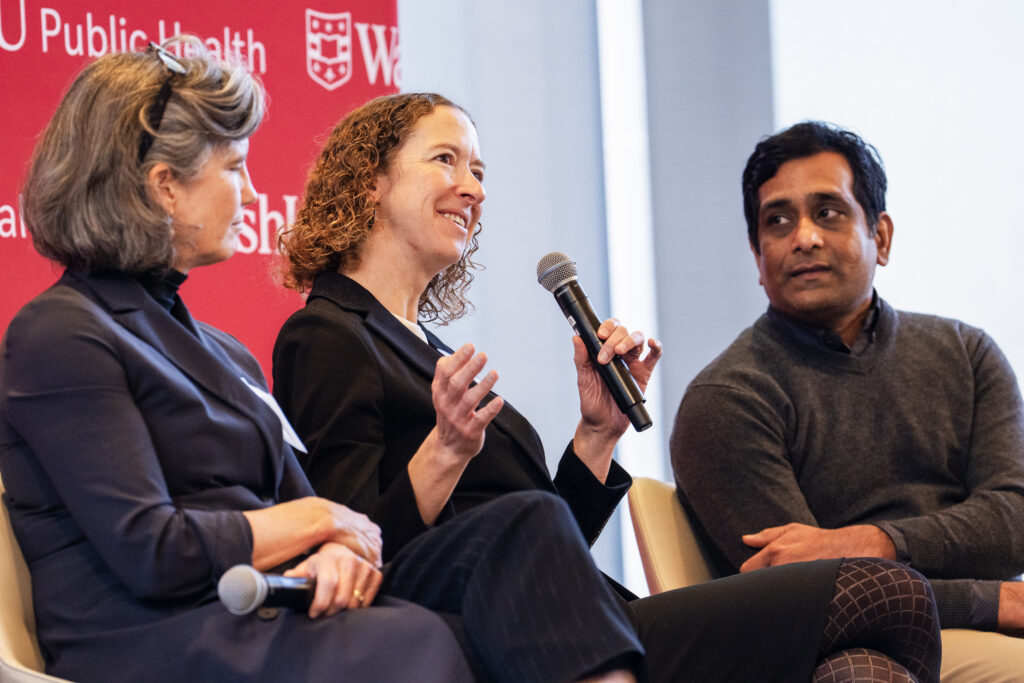
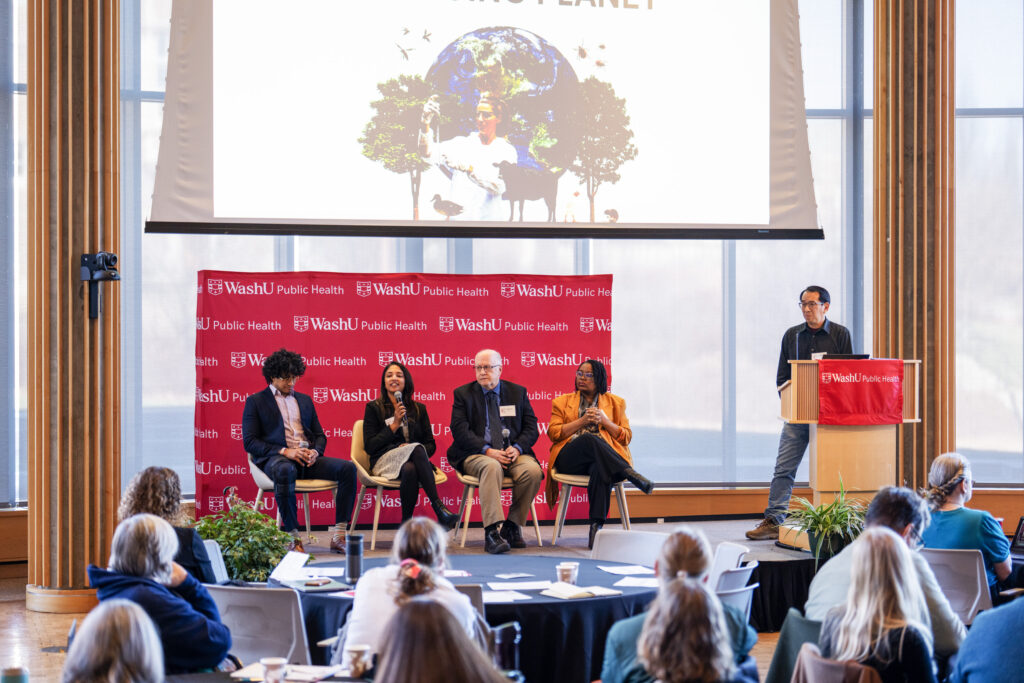
In the discussion that followed, panelists explored the complex interconnections between human, animal and environmental health, noting the difficulty of predicting how changes to any one part of the system will affect the rest of it.
“For ticks, we’re seeing range expansions, and some of that is driven by climate and some by land use change,” said Solny Adalsteinsson, PhD, a senior scientist who studies tick-borne diseases and conducts research at WashU’s Tyson Research Center. “Plus, we now have different species of ticks interacting that historically didn’t. For example, the longhorn tick. Not only is this a relatively new tick for the U.S. that is now able to pick up pathogens that are already circulating with our native ticks, but it has brought a pathogen of its own, too, and it’s unclear how that might interact with the rest of the system that’s already here. There’s a lot of work we need to do to be able to figure out how to predict those changes and where we should prioritize intervening.”
Neil Vora, MD, the executive director of Preventing Pandemics at the Source Coalition and orchestrator in residence at Integral Consulting, delivered the second keynote address, “An Investment in Nature is an Investment in Health.” In this talk, Vora said that effective pandemic preparedness involves both preventing animal pathogens from spilling over into people and being prepared to respond effectively if they do. In addition, he argued that pandemics are only one part of an overlapping set of global crises driven by human behavior.
“To me, pandemics, climate change, and biodiversity loss are all catastrophic threats rooted in our broken relationship to nature,” Vora said. “This is no longer theoretical. Millions of people are going to be dying in the years to come because of climate change, but people are also dying right now. We’re not talking nearly enough about this. It’s only recently that we have really been talking about climate and health, and we’re still not talking about biodiversity, even though biodiversity is the underpinning of all life on this planet. There is no future for humanity without nature. We have to accept that living within ecological boundaries is not optional.”
The second panel addressed the question of how to translate research into policy and practice. The panelists discussed the importance of forging partnerships from the beginning between researchers and the people who will be affected by their research, and of designing studies for impact.
“The right time to be partnering is as you’re formulating the question,” said panelist Douglas Luke, MA, PhD, the Distinguished Professor in Public Health Systems Science at WashU Public Health. “It’s a fatal mistake to wait to the end and then think about how your research could be applied. Impact equals evidence plus implementation plus sustainment. The dilemma is we put much more of our resources into new evidence generation, but less into getting it into the communities where we’ll see the impacts. Furthermore, the vast majority of evidence-based policies and programs are never sustained over time, and that lack of sustainment is particularly true in lower- and middle-income countries and under-resourced settings. We need new evidence in a changing world, but then we also have to implement new programs and policies, and then really make sure they stick around so that we can see the impact.”
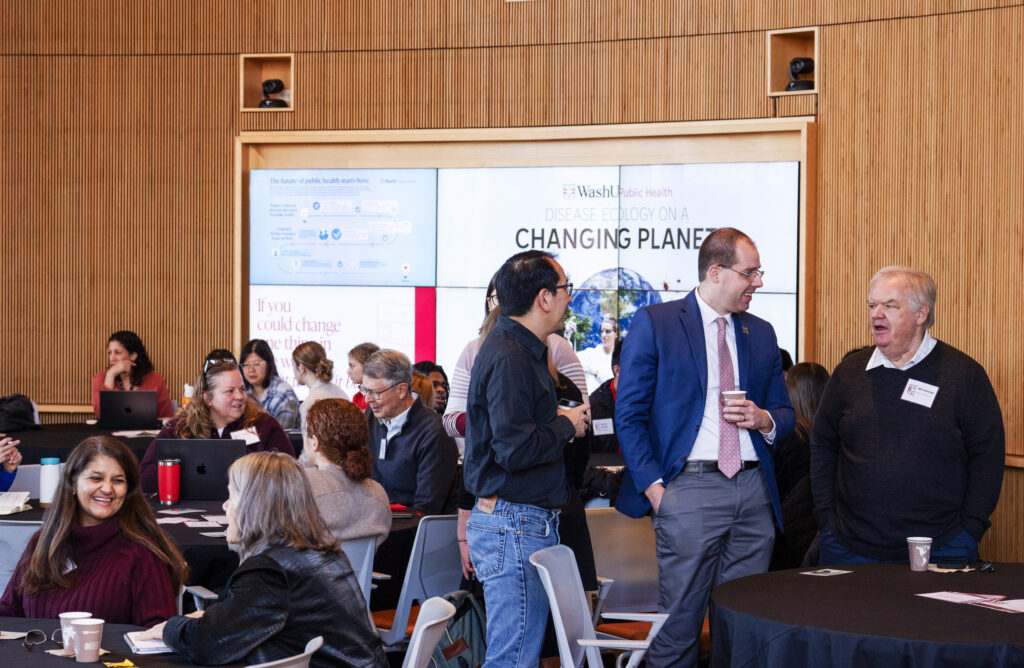
After the morning sessions, the keynote speakers had a chance to meet with panelists and attendees. “I’m just so impressed with the spirit of collaboration amongst all the people who I’ve met today,” Vora said. “People from all types of disciplines coming together and the willingness to learn new things so that we can work toward a common goal. It’s not easy to break down silos, but the reality is that the global challenges we face from climate change or pandemics are not going to be solved by any single person or discipline or institution. And so this type of initiative, the SPHERE initiative, is exactly what the world needs in this current moment.”


WashU Public Health-led team trains early-career scientists to assess their work’s impact
January 24, 2026

The Dissemination & Implementation Science Innovation Research Network (DISIRN) aims to speed translation of research into practice
January 17, 2026
Steensma, Mandeville lead WashU’s role in UN Academic Impact initiative
January 17, 2026