October 9, 2026
Bridging public health and primary care for a healthier population
WashU convening to explore building primary care-based research networks to improve healthcare, public health



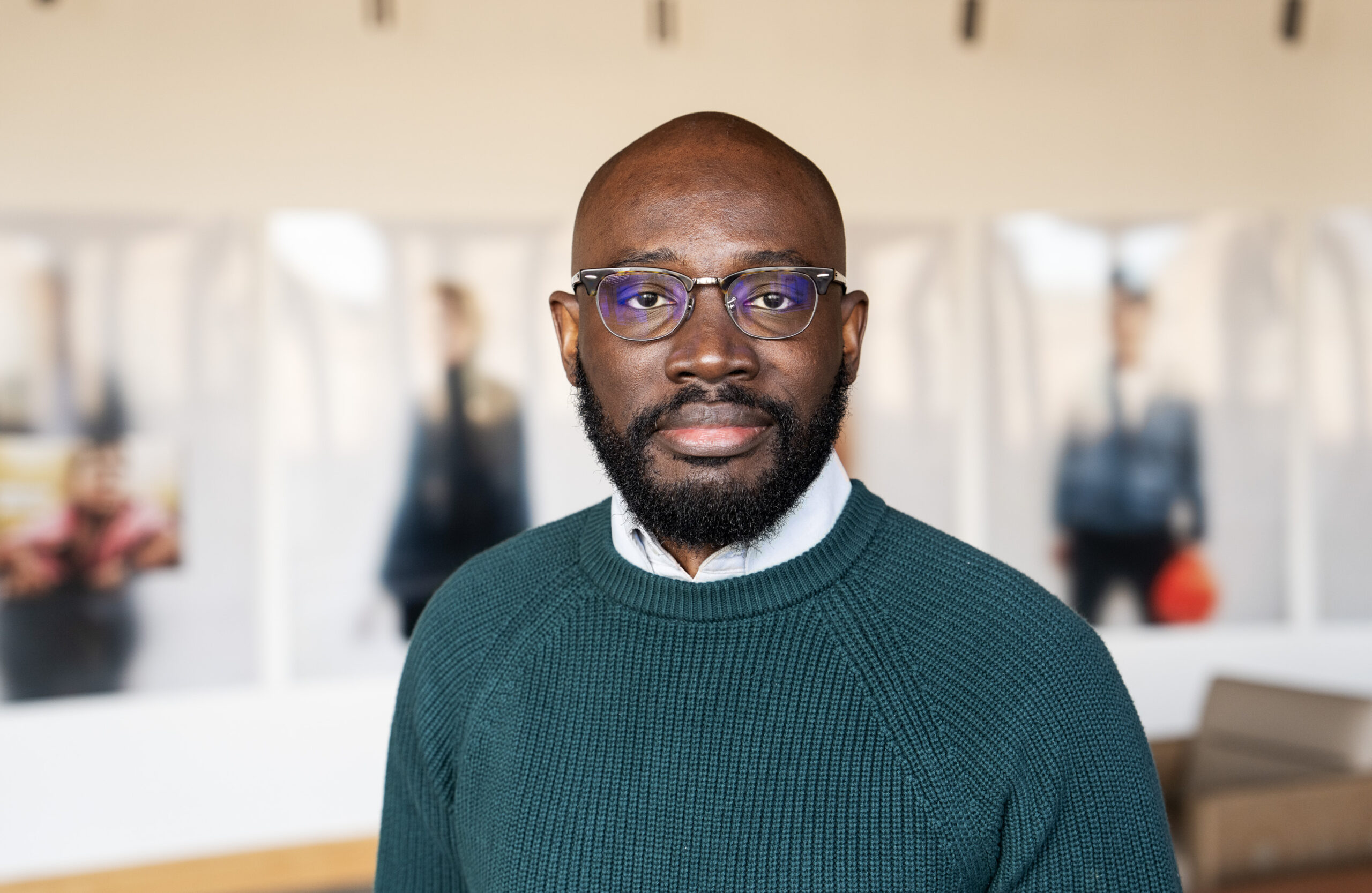
Also applied practice deputy director, Effah channels his experience and expertise into mentoring and guiding MPH students as they prepare for public health careers
It wasn’t that long ago that William Effah, MD, MPH, MBA, a lecturer and deputy director of applied practice at WashU Bursky School of Public Health, was in the middle of his own applied practice experience. In the summer of 2020, as a WashU MPH student, Effah worked at the St. Louis Department of Health, updating the city’s food code legislation.
“I had no legal background, but I worked alongside lawyers, inspectors, and health officials to help shape policies that eventually became law,” Effah said. “That experience taught me that some of the most meaningful work happens when you step into spaces where you initially feel uncomfortable.”
Today, Effah helps shape the hands-on experiences of the school’s MPH students. He works directly with students to identify practicum placements, connects them with community organizations, guides their fieldwork, and conducts site visits with supervisors. He also teaches epidemiology courses that emphasize translating theory into real-world impact.
In all of his work, he draws on his own wide-ranging experience. Trained in medicine, public health and business, Effah has worked in hospitals providing patient care, in a government public health office making policy recommendations, in academia conducting research, and in the nonprofit sector, where he co-founded an organization that provides community health education and screenings. His is a varied career that gives him a unique perspective on the many paths students can take that all lead toward the goal of improving public health.
Here, Effah discusses why he thinks of himself as similar to a midfielder on a soccer team; how a better understanding of business principles can advance public health; and what he loves most about working with students.
Q: How do you describe your job to people outside academia?
“At the core of everything I do, I’m a teacher. I’ve always loved teaching. But I also think of myself as someone who wears many hats. I usually describe myself as a physician-scientist who teaches, conducts research, and works in clinical practice settings. I love soccer, so I think of myself almost like a midfielder. You’re doing several things at once: defending, distributing passes, and helping create opportunities. I also teach epidemiology and epidemiologic methods. I work with students in applied practice. I do research. I work with nonprofits in Africa, building systems and programs. All those pieces matter to me.”
Q: What do you think students learn during practicum experiences that they can’t learn in a classroom?
“Public health is primarily practice-based, rooted in solving real societal problems. While research and theory matter, the field was built through action, like John Snow removing the pump handle during a cholera outbreak. (John Snow was a 19th century English physician who famously traced the source of a cholera epidemic to a contaminated public water pump. He had the pump handle removed, contributing to the end of the outbreak.)
"Training can't be purely classroom-based; students need real-world application to build confidence. Not all students become researchers; many work in nonprofits, health departments, and policy. Practicums allow students to apply their knowledge to actual community problems, emphasizing that understanding theory is different from using it effectively.”
Q: How did you make the switch from clinical medicine to public health?
“In 2014, I worked in pediatrics at Korle Bu Teaching Hospital in Accra, Ghana. I saw children repeatedly come in with diarrheal diseases like cholera and dysentery due to a lack of clean water and healthy environments. We treated and discharged them, but they often returned weeks later with the same conditions, creating a never-ending cycle. My friends and I started Hope Mandate, a nonprofit that conducts community outreach through free screenings and health education, covering topics such as boiling water, sanitation, HIV prevention, and preventive health. This led to fewer children returning to the hospital, showing me that community education and prevention can have a larger impact than treating one patient. Motivated to do more, I realized I needed public health training, which is why I pursued an MPH.”
Q: What prompted your decision to attend business school?
"It dawned on me that public health is not just about health. I realized there were not many people in public health in the spaces where major economic and business decisions that shape health are made. We talk a lot about the commercial determinants of health, how products are marketed, and how economic systems affect health outcomes, but public health professionals are often not sitting at those tables.
“Usually, someone with business training looks at the top or bottom line and makes decisions about how products should be marketed to the public. Public health professionals, meanwhile, are speaking about the health harms of those products. The two groups often don’t really understand each other. I wanted to understand both worlds. I already understood medicine and public health, but I wanted to learn how businesses think, how corporations operate, what motivates decision-making in those spaces, and whether there’s a place where business and public health can meet constructively. I also work with nonprofits and have become very interested in social entrepreneurship. I wanted to understand how we build sustainable systems that can take care of themselves.
“For example, there’s a nonprofit in Ghana I work with where women make baskets and other products that are sold here in the U.S., and the proceeds support their livelihoods and their children's education. I started asking questions like, “How do we scale models like that?” How do we make them sustainable? What tools and systems are needed to make social enterprises thrive? That’s what led me to pursue business education.”
Q: What do you enjoy most about your job?
“Watching students grow in confidence is deeply fulfilling. Students enter the MPH program anxious and uncertain. Over two years, you watch them transform. You see them speak confidently about epidemiology, work side by side with professionals in the field during their applied practice, analyze data, think critically about public health systems, and become professionals. Seeing that trajectory, from nervous student to capable public health professional, brings me great joy.”
Judith Mwobobia, MPH, is the inaugural Writing Fellow for the Bursky School of Public Health Office of Communications. Mwobobia is a PhD student in public health sciences and previously was a journalist in Kenya. She writes profiles and helps cover the news of the school, with a particular focus on student- and education-related stories.
October 9, 2026
WashU convening to explore building primary care-based research networks to improve healthcare, public health
WashU's The Source
October 9, 2026
Bursky Public Health researchers examine how to respond to changes driven by digital technology and generative AI.
October 9, 2026
Public attitudes may inform policies to address substance use, homelessness, mental illness