WashU’s FARM hosts visit by international food and ag experts
Visit part of effort to strengthen collaboration among Latin America, US, UK
February 7, 2026

Teachers, parents trained on social-emotional skills enhanced students’ mental health, learning

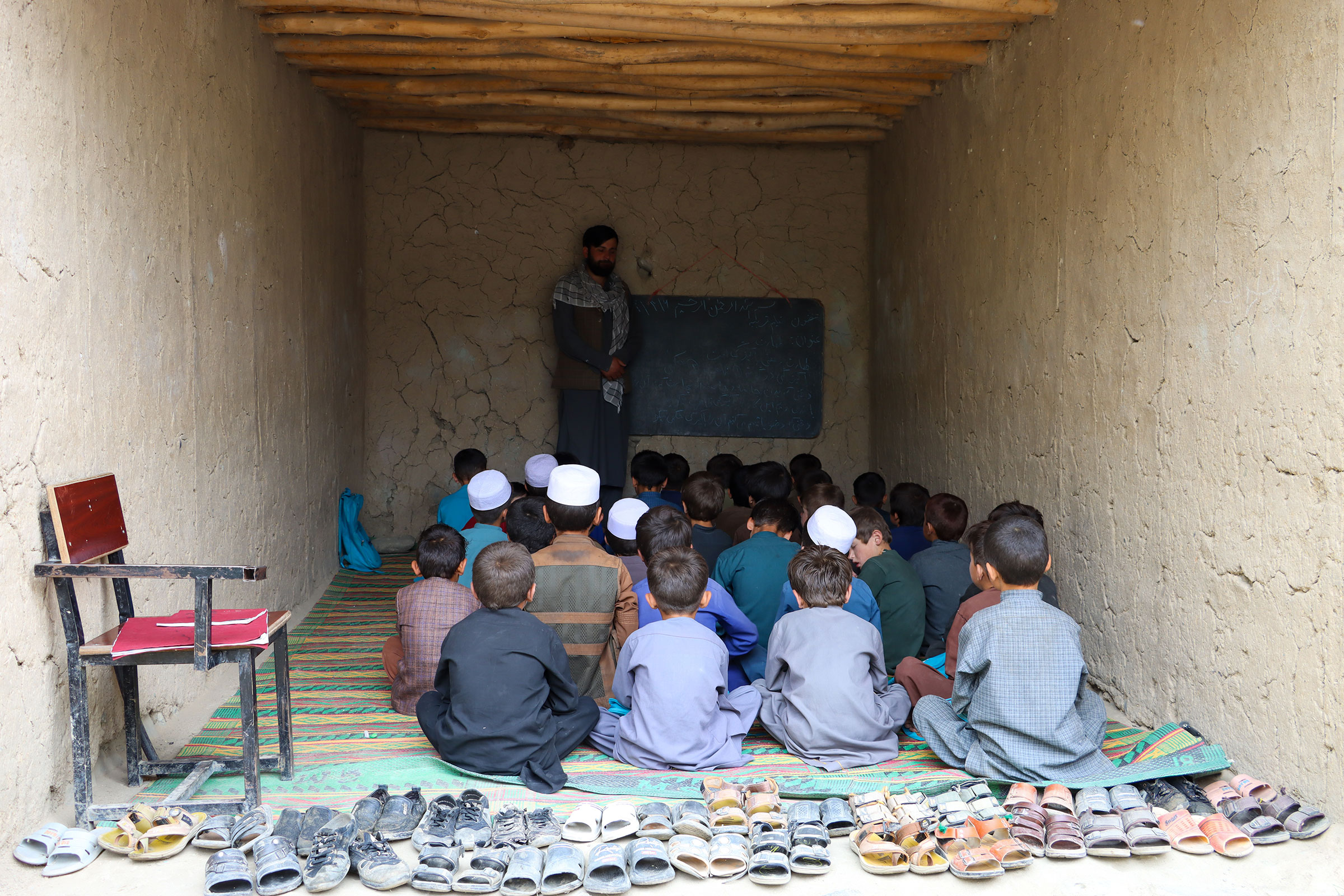
Afghan schools that implemented a program to help children develop resilience saw improvements in their students' mental health and learning, even as the country experienced crisis. (Photo: Norwegian Afghanistan Committee)
More than four decades of near-continuous war in Afghanistan has left many people in the country impoverished and traumatized. For children to thrive in these circumstances and break the cycle of generational trauma, they need support — but mental health care is limited and stigmatized in Afghanistan, and inaccessible to the vast majority of Afghan children.
With that in mind, Jean-Francois Trani, PhD, a professor at Washington University School of Public Health in St. Louis, and colleagues at the Norwegian Afghanistan Committee, designed, in collaboration with Afghan parents, children and teachers, a school-based intervention for students in third through sixth grade to improve the mental well-being of Afghan children. The intervention, based on a program established to address child mental distress during the COVID-19 pandemic, was culturally adapted for Afghanistan. It involved training teachers and parents on practical ways to help children develop resilience and core life skills such as communication, self-awareness and self-regulation.
Trani and colleagues found that the intervention works, when allowed to work. The program was implemented at 40 schools — involving more than 2,000 students — across Badakhshan, Ghazni and Takhar provinces, with a similar number of schools and students receiving no intervention for comparison. Students at schools that implemented the intervention exhibited better life skills and improved reading and math skills, and a decrease in depression, anxiety, stigma and discrimination — but the benefit was primarily for boys and only at schools that implemented the program within 90 days of when teachers were trained in the intervention, and that experienced minimal disruptions.
“It’s not that the intervention doesn’t work for girls; it’s that you have to have certain conditions in place for it to work,” said Trani, the study’s first and corresponding author. “A school-based intervention doesn’t work for children who aren’t in school.”
In the time between when the program was designed and when it was implemented, Afghanistan experienced yet another crisis: The kleptocratic government of the Islamic Republic of Afghanistan fell and was replaced by the theocratic Islamic Emirate of Afghanistan. The new government placed restrictions on girls’ education and the activities of foreign nongovernmental organizations. The unexpected changes caused delays and disruptions, and forced some girls to drop out of school — diluting the apparent effects of the intervention.
“Things didn’t happen quite the way we had expected, but I think the data we have indicate that our theory of change works if it is fully implemented,” Trani said. “This study shows, at a large scale, that this kind of intervention can have a meaningful impact on children’s mental health, learning outcomes and discrimination in a conflict context.”
The uniqueness of the program — and the reason, perhaps, that it was effective at helping some children even amid chaos — lies in the participatory way it was developed. Trani and colleagues began by conducting workshops with students, parents and teachers to figure out the factors that influence child well-being in Afghanistan and identify the points at which they could intervene to support children’s mental health and academic performance. Then, the researchers tested whether a social-emotional learning intervention could act on those leverage points.
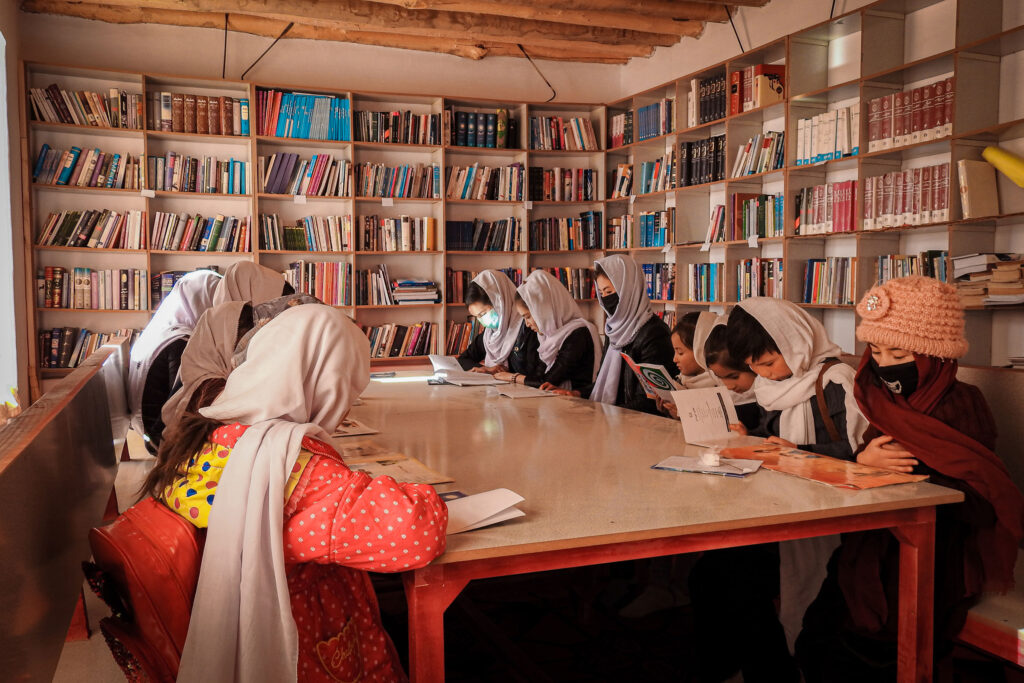
The intervention, called “A Hopeful, Healthy, and Happy Living and Learning Toolkit,” was developed by the International Federation of the Red Cross and Red Crescent Societies to help children cope with the COVID-19 pandemic.
Afghan members of the research team went over each activity in detail, making dozens of changes so the activities would be relevant and appropriate for Afghan children. An activity that encouraged children to help set household rules, for example, was nixed because Afghan parents do not traditionally allow their children much say over such matters. It was replaced with another in which children were encouraged to express what they needed, such as asking for fewer chores for girls and for chores to be distributed more equally among all children in the household, including boys, so that girls would have enough time for homework.
Another activity asked students to consider what they should do if they were stranded on a desert island, a baffling question for children growing up in landlocked Afghanistan. That activity was modified to one in which children were asked to come up with a plan for a scenario in which a car they were riding in broke down in the mountains at night. The team also added some mindfulness activities and physical exercises.
The final intervention was composed of a set of 42 classroom activities and 31 home-based activities to help children learn self-awareness, self-management, social awareness, relationship skills and decision-making. After a weeklong training with teachers and students, and a separate one-day training with parents, the parents and teachers were given free rein to use what they had learned at home and in the classroom. The effect of the intervention was evaluated after 90 days, but the hope was for parents and teachers to continue using what they had learned indefinitely.
“Everyone wants to see children happy and thriving,” Trani said. “Traditional mental health care is not available and is not going to be available for most Afghan children, but this intervention costs less than $100 per child per year. I think the message here is that it’s possible to do a lot with limited resources to improve child learning outcomes, mental health, and well-being.”
Trani JF, Zhu Y, Bechara S, Yin S, Bakhshi P, Kaplan I, Singh RK, Modaber MA, Rawab H, Yoo M, Seelinger KT, Babulal GM, Raghavan R. Improving child mental health and learning outcomes and reducing stigma and discrimination in conflict setting: findings from a cluster randomized controlled trial of a classroom-based psychosocial intervention in rural primary schools in Afghanistan. The Journal of Child Psychology and Psychiatry. January 25, 2026. DOI: 10.1111/jcpp.70125
The study was funded by the Economic and Social Research Council (grant number ES/P005799/1, Improving child mental health in schools of Afghanistan), London, U.K.; and the Norwegian International Agency, Oslo, Norway.
Visit part of effort to strengthen collaboration among Latin America, US, UK
February 7, 2026
Clasby leads efforts to recruit students to WashU Public Health who will go on to become leaders in public health
February 6, 2026
Nicholas Szoko, MD, PhD, an assistant professor of pediatrics at WashU Medicine and a member of the SPH secondary faculty, was named the inaugural Larry Shapiro Scholar in Population Health. He will study violence and substance use among adolescents. The award was established by SPH and ICTS.
February 6, 2026