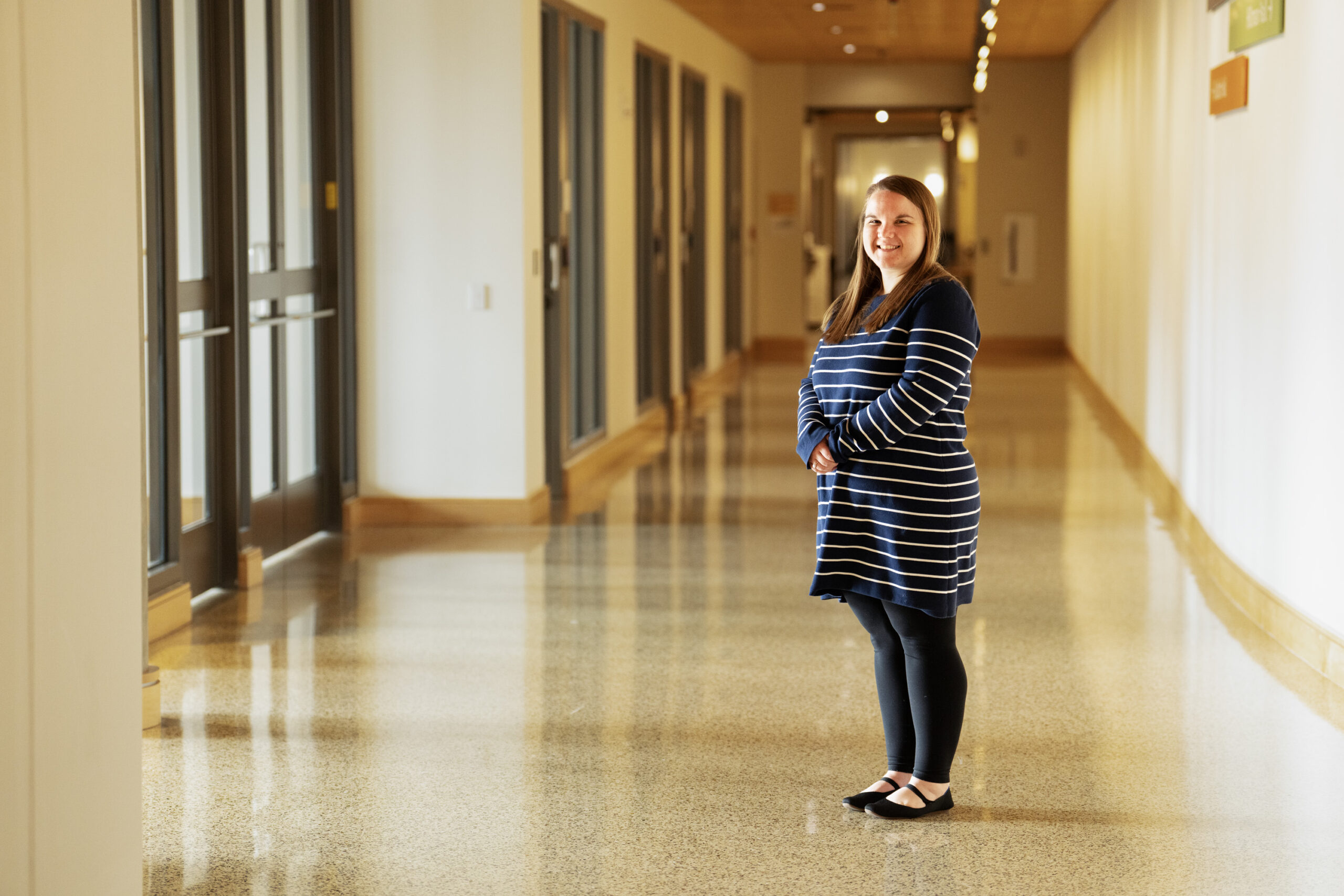
One of the most important duties of any school is attracting the right students. At Washington University School of Public Health, that duty falls to Caroline Clasby, the director of admissions and recruitment. She’s responsible for finding talented, dedicated people who will go on to become leaders in public health — but first, she makes them aware of the advantages of continuing their education at WashU Public Health.
Attending a brand-new school that is rooted in a strong, universitywide tradition of public health scholarship provides unique benefits, Clasby explained.
“This is an opportunity for students to be a part of something new and refreshing, where ideas are flowing and people are trying out new ways of doing things,” Clasby said. “Our students help shape the school, just as our staff and faculty and administration are doing. It’s a huge deal, especially at a top-tier institution like WashU.”
Clasby has spent her career in university admissions, traveling to high schools and universities all over the world recruiting students for undergraduate and graduate programs. She was drawn to the position at the School of Public Health because she found it exciting to be part of building a new school — and she wanted to try new ways of thinking and working.
“I really like change,” Clasby said. “I am often very optimistic about change because I believe it helps me and everyone else evolve. In a lot of workplaces, there’s a culture of resistance to change. People say, ‘This is how we’ve always done this, and this is how we’re going to continue to do it.’ But that’s just not possible when you’re starting from scratch. Joining SPH was an opportunity to try something different. I’ll always be able to say, ‘We built something new, and I was a part of that.’”
Here, Clasby speaks on her role as director of admissions, the advantages of attending WashU and her belief in the power of education.
Q: You’ve spent your career in admissions for higher education institutions. What appeals to you about this work?
“I come from a family of educators ranging from primary school all the way to university. I know college is not for everybody, but it is for many. When you get a higher education, you learn to think critically, and most importantly, you’re often introduced to people who think differently from you. New ways of thinking helped shape me into a better person as I think it does to many others. So I like to spread and encourage that. I want to help lifelong learners.”
Q: How do you connect with prospective students?
“We try to personalize it as much as we can. We want our students to feel like they are welcomed. We want them to feel like they have a support system. I want to know their hopes and dreams. I want to know more about them outside of just being a student. To me, they’re not just a number. Each is a human being who’s making a large investment that sets the stage for the rest of their career.
“With my international students, I know what it’s like to feel homesick. I have lived abroad. I know what it’s like to be in a culture or a language where you’re just like, ‘Holy moly, this is a lot.’ And so I immediately try to make some sort of connection.
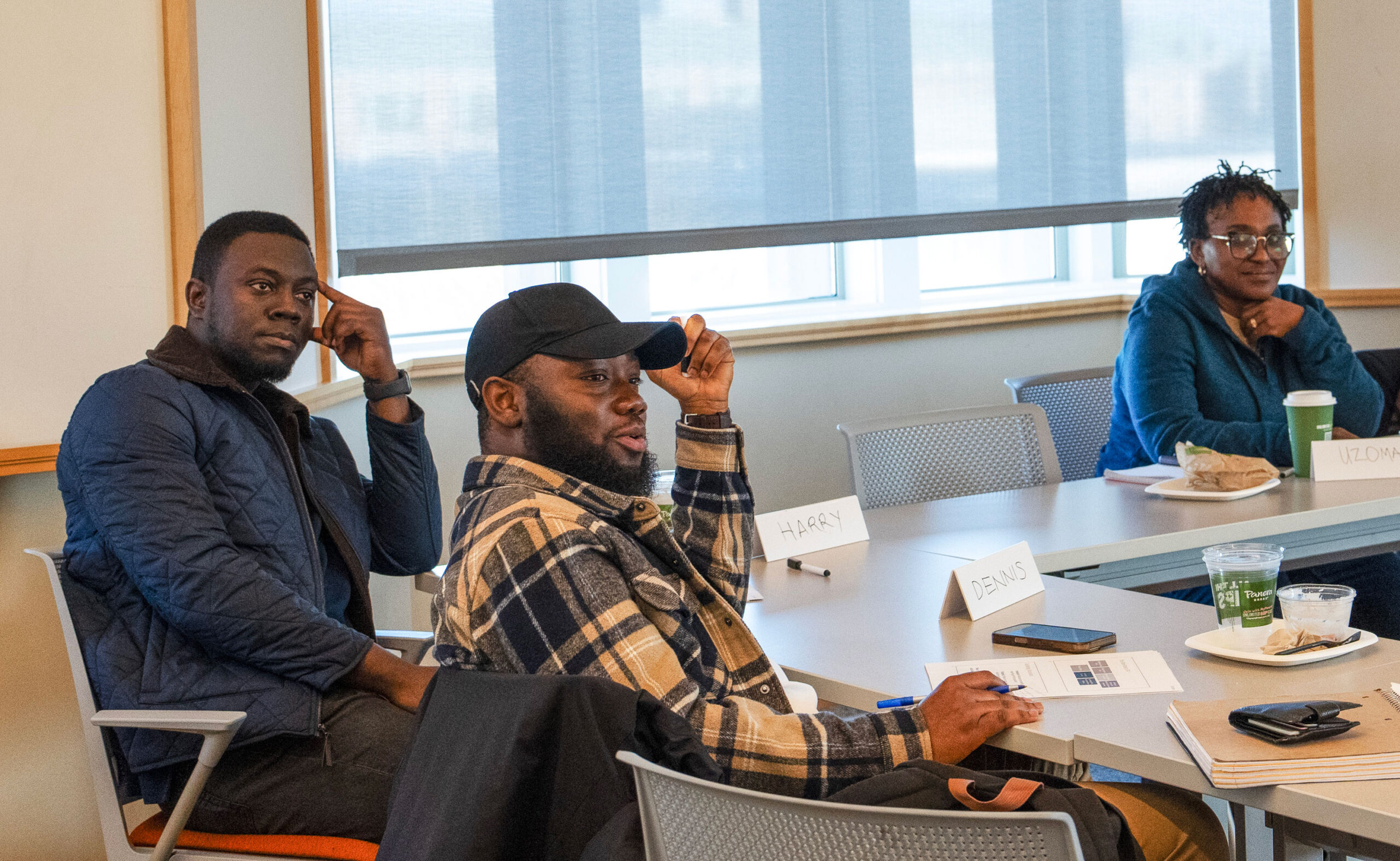
“With the domestic population, it’s a different vibe. A lot of students want to know: What kind of job can I get? Why WashU? Why public health? And so you have to be able to provide those kinds of answers for them. We talk to them about their practicums that they will be doing, their future research, the amazing culture at WashU, and about the professional relationships they should be establishing with others.”
Q: What opportunities does the School of Public Health have for domestic students?
“For domestic students, there are multiple scholarships available for prospective students from the Midwest. We really want to encourage students from this region to come to WashU. They strengthen the local and regional public health workforce and bring value to the community.
“St. Louis, like every other city, has its ups and downs; it has beauty, but it also has inequities. It is important that we address the issues that are happening right here in our home. We want to get our hometown students to come, as well as people from around the Midwest and the rest of the United States, to give them opportunities to contribute to this community at the city, state and regional levels. It’s important.”
Q: What are your favorite parts of this role?
“I really do enjoy seeing the number of students grow in the field and seeing the overall big picture of student recruitment. I love being part of building a new school.
“And then the other part is the enrollment manager side in me, which is that you set goals, and you strive to exceed them. And that brings a lot of joy to me every single year. This is the first year that I don’t know what’s going to happen in terms of admissions, and that’s a little scary. I’m very competitive internally with myself. I want to be able to meet our goals to the best of my ability.”
Q: How does WashU support new students?
“WashU is one of the most beautiful, interesting places where I have worked. And I can say that wholeheartedly. This is one of my favorite jobs. And part of it is not only the accessibility and availability of resources at this university, but the will to get them if you need them. If you’re saying, ‘Look, this is what we need to help the students and to succeed,’ then WashU will do what they can to try to make that happen.
“I think that’s very important in the education system — even at the student level; students should want that from their university. They should want that as part of their education, know that ‘no’ is not always going to be the answer, or it could be ‘no’ for right now, but we’re going to work on it, or we’re going to see what we can do.”
Q: What advice do you have for students coming into the school?
“Go sit in the front of the class. I know you don’t like it, I know it’s uncomfortable, but go sit in front of the class and engage so your professor knows who you are and that you are getting the very most out of your education. A degree goes as far as you make it go.”