
Dean Sandro Galea
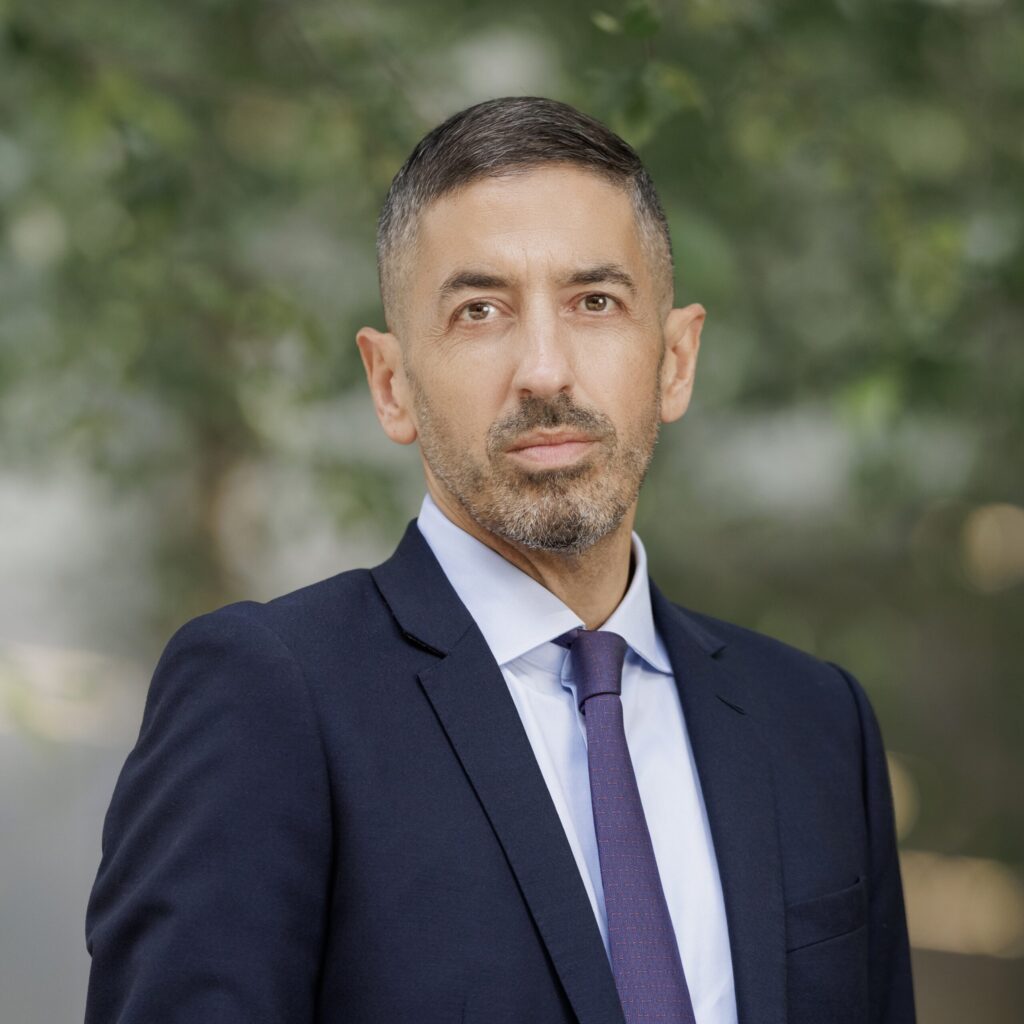
— Sandro“We are building a school that promotes health through excellence in interdisciplinary population health science and scholarship, distinction in educational programs, and a deep commitment to local and global impact.
This mission arises in response to the challenges — and opportunities — we face as a world today. The world needs public health now more than ever, even as the field is in a time of transition. Our aspiration is to reimagine and rethink what public health can be. We aspire, guided by our 4×4 plan, to think differently, to embrace innovative approaches, to conduct consequential science that leads to changes in policy and practice, and to do so across disciplines and sectors. That is an ambitious remit, but one that is perhaps fitting for the first school launched at WashU in 100 years.
This website represents who we are, what we do, showcasing the work of our scholars, educators, students, and community partners. We hope it is a way into the work we do, and an invitation to engage with our work.
Join us.”
Our dean
As dean of WashU’s first new school in 100 years, Dean Galea is leading the building of a world-class academic institution that will work in myriad ways to advance solutions to pressing, real-world issues involving infectious disease; mental, global and environmental health; dissemination and implementation science; and other key areas of public health.
A population health scientist and physician, Galea came to WashU from Boston University School of Public Health, where he was the Robert A. Knox Professor and dean for a decade. Prior to that, he served as the Gelman Professor and Chair of the Department of Epidemiology at Columbia University Mailman School of Public Health. He also previously held academic and leadership positions at the University of Michigan and at the New York Academy of Medicine.
His tenure as dean of Boston University School of Public Health was marked by expansion and innovation. The school launched a new Master of Public Health curriculum, an online Master of Public Health program, a public health communication initiative, and lifelong learning and student-alumni mentoring programs, among other initiatives. During his tenure, the school doubled its research funding portfolio and development revenue, developed new Centers of Excellence, and was continually ranked as a top U.S. public health school.
A prolific writer, author and speaker, Galea’s scholarship lives at the intersection of social and psychiatric epidemiology, with a focus on the behavioral health consequences of trauma. His work has been principally funded by the National Institutes of Health (NIH), the Centers for Disease Control and Prevention, and several foundations. Further, he has been engaged in more than $100 million of extramurally funded research.
Galea has served on numerous advisory groups to national and global organizations. Among his newest roles, he serves as editor-in-chief of JAMA Health Forum.
He is an elected member of the National Academy of Medicine, and was named one of TIME magazine’s epidemiology innovators. He has received several lifetime achievement awards for his research, including the Michael J. McGinnis Award from the Interdisciplinary Association for Population Health Science, the Wade Hampton Frost and the Rema Lapouse Awards from the American Public Health Association, and the Robert S. Laufer Award from the International Society for Traumatic Stress.
Galea was born and raised in Malta. He immigrated to Canada with his family as a teenager and later immigrated to the United States. He earned his medical degree from the University of Toronto, graduate degrees from Harvard University and Columbia University, and honorary doctorates from the University of Glasgow and the Icahn School of Medicine at Mount Sinai. He has practiced medicine in rural and remote parts of the world, including as a field physician for Doctors Without Borders in Somalia.